

With growing power in the air, Ukrainian forces have launched an astounding number of drone and missile strikes against Russia, landing hits where it would hurt the Russian war machine the most, in the long term: on oil and gas infrastructure throughout the country. It is part of what Ukrainian President Volodymyr Zelensky has called his country’s “long-range sanctions regime” and part of a broader effort to hit the Kremlin’s coffers.
The effects of that campaign have been difficult to hide: Russian social media has been rife with videos of damaged energy infrastructure belching thick black smoke into the air. But the strike campaign’s goals are twofold and include bringing the war in Ukraine into the Russian heartland itself. If Kyiv’s goal is to put pressure on the Russian president, it may be working.

The Soviet-designed Su-27 all-weather fighter-interceptor was created to counter the American McDonnell Douglas F-15 Eagle. This two-seat trainer version, designated Su-27UB, entered USSR service in 1986 and still flies with Russian forces and other nations. Its NATO name is Flanker-C. Image Credit: U.S. Air Force.
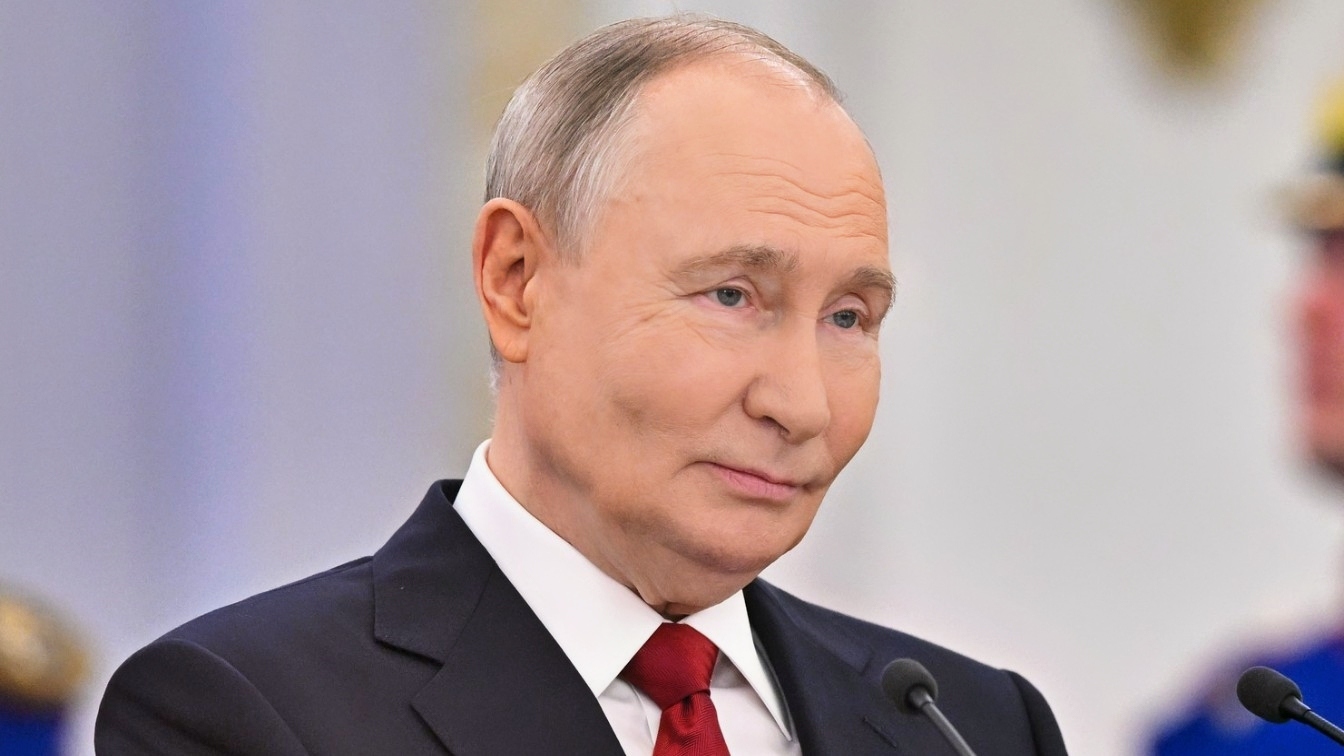
Just last week, Russian President Vladimir Putin spoke directly about the fuel shortages.
Russian President Putin Acknowledges Fuel Shortages
In a stunning, singular admission, the Russian president addressed the fuel shortages being experienced in Russia, seemingly proof that Ukraine’s ongoing strikes against Russian energy infrastructure have had an acute effect. “As for the attacks on critical infrastructure in general, and energy infrastructure in particular, they are, of course, creating problems,” Putin said in an interview with Russian media. “That is obvious,” he added, saying “we are currently seeing certain shortages, although they are not critical.”
But the severity of the shortage has become evident in reporting.
One survey conducted by Mediazona, one of Russia’s few independent outlets, shows that in 56 of Russia’s regions, fuel shortages have resulted in rationing, instituted either by local authorities or by gas station chains. In Crimea, the Ukrainian peninsula annexed by Russian forces in 2014, fuel sales have ground to a halt for civilians, though limited quantities may still be available for Russian military personnel there.

Su-25. Image Credit: Creative Commons.
Multiple Setbacks for Russia in Ukraine War
Russian cities and towns far from the front lines in Ukraine have been pummeled by Ukrainian drone and missile strikes for several months, upending the daily routines of many Russians and bringing the war in Ukraine to the forefront of a population that has been otherwise insulated from the war launched by the Kremlin in 2022.
Moscow’s annual May 9th Victory Day Parade, held on Red Square to commemorate the Soviet victory over Nazi Germany during the Second World War, was, by comparison with previous years, almost shambolic.
Typically an opportunity for today’s Russia, and previously the Soviet Union, to showcase its military might in the form of grand parades of goose-stepping soldiers, tanks, armored vehicles, and intercontinental ballistic missiles, this year’s installment was severely curtailed, with few world leaders in attendance and the Russian president viewing from a safe location elsewhere.
Few pieces of heavy military equipment were on display, evidence of how seriously Russia took the threat of Ukrainian drone strikes, throwing the event asunder.
Ballooning Costs in Lives and Treasure
The costs of the war have been high. Recent reporting shows that Russians killed and wounded in Ukraine have crossed the two-million mark — an astounding figure that represents around one percent of the Russian pre-war population.
Russian casualties have been most severely felt in Russian regions far from the capital, Moscow, and from St. Petersburg, the country’s number two city.
But that number is believed to rival the casualties suffered by the Soviet Union during the Battle of Stalingrad, considered by historians to be one of the bloodiest battles of the Second World War — and likely a historical record.
Slow Advances on the Battlefield — but Hotly Contested
Despite the incredible toll in human lives and treasure, Russia is seemingly able to eke out small advances in Ukraine’s eastern Donbas region. One of the current flashpoints in Donbas is Kostiantynivka, a small but important hub that has been contested for weeks. While the Russian president has insisted that his forces have taken the city, Ukraine has denied that claim emphatically.
“Of course, [the Russian capture of the city] is not true. It is just another Russian lie, an attempt to generate some kind of a news story,” the Ukrainian president insisted. “If Kostiantynivka were under Russian control, then perhaps Putin would have no problem meeting me there to find a diplomatic way to finally end this war. But the fact is, he won’t cross the front line – reality is very different from Putin’s words,” he added.
About the Author: Caleb Larson
Caleb Larson is an American multiformat journalist based in Berlin, Germany. His work covers the intersection of conflict and society, focusing on American foreign policy and European security. He has reported from Germany, Russia, and the United States. Most recently, he covered the war in Ukraine, reporting extensively on the war’s shifting battle lines from Donbas and writing on the war’s civilian and humanitarian toll. Previously, he worked as a Defense Reporter for POLITICO Europe. You can follow his latest work on X.


