

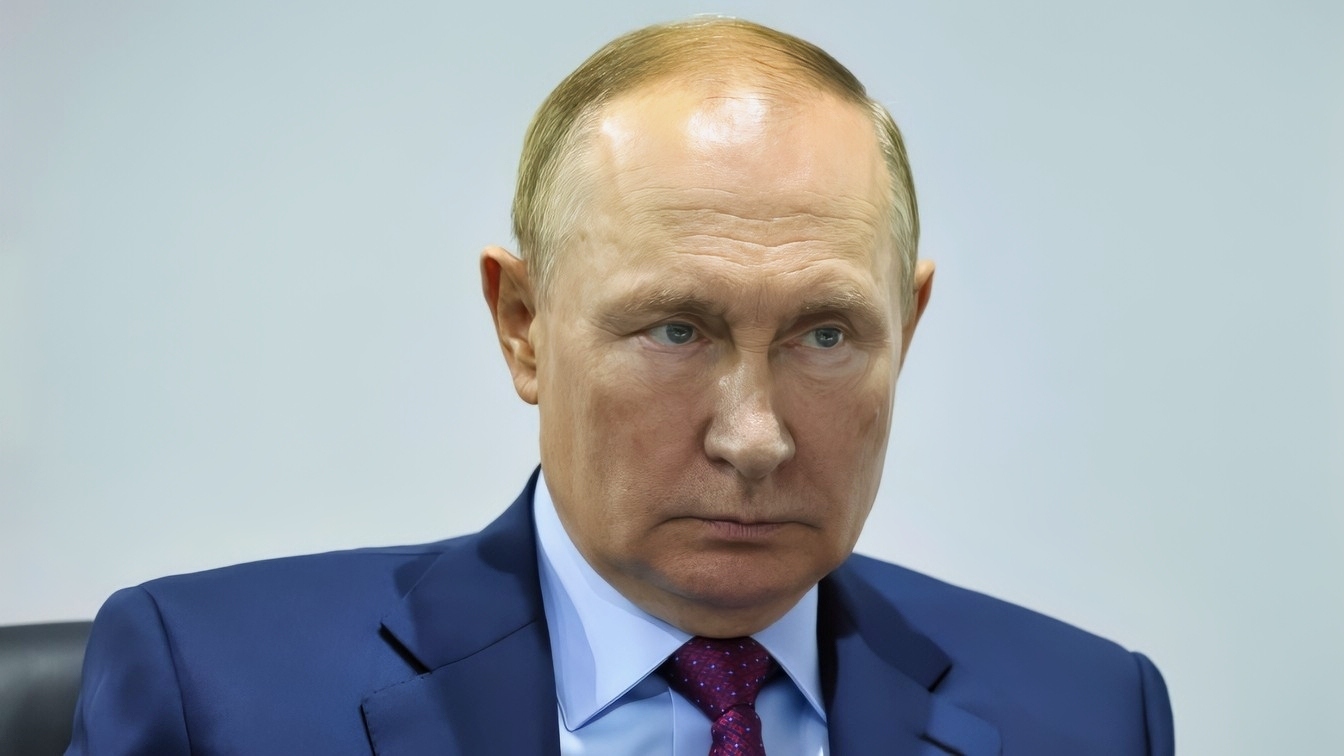
Russia’s dead can be buried quietly, in distant regions, with little fanfare and less press. It’s wounded cannot. After four years of grinding war in Ukraine, the larger share of Russia’s casualties are not the dead but the wounded, hundreds of thousands of men who survived and are coming home missing limbs, carrying shrapnel, blinded, burned, or broken in ways that will require care for the rest of their lives. They are the cost of the war that Vladimir Putin cannot censor, because they live in every region of the country, visible to their neighbors and their families. And the early signs suggest the Kremlin is less prepared to care for them than to make them disappear from the books. Russia has quietly tightened the rules for who counts as disabled and trimmed what it pays the wounded, moves that shrink the official numbers and save the state money. The question Moscow now faces is one no propaganda can answer: who pays for a generation of broken men, and what happens to a society when the state cannot?
The Casualties Putin Can’t Bury
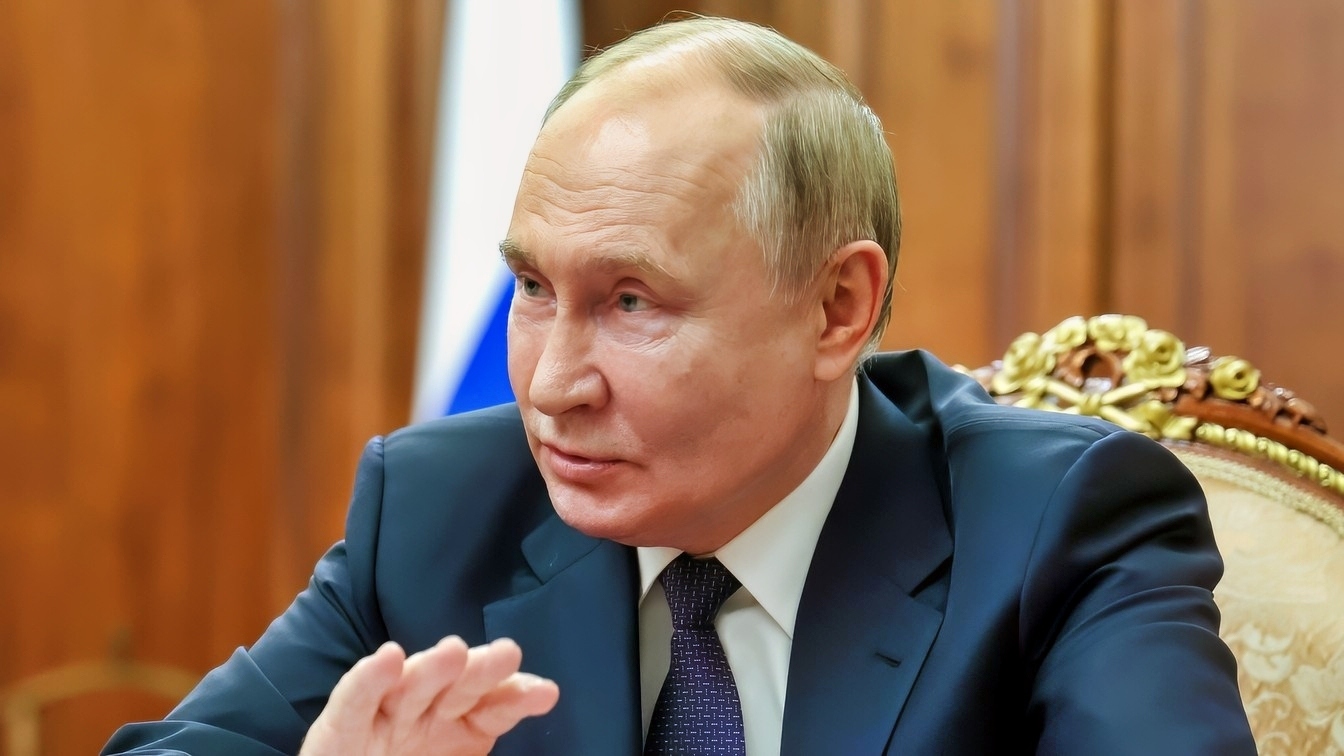
Vladimir Putin Back in 20224 Russian Federation Photo
Western and Ukrainian estimates, which Moscow disputes and which both sides have incentives to shape, put total Russian casualties well into the hundreds of thousands and, by many assessments, past a million since February 2022.
The figure that matters for what comes next is the ratio. In modern war, the wounded consistently outnumber the dead by several times over, which means that even on conservative numbers, Russia is facing several hundred thousand wounded veterans, a large share of them permanently disabled.
The scale is visible in Russia’s own statistics. According to figures from a NATO intelligence briefing reported in 2024, the number of Russian men aged 31 to 59 registered as disabled rose by about 30 percent, or roughly 507,000, in the single year after the invasion.
The injuries are severe. Russia’s own deputy minister of labor has said that the majority of disabled veterans have at least one amputation, and the wounded are returning with complex, long-term damage that will need decades of treatment. These men cannot be quietly interred in a regional cemetery. They are home, in wheelchairs and on prosthetics, in every part of the country.
Quietly Shrinking The Disabled Rolls
The Kremlin’s first response has been to manage the number down. In early April 2022, six weeks into the full-scale invasion, Putin’s government tightened its rules for recognizing disabilities, something it had done several times over the previous decade, just as the war began driving up military spending and straining the federal budget.
An investigation by RFE/RL’s Russian-language investigative unit, Systema, found the financial logic to be straightforward: tighter criteria mean fewer people qualify as disabled, and fewer qualifying means lower costs for the state.
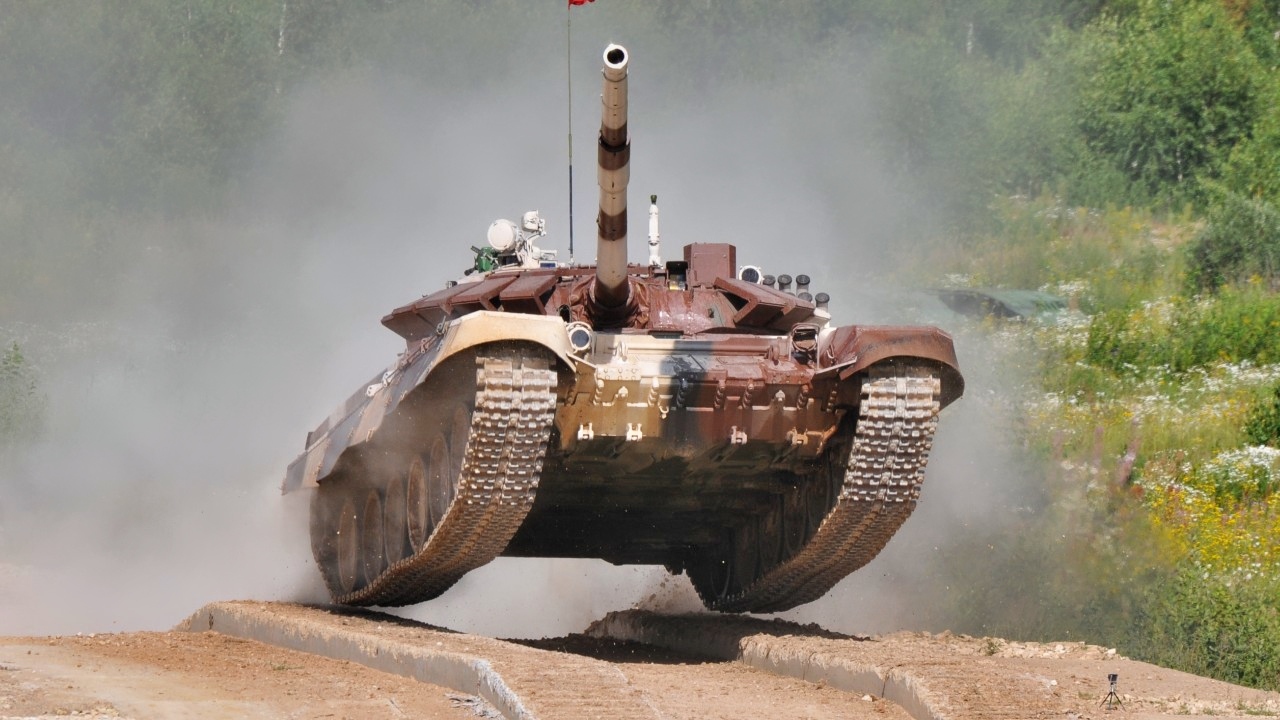
T-72 Tank from Russia. Image Credit: Creative Commons.
Systema estimated that reducing the disability rolls by roughly a million people could save Russia around 120 billion rubles, about $1.6 billion, every year. By the start of 2025, the official count of disabled people in Russia stood at a little over 11.1 million, roughly 2 million lower than in 2010, even as a war was actively wounding hundreds of thousands more. The optics and the budget are being managed simultaneously by redefining who is considered disabled in the first place.
Paying The Wounded Less
The second move has been to pay the wounded less than they were promised. For most of the war, any Russian soldier wounded in combat was entitled to a flat one-time payment of 3 million rubles. On November 13, 2024, Putin signed a decree that restricted those payments, reserving the full sum for soldiers whose injuries are deemed “severe,” dropping those classed as “minor” to 1 million rubles, and cutting injuries not on an official list to just 100,000.
After a backlash from pro-war milbloggers, Putin raised the severe-injury payment to 4 million rubles the next day, but only for wounds resulting in disability. The change hands enormous discretion to military medical commissions, and as Russian military analyst Kirill Shamiev noted, wounded soldiers will likely struggle to collect the higher sums because doctors can downgrade the severity of their injuries. The cost-cutting is easier to hide because the underlying data is secret. Russia has classified all data on the number of wounded and the categories of their injuries, which is one reason the analyst Alexander Golts has read the new payment tiers as the first serious signal that the Kremlin’s resources to wage the war are starting to run dry.
A Bill That Outlasts The War
Even with the trimming, the bill is staggering, and the one-time payments are only the beginning. Combining federal, regional, and insurance sums, the family of a soldier killed in Ukraine is entitled to at least 14 million rubles, and the payments to the wounded, before the recent tiering, ran to several million each.
Analysts writing for the respected publication War on the Rocks in 2024 estimated that one-time payouts to the wounded and the families of the dead had already reached roughly 2.3 trillion rubles, about 6 percent of the 2024 budget, and that the figure was certain to keep climbing as casualties mounted.
The one-time payments are also the cheap part. A disabled veteran needs care for decades, and the costs compound long after the fighting stops. Amputees need prosthetics that have to be refitted repeatedly over a lifetime.

Russian T-90 Tank. Image Credit: Creative Commons.
Beyond that come rehabilitation, disability pensions, and mental-health treatment, the last of which may be the most daunting of all to fund at scale. Those same analysts note that caring for this generation of wounded will be harder than after the Soviet wars in Afghanistan and Chechnya, because the scope of modern treatment is broader and the cost of equipment, drugs, and medical labor is far higher than it was a generation ago. The war could end tomorrow, and the bill would keep arriving for thirty years.
A State Unprepared To Deliver
The deeper problem is that money is not even the main bottleneck. The constraint is the Russian state’s ability to actually deliver medical and social services to disabled veterans scattered across a vast and unequal country.
According to an analysis by the Foreign Policy Research Institute, Moscow’s approach decentralizes responsibility for reintegrating war participants while centralizing the credit, pushing the financial and logistical burden onto regional governments and employers that often lack the resources, even as the Kremlin keeps tight control of the feel-good success stories in state media.
The result is steep regional inequality. A wounded veteran in a wealthy region can expect far better care than one in a poor region, and Russia’s recruits have come disproportionately from its poorer regions to begin with. Layered on top is a long history of neglecting veterans’ mental health, treating psychological injury as weakness, a pattern that ran through the Afghan and Chechen wars and that leaves programs for trauma among the first to be cut if oil revenue falls.
The Cohort The Kremlin Fears
All of these point to a problem the Kremlin appears to understand better than it lets on. Russian decision-makers, reportedly up to Putin himself, view the eventual return of hundreds of thousands of war participants as a potential source of domestic instability, fearing a surge in violent crime, organized crime, alcoholism, and drug use. The precedent they have in mind is their own.

T-14 Armata. Image Credit: Russian State Media.
Western analysts note that the Kremlin fears a new wave of Afghan syndrome, the disillusionment and violence associated with the “Afgantsy,” the Soviet veterans of Afghanistan who came home in the 1980s to a state that could not reintegrate them and who drifted into the criminal underworld of the 1990s.
This time the scale is larger. By some assessments, as many as 700,000 veterans may eventually return from Ukraine, roughly 100,000 more than came back from Afghanistan, and they are returning to a society that, for all the Kremlin’s hero imagery, is not especially eager to receive them and to a civilian economy that pays a fraction of what the front did. One legal analysis put it bluntly, concluding that by sending these men to war and planning so little for their return, the Russian government has created a time bomb for itself.
None of this is unique to Russia. Ukraine faces its own version of the same reckoning, with hundreds of thousands of its own wounded and a care system strained past its limits, and the lifetime cost of broken men is a feature of this war on both sides of the line.
But Ukraine is not the country quietly rewriting its disability rules and downgrading what it pays the wounded while classifying the numbers. That is Moscow’s particular answer to the problem, and it works only on paper.
The wounded are part of the war that Putin cannot make disappear. The dead can be buried far from the capital and left out of the official tallies, but the men in wheelchairs and on crutches live among their neighbors in every region; they are owed money the state is increasingly reluctant to pay, they need care the state is poorly built to deliver, and there are going to be hundreds of thousands of them for decades.
A government can censor a death toll. It cannot censor a generation of its own veterans, and the longer the war runs, the larger and more embittered that cohort grows.
About the Author: Harry J. Kazianis
Harry J. Kazianis (@Grecianformula) was the former Senior Director of National Security Affairs at the Center for the National Interest (CFTNI), a foreign policy think tank founded by Richard Nixon based in Washington, DC. Harry has over a decade of experience in think tanks and national security publishing. His ideas have been published in the NY Times, The Washington Post, The Wall Street Journal, CNN, and many other outlets worldwide. He has held positions at CSIS, the Heritage Foundation, the University of Nottingham, and several other institutions related to national security research and studies. He is the former Executive Editor of the National Interest and the Diplomat. He holds a Master’s degree focusing on international affairs from Harvard University.


