

Six time zones east of Moscow, in the Siberian region of Zabaikalye, the line of cars waiting to reach a working fuel pump stretched three kilometers. In some districts, garbage collection has stopped because the trucks have no diesel. In parts of the Pacific region of Khabarovsk, where the governor says about 40 percent of stations are dry, residents have reported fighting wildfires themselves because the fire trucks cannot be fueled. One woman in a village near the Chinese border said that when her husband fell into a diabetic coma, and she called an ambulance, the dispatcher told her to find her own car because there was no gasoline.
Those accounts, reported by RFE/RL’s Siberia. A reality service from inside Russia describes a fuel crisis that has spread far beyond Ukraine’s battlefields into the daily lives of ordinary Russians. It is the intended result of a sustained Ukrainian drone campaign against the refineries, pipelines, and fuel logistics that keep the country running and its war funded.
The question now is whether the pain reaches far enough up to change anything in the Kremlin.
A Fuel Crisis That Has Spread Across Russia Thanks to the Ukraine War
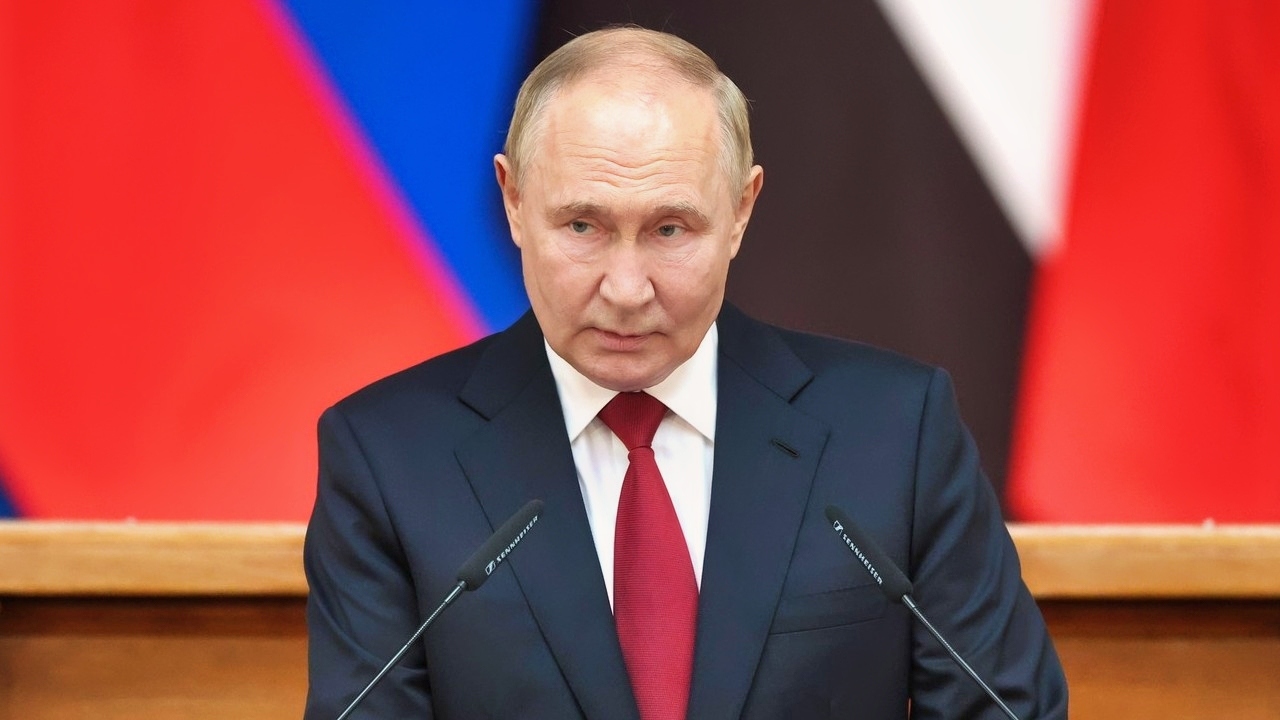
Putin July of 2024. Image Credit from Russian Government
The shortages are no longer a regional story. As of late June, dozens of Russia’s 83 federal regions were reporting either mandated government restrictions on fuel sales or shortages tied to supply problems, and at least 17 had imposed compulsory limits, according to RFE/RL. In Moscow, where complaints carry the most political weight, station operators, including Lukoil and Gazprom, have capped purchases, and the Moscow Times, an exiled Russian outlet, reported limits as low as 60 liters per driver in parts of the capital region. In occupied Crimea, authorities suspended civilian gasoline sales entirely and later declared a state of emergency.
The damage driving it is heavily concentrated in Russia’s refining sector. Ukraine has struck more than two dozen refineries since March, including eight of the country’s ten largest, and the single biggest supplier to the Moscow region, the Gazprom Neft refinery in the capital’s Kapotnya district, was hit twice this month and is expected to be offline for at least six months, with industry sources telling Reuters it may not resume production until 2027.
That plant alone supplies roughly 40 percent of Moscow’s fuel and about 70 percent of the gasoline burned in the capital region.
Estimates of the nationwide hit vary by source. The International Energy Agency and the Carnegie Russia Eurasia Center put more than 20 percent of Russia’s refining capacity offline, Reuters has cited figures closer to a quarter of capacity and over 30 percent of gasoline output, and the research firm Energy Intelligence estimated as much as a third, with refining runs at their lowest in more than two decades.
What Ukraine Is Trying to Achieve
Kyiv has been open about the goal. Ukraine’s long-range strikes are aimed at cutting the hard-currency revenue Russia earns from exporting hydrocarbons and at squeezing the fuel that moves its economy and its army, and the campaign has shifted over the year from export terminals toward the refineries and pipelines that produce gasoline and diesel.
President Volodymyr Zelensky has taken to calling the strikes “long-range sanctions,” and on June 29, he posted a mocking video address suggesting that Russians waiting in fuel lines should consider what the war has cost them. A day earlier, his forces hit refineries in the Krasnodar and Yaroslavl regions, the latter more than 400 miles from the Ukrainian border.
The strategy carries a logic beyond the immediate disruption.
Sergei Vakulenko, an energy analyst at the Carnegie Russia Eurasia Center, described the Russian oil industry’s resilience as dangerously stretched, even as he cautioned that the sector is battered but not broken. Russia has begun importing gasoline, asked Kazakhstan for tens of thousands of tons of fuel, and is weighing a total ban on diesel exports to keep enough at home, all signs of a supply system under real strain rather than a passing inconvenience.
The Pressure Is Reaching the Kremlin
For most of the war, Vladimir Putin has avoided discussing Ukraine’s deep strikes in any detail.
That changed in recent days. In an interview with state television on June 28, he conceded that the attacks were having an effect while trying to limit the alarm. “Of course, they’re creating problems; that’s obvious,” he said, before adding that the shortages were “not critical” and that damaged facilities were being repaired quickly. Analysts at the Institute for the Study of War assessed that the remarks acknowledged the strike campaign’s impact but were meant to promote a facade of stability.
The economic cost is becoming harder to hide. Alexey Zabotkin, a deputy governor of Russia’s central bank, told reporters that several months of the fuel sector running below capacity would probably subtract from this year’s economic output, with the bank already forecasting growth of just 0.5 to 1.5 percent.
That sits atop a war economy under broader strain, with a budget deficit that has roughly doubled over the past year and rising tax burdens on the population. The fuel lines have also done something the war’s distant battlefields rarely do: make the conflict a daily, personal grievance for Russians far from the front. One Khabarovsk resident told RFE/RL it was the first time he had heard ordinary working people, not just the intelligentsia, openly cursing the country’s leadership.
Russia Is Still Advancing, Slowly
None of this has yet bent the war in Ukraine’s favor, and that is the hard counterpoint to the crisis at home. Russian forces are still pressing forward in the east, though at a grinding pace and enormous cost.
The Center for Strategic and International Studies has measured the Russian advance toward Pokrovsk at roughly 70 meters a day, slower than the Allied advance at the Battle of the Somme, and calculated that Russia has taken less than 1.5 percent of Ukrainian territory since the start of 2024.
The most recent battlefield accounting is murkier still. The Institute for the Study of War assessed that between December 2025 and May 2026, Russian forces gained or infiltrated about 40 square kilometers while losing control of roughly 281, with the two sides’ positions interspersed and the expanding drone “kill zone” making it increasingly difficult to cleanly measure who holds what.
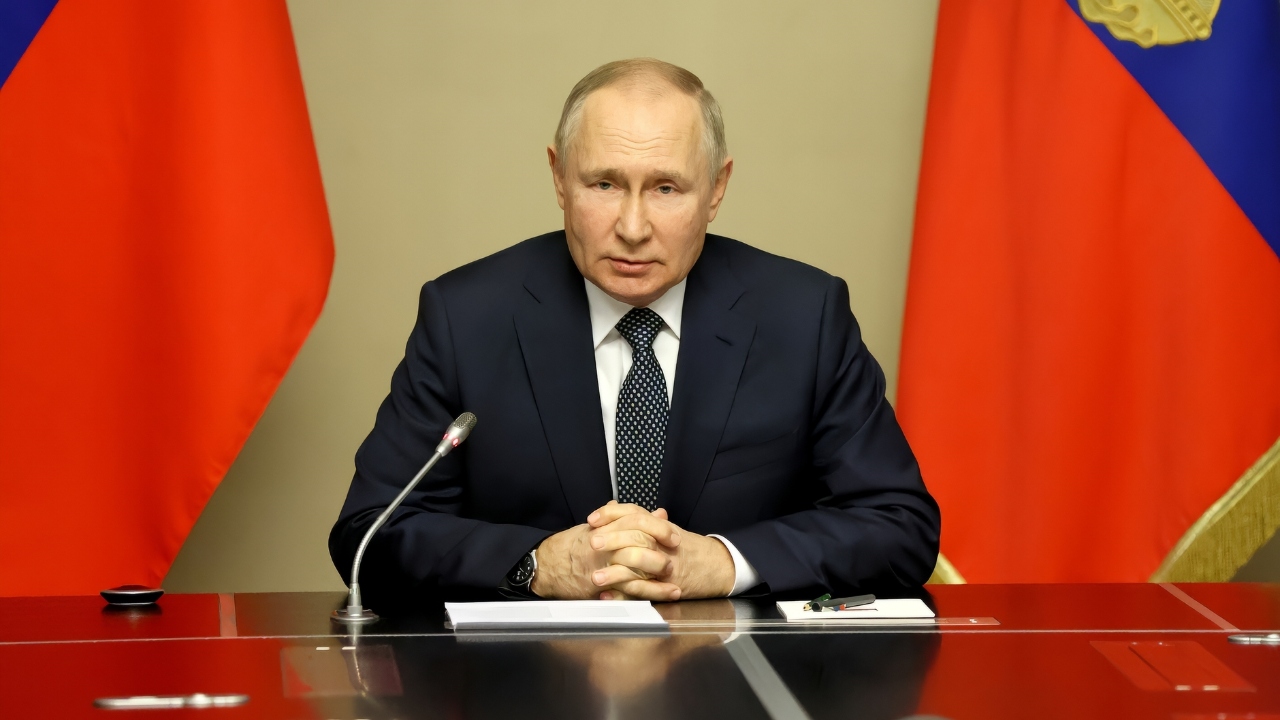
Putin November 2022. Image Credit: Creative Commons.
That is the balance Kyiv is betting against. The drone campaign has imposed visible economic damage, forced rationing across much of the country, and turned fuel into a political problem inside Moscow, all without Ukraine putting a soldier on Russian soil. Russia’s own forces have spent years bombarding Ukraine’s power grid and cities, leaving millions of civilians throughout last winter in cold and darkness, and the campaign inside Russia is in part an answer to that.
It has not, so far, forced Putin to change course, and the front continues to advance meters toward him. Whether sustained pressure on refineries and revenues eventually narrows his options, or whether the Kremlin absorbs the cost as it has absorbed its battlefield losses, is the question the rest of this year will answer.
For now, the clearest measure of the campaign’s reach is the one playing out at gas stations from Crimea to the Pacific coast, where Russians are waiting in lines that have become, for many, the most tangible sign of a war their government still insists is going according to plan.
About the Author: Harry J. Kazianis
Harry J. Kazianis (@Grecianformula) was the former Senior Director of National Security Affairs at the Center for the National Interest (CFTNI), a foreign policy think tank founded by Richard Nixon based in Washington, DC. Harry has over a decade of experience in think tanks and national security publishing. His ideas have been published in the NY Times, The Washington Post, The Wall Street Journal, CNN, and many other outlets worldwide. He has held positions at CSIS, the Heritage Foundation, the University of Nottingham, and several other institutions related to national security research and studies. He is the former Executive Editor of the National Interest and the Diplomat. He holds a Master’s degree focusing on international affairs from Harvard University.


