

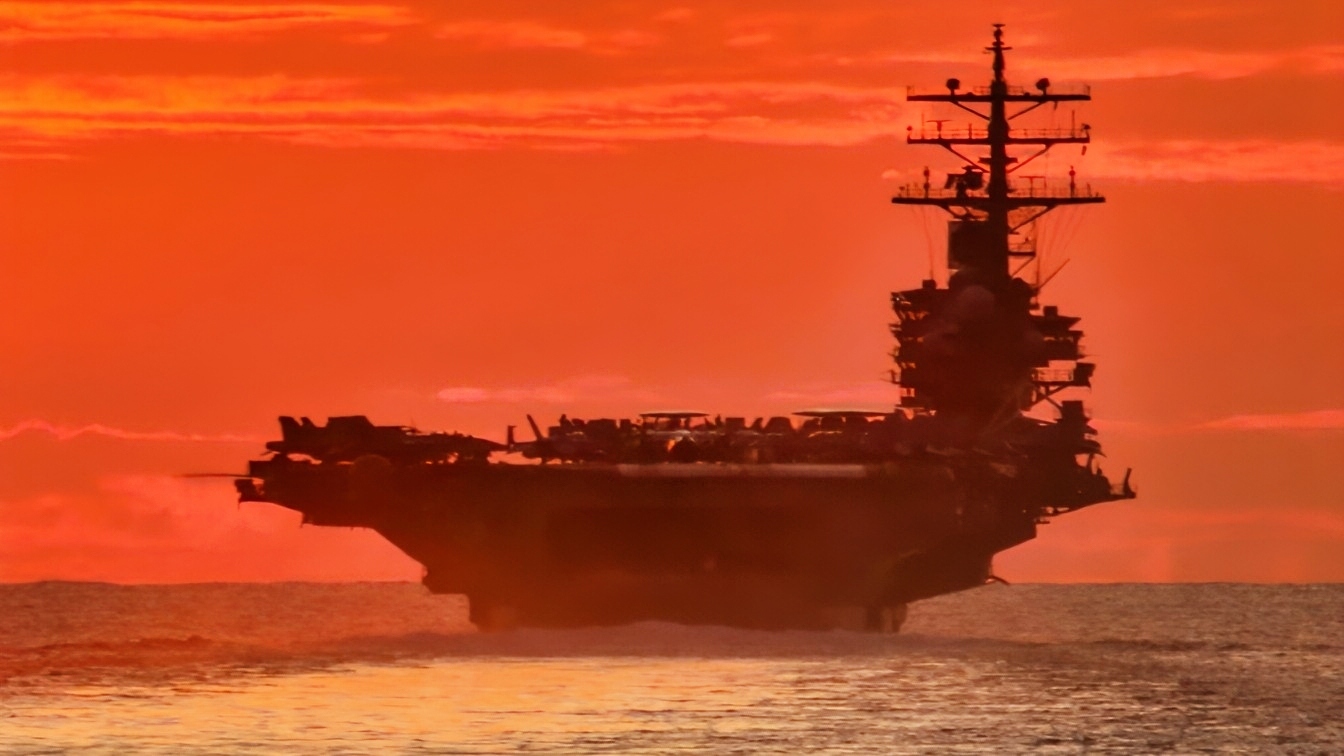
Iran Attacks Three Ships in the Strait of Hormuz: There is a pathway to peace in the Middle East going on, but someone forgot to tell Iran.
The country ordered an attack on commercial shipping overnight on July 6, and at least two drones or missiles were fired at the vessels in the Strait of Hormuz. Three ships sustained extensive damage.
Thankfully, this strike caused no casualties. The incidents occurred about eight nautical miles east of Limah in Oman. Flames bellowed from the Qatari-flagged ship Al Rekayyat.
“Mayday mayday mayday. This is vessel Al Rekayyat, LNG vessel Al Rekayyat. We are being hit by drones on the port side, top of engine room,” the Al Rekayyat’s captain said in an emergency plea for help that Reuters reported. “Status: engine room fire and full of smoke. Unable to assess further damage.”
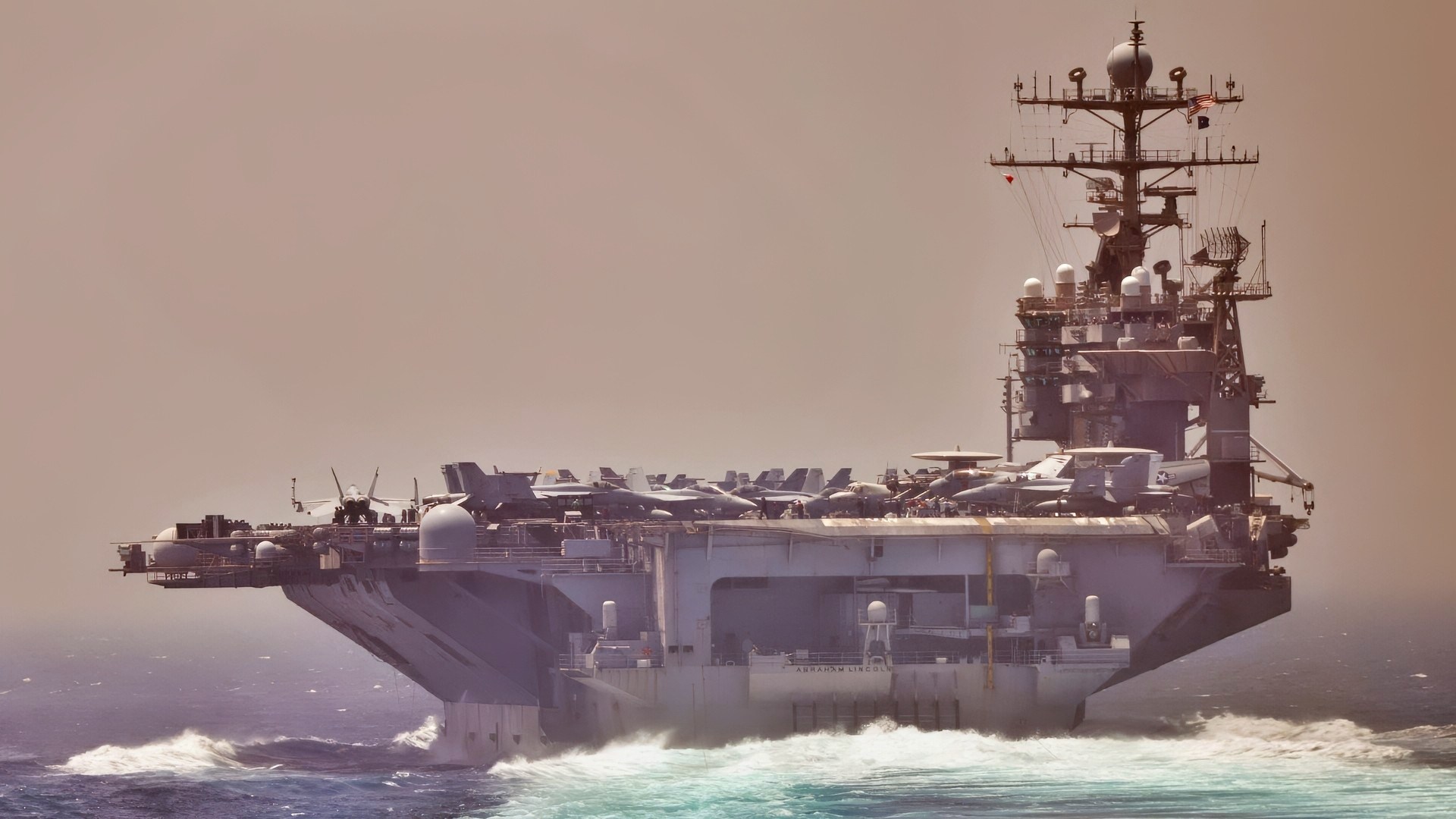
120501-N-WO496-013
STRAIT OF HORMUZ (May 1, 2012) The aircraft carrier USS Abraham Lincoln (CVN 72), left, and the guided-missile cruiser USS Cape St. George (CG 71) transit the Strait of Hormuz. Abraham Lincoln and Cape St. George are deployed to the U.S. 5th Fleet area of responsibility conducting maritime security operations, theater security cooperation efforts and support missions as part of Operation Enduring Freedom. (U.S. Navy photo by Mass Communication Specialist 3rd Class Alex R. Forster/Released)
Another ship, the Saudi-flagged Wedyan oil tanker, was also hit by a projectile, but no one was hurt, and the tanker did not leak any hydrocarbons into the water.
Qatar Said the Attack Is Unacceptable
Qatar’s foreign ministry said the attack violated international law. Spokesperson Majed Al Ansari warned Tehran that the strikes should not continue.
Al Ansari criticized Iran’s action, deeming it an “unacceptable attack on the security and safety of international maritime navigation.”
Iran’s IRGC Is Spoiling for a Fight
The Islamic Revolutionary Guard Corps led the attacks on the ships. Meanwhile, the Organization of the Petroleum Exporting Countries plus (OPEC+) announced it will increase oil supply in the region to curb high prices.
Effect on Oil Prices
West Texas Intermediate Crude was $70.19 at 12:30 pm ET on July 7, up about 2.3 percent in the last 24 hours. The average price of gasoline in the United States was $3.79 on Tuesday.
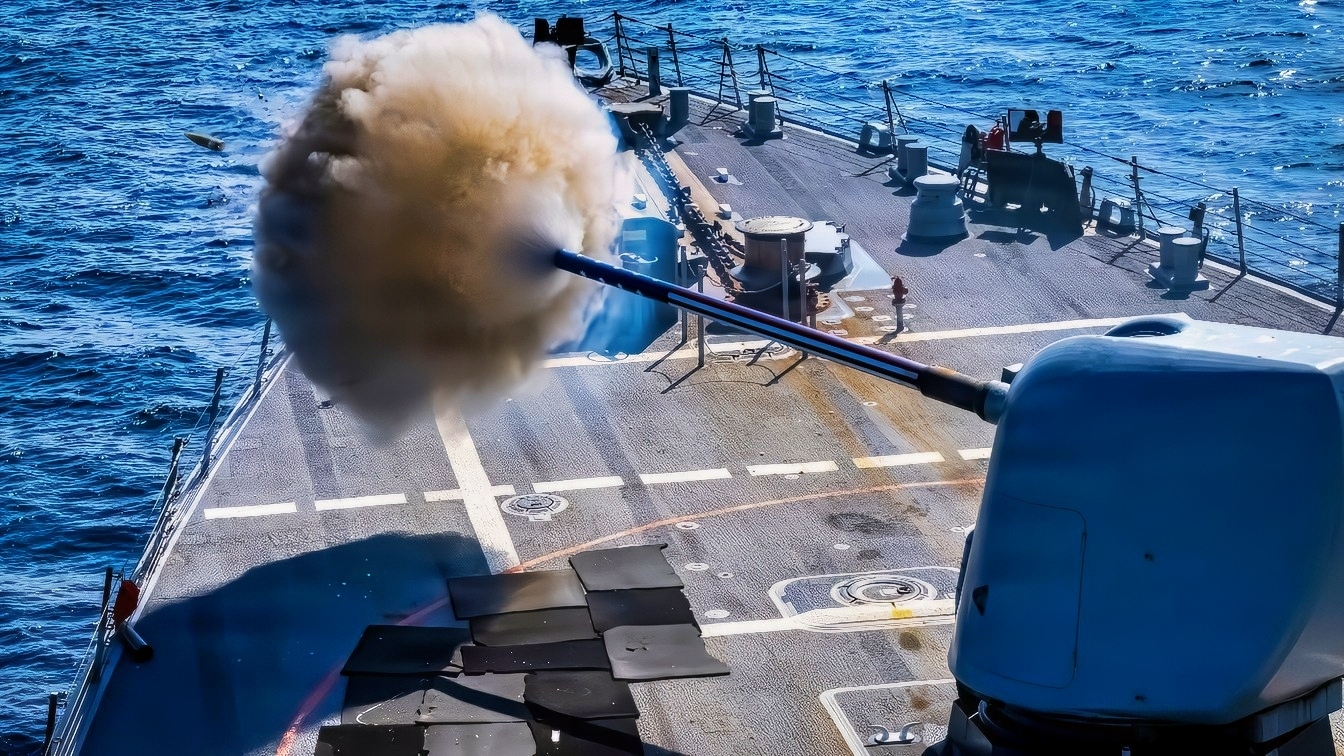
PACIFIC OCEAN (April 27, 2026) U.S. Navy Arleigh Burke-Class guided-missile destroyer USS John Paul Jones (DDG) 53, fires its Mk.45 5-inch deck cannon during a live fire exercise, April 27, 2026. John Paul Jones, part of the Theodore Roosevelt Carrier Strike Group, is underway in the U.S. 3rd Fleet area of operation conducting advanced training to bolster strike group readiness and capability. (U.S. Navy photo by Mass Communications Specialist 2nd Class Ryan Holloway)
Trump Is Losing Patience
Iran has said that it still controls the Strait of Hormuz and vowed that more ships could be hit. President Donald Trump said July 6 that the United States would either reach a comprehensive agreement with Iran or “finish the job” with more military strikes.
Will the Ceasefire Hold?
Peace talks concluded last week without a broader agreement to halt Iran’s nuclear program or for Tehran to relinquish control over the Strait of Hormuz. There is supposed to be a 60-day ceasefire between the United States and Iran, with the promise that there would be no further attacks on international shipping in the strait.
Time to ‘Finish the Job’
“We’re either going to make a deal, or we’re going to finish the job. OK. And it won’t be tough to finish the job. I’d rather make a deal, because I don’t want to affect 91 million people,” Trump told journalists in the White House.
“We can knock down their bridges in one hour, we can knock out their energy supply…. They don’t have any money now. We haven’t given them any money,” the president said.
Iran Believes Trump is ‘Delusional’
Iran’s Mohammad Baqer Zolqadr, from the country’s national security council, said Trump was acting “delusional.”
“Iranians are unfamiliar with the language of threats. So speak to the Iranian people with respect; otherwise, we will respond in another language,” Zolqadr said in comments on state-run media outlets, Reuters noted.
What Will Happen Next?
The latest tanker strikes are placing the peace framework in jeopardy. Both sides are growing frustrated. Iran continues to bully shipping, and the United States responds with aggressive threats. It is not clear what will happen next in the talks. New negotiations will probably not be held in person, as representatives will likely not want to be in the same room.
Next steps are uncertain. It seems that both sides will have to start from scratch, as the talks are likely to stall again. Regional actors are fed up with Iran’s violent actions.
Who Is In Charge In Iran?
It is also unclear which entity in Iran is leading the peace deliberations. The IRGC is full of hardliners who are not willing to give up their military options. The foreign ministry and the national security council appear to be acting in step with the IRGC now, but the guards could be seen as spoilers to lasting peace. The IRGC may be acting alone to scuttle talks.
Trump Looks To NATO to Synchronize Policy Among Allies
Trump is in Turkey for the NATO summit. Iran is likely seeking to disrupt the proceedings to prevent the Americans from marshaling support from allies during the peace process.
A long funeral is being held for Ayatollah Ali Khamenei, the supreme leader who died on the first day of the war. The Iranians are finding newfound strength to resist giving up their nuclear program and are steadfastly controlling the Strait of Hormuz.
The situation in the Middle East seems to be changing by the hour. Iran and the United States continue to struggle for the upper hand during the negotiations. The latest strikes on commercial shipping have thrown the negotiations into disarray once again, and Iran may have a renewed emphasis on violence rather than peace.
About the Author: Dr. Brent M. Eastwood
Author of now over 3,500 articles on defense issues, Brent M. Eastwood, PhD, is the author of Don’t Turn Your Back On the World: A Conservative Foreign Policy and Humans, Machines, and Data: Future Trends in Warfare, plus two other books. Brent was the founder and CEO of a tech firm that predicted world events using artificial intelligence. He served as a legislative fellow for US Senator Tim Scott and advised the senator on defense and foreign policy issues. He has taught at American University, George Washington University, and George Mason University. Brent is a former US Army Infantry officer. He can be followed on X @BMEastwood.


