

The Commander of Ukraine’s Unmanned Systems Forces, Robert Yosypovych “Magyar” Brovdi, announced on 8 July that his forces had struck 21 Russian-flagged vessels in the Sea of Azov over a period of 72 hours. According to Magyar, nine Russian tankers were hit by unmanned aerial vehicles (UAVs) overnight on 8 July, adding to 10 attacks reported on 7 July and two reported on 6 July.
The ships were all operating in the Sea of Azov and were taken out as part of Ukraine’s attempts to choke off fuel supplies in Russian-occupied Crimea. One ferry was also hit, along with one bulker and 19 tankers, the commander said.

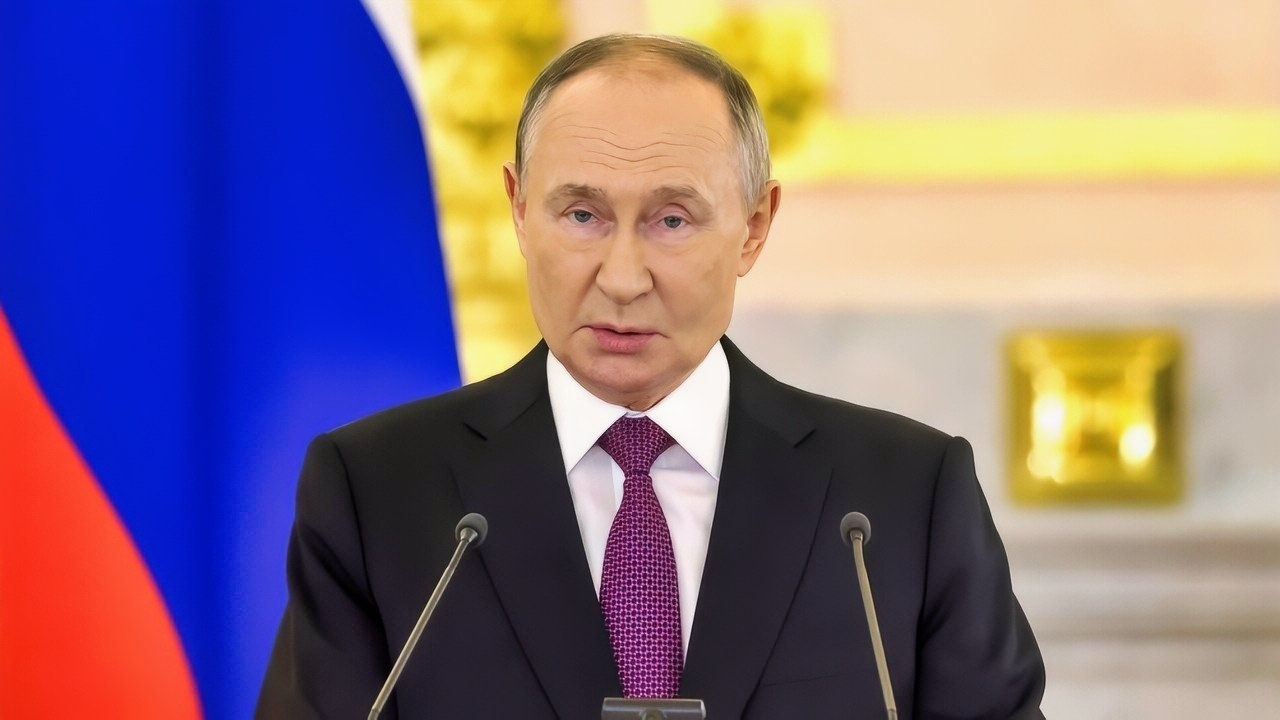
Putin in June 2016 Image Credit Russian Federation Photo
Then, overnight on 9 July, Ukraine claimed 14 more drone strikes on Russian ships, for a total of 35 over a four-day period, although there are still some minor differences as to the overall total. As today’s London Daily Telegraph podcast detailed, “Ukraine’s Ministry of Defense says 36, the Kyiv Independent counts 35 and Dom [Dominic Nicholls, the Telegraph Defense Editor] says 31.”
These attacks on vessels represent a significant escalation in strikes on Russian merchant shipping but are consistent with the strategy Kyiv is now employing. The goal is to choke off Crimea from any logistical support to the point where the presence of Moscow’s military on the peninsula becomes untenable.
Madyar’s Birds and Dodgy Russian Registration
The 414th Unmanned Strike Aviation Brigade, known as “Magyar’s Birds”, said on 9 July that it had hit 12 Russian tankers, one dry cargo ship, and a tugboat overnight. They also provided more details about some of the 35 other ships reportedly struck this week.
The brigade said that among the targets of these latest attacks was a Russian-flagged tanker, the Chelsea-6. The registration data and other details on the ship illustrate the degree to which the Russian operations of its shadow fleet are somewhere between opaque and a maritime version of an illicit shell game.
Information in the Equasis database indicates that the Chelsea-6 was built in 2008 and registered as a Palau-flagged general cargo ship. AIS transponder data show that its last known location, as reported by the electronic monitoring system, was five days ago in the southern Black Sea.
Ships operating in the Black Sea and the Sea of Azov are known for turning off their AIS emitters for “security reasons,” which usually means avoiding their movements from being tracked. The other vessels that the Ukrainian drone force claims to have hit were the Aura, Ilya Repin, Mercury, Galiasgar Kamal, Venus III, Penelope, and the tugboat Alfeo. The details of five more vessels are still being confirmed.
Sanctioned and Targeted
Even before the nine attacks on 8 July were reported, Ambrey, a prominent global maritime security and intelligence firm, said that the dozen attacks on 7 July alone represent the highest number of vessels targeted within a 48-hour period since the war in Ukraine began in 2022.
Ambrey frequently provides data, risk assessments, and expert commentary for articles and podcasts in Seatrade Maritime News.
“The Sea of Azov strikes this week are more than another development in the Black Sea conflict—they represent a significant escalation in the Ukraine maritime security threat and a genuine shift in how this war is being fought at sea,” said Ambrey.
“Ambrey assesses a realistic possibility of reciprocal Russian action against Ukraine-linked shipping in the coming days,” it added.
Magyar also provided data on eight of the vessels hit in the initial attacks. After cross-referencing them with the Equasis database, the ship names at the time they were attacked appear to correspond with:
2011-built 7,100 dwt tanker Venus III
2004-built 5,420 dwt tanker Sanar-1
2012-built 7,000 dwt tanker Sanar-17
2010-built 7,500 dwt tanker Teti
2013-built 7,013 dwt tanker Aleksey Savrasov
2010-built, 7,500 dwt tanker Penelope
2006-built, 5,600 dwt tanker Climene
2002-built 1,635 dwt dredger Ivan Cheremisinov
These and other identified vessels have been subject to international sanctions by jurisdictions including Ukraine, the EU, and the US, or have been identified as operating for companies subject to similar sanctions. These ships have almost all been identified as operating to transport sanctioned Russian oil.
“Sanctions status alone was likely not the determining factor in target selection; the vessels’ role in sustaining fuel deliveries to Crimea was likely the primary consideration,” said the Unmanned Forces commander.
In an example, the turnabout is fair play; videos published of the Ukraine attacks show a predilection for targeting their drones not on the ships’ propulsion or communications systems, but instead on the bridges and accommodation blocks of ships
According to Ambrey, this is an exact parallel to the approach Russia has practiced. The Russian objective has been to ensure the highest possible number of casualties among the ships’ crew and passengers.
About the Author: Reuben F. Johnson
Reuben F. Johnson has thirty-six years of experience analyzing and reporting on foreign weapons systems, defense technologies, and international arms export policy. Johnson is the Director of Research at the Casimir Pulaski Foundation. He is also a survivor of the Russian invasion of Ukraine in February 2022. He worked for years in the American defense industry as a foreign technology analyst and later as a consultant for the U.S. Department of Defense, the Departments of the Navy and Air Force, and the governments of the United Kingdom and Australia. In 2022-2023, he won two awards in a row for his defense reporting. He holds a bachelor’s degree from DePauw University and a master’s degree from Miami University in Ohio, specializing in Soviet and Russian studies. He lives in Warsaw.


