

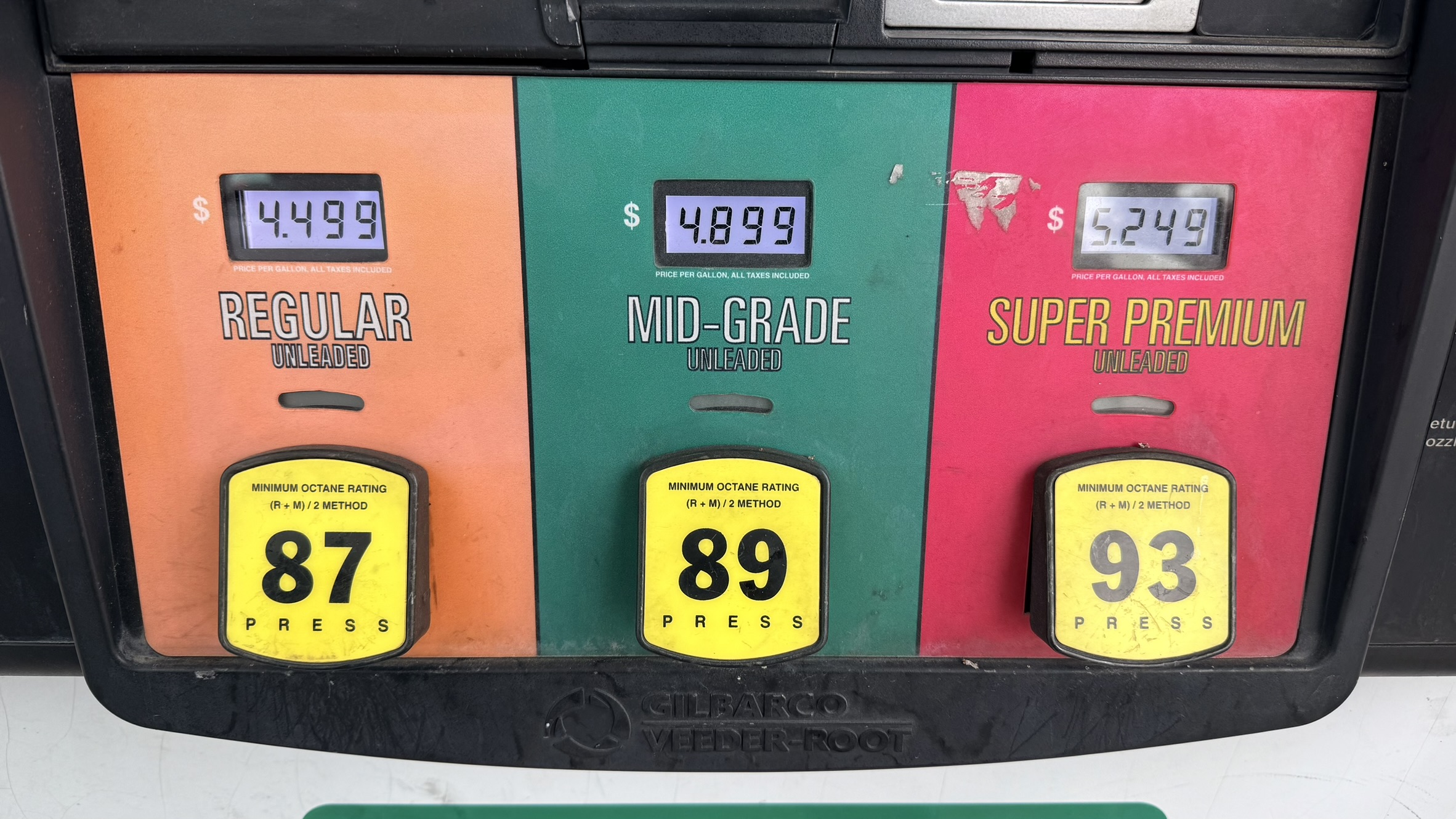
The renewed hostilities between the U.S. and Iran could disrupt the International Energy Agency’s (IEA) forecast of a significant oil market surplus next year, it said on Friday.
The IEA recently forecast that global oil markets will shift from a major deficit in 2026 to a massive supply surplus in 2027, driven by a recovery in production in the Middle East.

President Donald J. Trump signs executive orders, Friday, May 9, 2025, in the Oval Office. (Official White House Photo by Molly Riley)
Global supply is projected to surge by 8 million barrels per day (bpd) to 110.3 million bpd.
That was due to the signing of the Memorandum of Understanding (MoU) between the US and Iran and the resumption of shipping of oil, gas, and liquefied natural gas through the Strait of Hormuz, although the number of ships passing through was not at the same level as before the conflict.
The IEA was basing the forecast on the assumption that a resumption of oil flows would allow countries to replenish their strategic oil reserves, which were tapped earlier this spring to address fuel shortages and keep prices down.
Reuters reported that the IEA said global oil supply rose by 4.1 million bpd in June, but remained 9.4 million bpd below pre-conflict levels.
Higher Oil Production Estimates Were Based On Hormuz Traffic
The IEA predicted that supply will expand by 7.5 million bpd in 2027 after a 3.7 million bpd contraction this year, but that is contingent on continued and improved tanker traffic through the Strait of Hormuz.
“An escalation in hostilities on 7-8 July, however, clouds the outlook and could upend the forecast that sees the market flipping to a surplus next year,” it said, adding that a lasting peace agreement between the US and Iran is a “must” for oil markets to normalize.
The IEA’s 2027 forecast that supply will outweigh demand by 4.62 million bpd next year, up from an 860,000 bpd deficit this year, was based on the assumption that oil producers can restart drilling and pumping and refiners can resume normal product shipments through the Strait.
President Donald Trump participates in the swearing-in ceremony for U.S. Ambassador to China David Purdue, Wednesday, May 7, 2025, in the Oval Office. (Official White House Photo by Molly Riley)
Iran Approaches Pakistan To Signal Willingness To Resume Talks
The United States was alternating airstrikes with pauses to keep diplomatic channels open and avoid further escalation, according to sources.
The sources told American news media that the US military remains fully prepared to launch additional strikes if the situation requires it.
The United Nations has also voiced alarm, warning that the renewed clashes risk derailing any diplomatic progress and could carry catastrophic consequences for the region and the global economy if they escalate any further.
The push to resume talks has gained momentum, with regional players also seeking to revive them. Sources told CNN that Qatar and Pakistan are working to bring Washington and Tehran back to the negotiating table.
The DPA news agency confirmed this, quoting sources in Islamabad who said that Iran has asked Pakistan to signal to the US its willingness to negotiate.
Discussions were reported to have taken place through various channels, including a meeting between Iranian Foreign Minister Abbas Araghchi and Pakistan’s Chief of Army Staff Asim Munir that lasted late into Thursday night.
Strait Traffic Is Down, But Analysts State “The World Is Adapting”
Although the United States and Iran have resumed fighting and conducting attacks on one another, which has resulted in traffic in the Strait of Hormuz grinding to a near halt, the markets are remaining quite steady on Friday.
“Hormuz confidence erodes again,” Kpler, a data and tracking service, wrote, noting that crude oil is still making passage. But the attacks and “a decline in forward tanker positioning have weakened confidence in the reopening.”
Oil futures saw a quick price bump this week as news of the attacks broke, but markets quickly recovered and posted small gains on Thursday.
Oil prices dropped slightly on Friday in Asian trading, with global benchmark Brent crude futures for September delivery easing to $75.85 per barrel on Friday morning, while U.S. West Texas Intermediate crude futures were at $71.90 per barrel.
Many market analysts believe that the world has already adapted to withstand energy shocks from the Middle East.
“The broader economic damage could be smaller than feared,” Dan Alamariu of Alpine Macro, an investment research firm that is part of Oxford Economics, wrote on Thursday regarding issues in the Strait of Hormuz. “The world has adapted.”
The IEA said its current market outlook still assumes that a ceasefire will eventually be agreed to and that shipping through the Strait of Hormuz will gradually return to normal.
However, it cautioned that any prolonged disruption would significantly alter the global balance between oil supply and demand in the months ahead.
About the Author: Steve Balestrieri
Steve Balestrieri is a National Security Columnist. He served as a US Army Special Forces NCO and Warrant Officer. In addition to writing on defense, he covers the NFL for PatsFans.com and is a member of the Pro Football Writers of America (PFWA). His work was regularly featured in many military publications.


Hujjathullah M.H. Babu Sahib
July 10, 2026 at 1:24 pm
The ceasefire yo-yo is apparently riding the oil-prices thread. This is easily understandable when taken together with the ships stranded by the Hormuz compliance bottleneck. But what shouldn’t be as easily digested is the needlessly attendant strategic assets targeting and collateral blood-lettings. When what is oily is also bloody, it turns rather fishy and we know this is equally true figuratively as well as literally !