

Just a few weeks ago, transit through the Strait of Hormuz was starting to increase. Now, traffic has slowed back to a crawl as the war between the U.S. and Iran heats up once again.
Just as oil prices have come down, Iran launched a series of attacks against civilian tankers in the Strait, which prompted the U.S. to launch a series of retaliatory strikes against the IRGC.

At sea (Mar. 1, 2007) – Capt. Craig “Animal” Williams (front) in a F/A 18C Hornet (front) and Capt. Richard “Rhett” Butler (back) in an F/A 18C Hornet look up for a photo as they fly over USS Ronald Reagan (CVN 76). Capt. Williams, a 22-year Naval Aviator who graduated from the United States Naval Academy, was relieved as Commander, Carrier Air Wing Fourteen (CVW-14) by 21-year Naval Aviator, Capt. Butler, a graduate of the University of Kentucky during an aerial change of command ceremony. The Ronald Reagan Carrier Strike Group is currently underway in the Pacific Ocean on a surge deployment in support of U.S. military operations in the Western Pacific. Official U.S. Navy photo by Lt. Cmdr. Tam Pham
(RELEASED)
The ceasefire between the U.S. and Iran, which was admittedly quite fragile to begin with, is now completely over.
The Strait of Hormuz remains a heavily contested zone, with both sides fighting for control, and traffic through the vital chokepoint has come to a standstill.
According to reports, no large vessels have crossed the Strait using the U.S.-approved route while broadcasting their location since Tuesday.
The few ships transiting via the Southern route along the Oman coastline have also come to a standstill following Iranian attacks. Lloyd’s List Intelligence, a prominent maritime tracking agency, presented these findings in a recent report on maritime traffic in the Middle East.
“Lloyd’s List Intelligence data shows no vessels above 10,000 dwt [deadweight tonnage] have transited the so-called Southern Highway with their AIS [automatic identification system] switched on since July 7, although at least two ships are believed to have crossed dark,” the maritime data company said.
On Wednesday, it was reported that only five ships were tracked crossing the Strait, a far cry from the 45 transits recorded on Monday, July 6. Prior to the war, around 130 vessels transited the valuable maritime route per day.

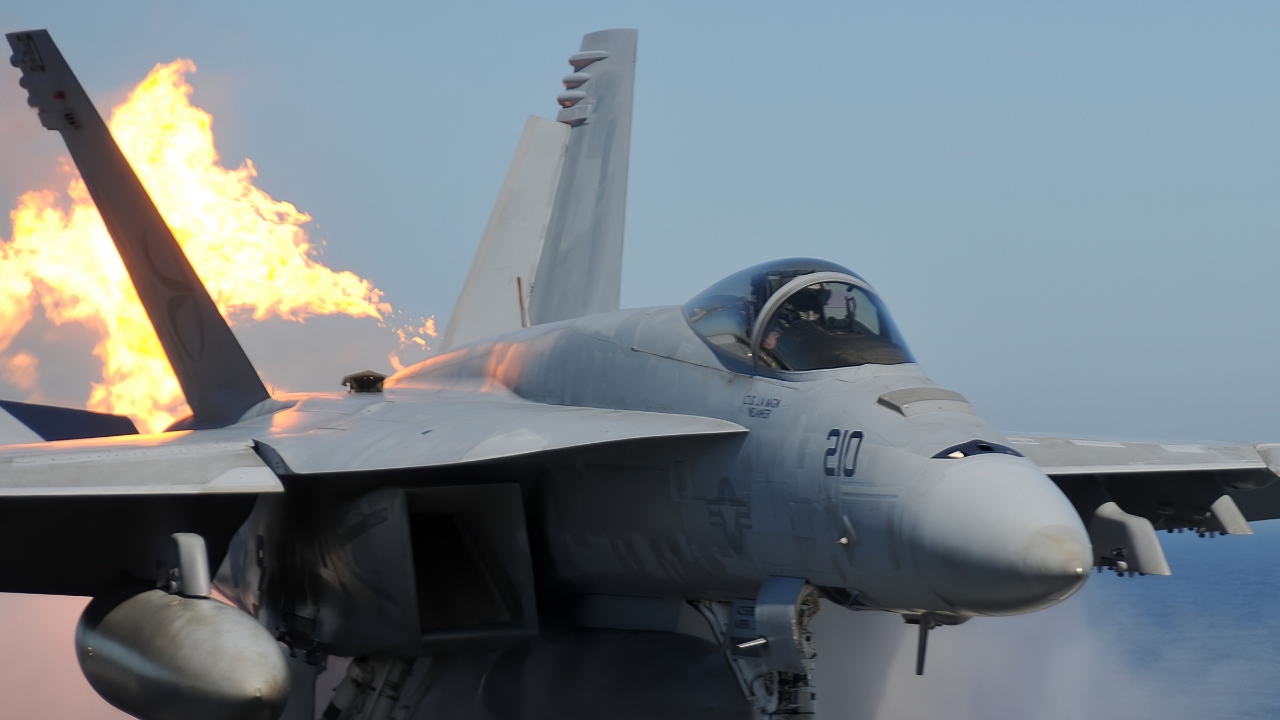
An F/A-18 Super Hornet from Naval Air Station Oceana, Virginia, performs an aerial demonstration over Rickenbacker International Airport, Ohio, June 16, 2024, as part of the Columbus Air Show. This year’s event featured more than 20 military and civilian planes, including a KC-135 Stratotanker from the 121st Air Refueling Wing, which served as the base of operations for military aircraft participating in the show. (U.S. Air National Guard photo by Senior Airman Ivy Thomas)
In response to recent maritime attacks, the UK Maritime Trade Operations (UKMTO) stated in its recent threat assessment of the region that it advised commercial tankers to “transit with caution,” as the situation continues to deteriorate. The current threat level, according to UKMTO, remains severe, with a high risk of attacks.
Other experts fear that continued Iranian attacks could have devastating long-term impacts on global shipping and the global economy as a whole.
“The great risk is that as the crisis prolongs and start-stop dynamics become the perceived norm, shipping may begin to make more sustained decisions to prioritize other ports and routes,” John Bradford, executive director of the Yokosuka Council on Asia Pacific Studies, a nonprofit dedicated to the study of strategic and diplomatic issues in the region, told news outlet Al Jazeera.
“Iran has the ability to strike ships across the Persian Gulf, through the Strait of Hormuz, and out into the Gulf of Oman,” he said. “That exposes all regional shipping to risk.”
Despite the attacks on shipping and the recent retaliatory strikes by the U.S., oil prices have not risen as much as expected. Brent Crude and WTI Crude peaked on July 8th, after the initial attacks, but have remained relatively stagnant and have even declined slightly.
The reason prices haven’t spiked further is that there is “confidence on the part of the market that the situation will stabilize,” said Bart Melek, global head of commodity strategy at TD Securities in Toronto, Canada. However, with this recent round of hostilities, the market is bound to respond as shipments grind to a halt in the Strait of Hormuz.
“With that, we see Brent moving $10-$15 higher into the summer, as inventories of oil and product wane, stressing supply chains,” Melek added.
Crude oil is not the only industry affected by the war in Iran. Diesel fuels and refined petroleum have also seen major price hikes as a direct result of the war in the Middle East.
June Goh, senior oil market analyst at Sparta Commodities, explained that prices were further exacerbated by attacks on Russian fuel refineries by Ukrainian drones.
“Diesel, in particular, is grappling with both the loss of supply from the Middle East refineries and the Russian refineries facing relentless attacks by Ukrainian drones, leading to skyrocketing diesel prices beyond seasonal norms against crude,” she explained.
Other commodities, such as fertilizer, have also seen price increases, as most exporters rely on the Strait of Hormuz for transit.
Throughout Monday and Tuesday, the U.S. launched a devastating series of strikes against IRGC targets around the country.
The main targets were Iranian naval vessels that were reportedly being used to attack civilian tankers in the region. Iran reacted to these attacks by sending several drones and ballistic missiles to U.S. bases located in Kuwait and Bahrain.
The U.S. and OSINT analysts have yet to confirm whether these attacks have caused any damage to any American military assets. Another attack was launched against Iran on Friday (local time), though it is unclear who launched the attack after the U.S. denied responsibility.
Despite the recent upticks in violence and the death of the Memorandum of Understanding, the U.S. is keeping its doors open to further negotiations with Tehran. According to some sources, talks between the two parties are still ongoing, with Qatar mediating.
“The Islamic Republic of Iran has asked us to continue ‘talks.’ We have agreed to do so, but the United States has stated to them, in no uncertain terms, that the Cease Fire is OVER!”
President Trump wrote on social media. As of yet, it is unclear where the war in Iran will go next. As markets close for the weekend, keep an eye on the Middle East, as the U.S. often operates while the markets are closed.
About the Author: Isaac Seitz
Isaac Seitz, a Defense Columnist, graduated from Patrick Henry College’s Strategic Intelligence and National Security program. He has also studied Russian at Middlebury Language Schools and has worked as an intelligence Analyst in the private sector.


