

In an effort to provide an additional measure of protection to its warships, Russia is apparently outfitting some of its fleet with electronic warfare systems. The system, provisionally identified by one website as Russia’s Pereyed-M, appears to be a mobile electronic warfare system designed to protect against small unmanned aerial vehicles (UAVs).
In tandem with the Pereyolov-M, some Russian ships have been outfitted with a radar unit, identified as Repeynik, a relatively small, mobile radar optimized for small targets. Ukraine has leveraged those kinds of explosive-laden quadcopters against a variety of Russian targets on land with devastating effect — and Russia is apparently worried about their application against its assets at sea too.
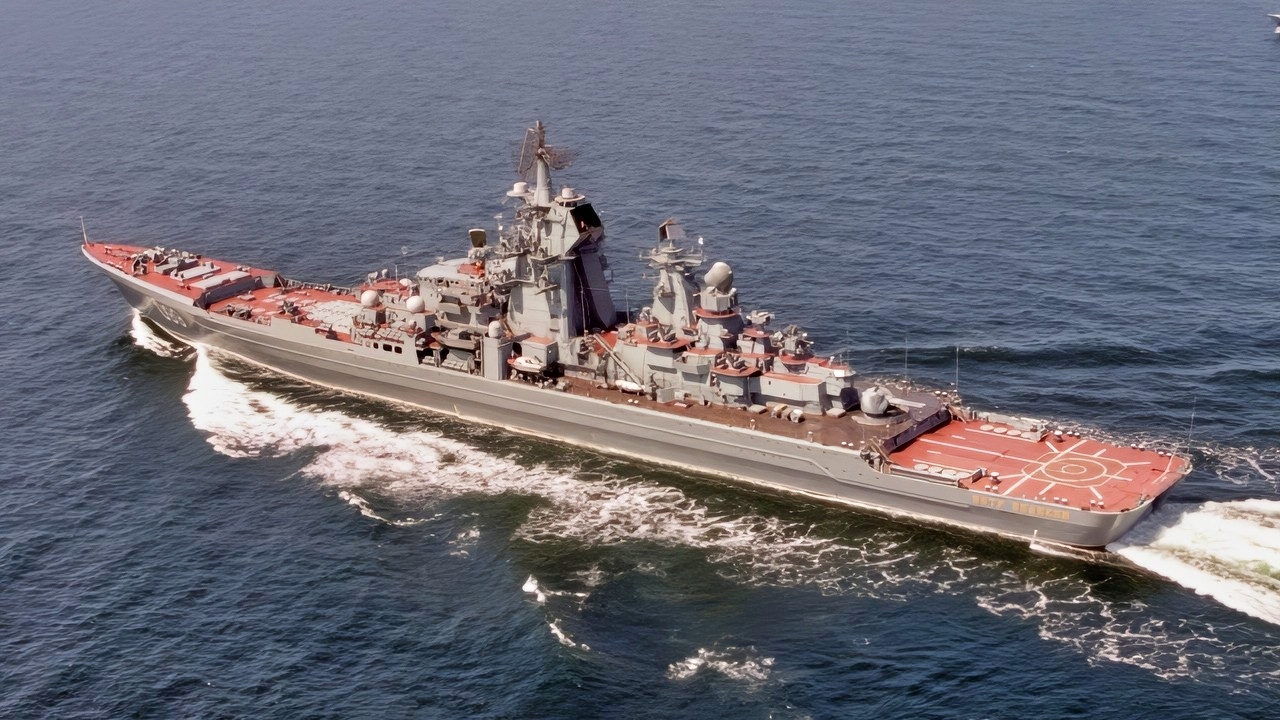
Russian Navy Kirov-Class. Image Credit: Creative Commons.
The reasons for mounting a land-based air defense system onto Russian warships underscore how successful Ukrainian forces have been in recent months at targeting Russian cargo ships and naval vessels, even against those Russian assets afloat in waters further afield than the Black Sea. So great has the threat been against Russian ships that Russian forces have outfitted some of their ships with anti-drone netting, a strategy Russian and Ukrainian forces have utilized to protect tanks and other armored vehicles on land from the FPV threat.
Russian Naval Operations Squeezed
In a sign of how successful Ukrainian anti-shipping operations have been, Russia has suspended shipping in the Sea of Azov, a body of water connected to the Black Sea via the Kerch Strait, separating Russian-occupied Crimea from the Russian mainland.
“28 vessels of the Russian shadow…fleet were hunted down overnight on July 11 in the Sea of Azov by the Birds of the USF. A total of 76 vessels were struck within 6 days (July 6-11, 2026)… The shadow oil fleet is visibly thinning, the week of default continues. It appears that movement through the Kerch Strait has been halted,” Commander of the Unmanned Systems Forces of the Armed Forces of Ukraine, Robert “Magyar” Brovdi, wrote.

Kirov-Class Russian Navy. Image Credit: Creative Commons.
The Sea of Azov is a vital maritime corridor for Russia, connecting the country with international customers for steel, energy, and grain shipments, particularly those destined for Eastern European markets. Though Russia could conceivably adjust its transportation routes similarly to how Ukraine shifted to shipping by truck rather than by ship, those routes are slower, longer, and more costly for Russian exporters and international importers, raising costs and lowering profits.
Russian Refineries Pinched as Well
Ukrainian forces have targeted Russian radar and air defense assets throughout Crimea, but deep within the Russian heartland as well, as part of a broader effort to hit the Kremlin where it hurts the most: its coffers.
The single greatest source of Russian state revenue is the export of oil and gas products abroad, and it has allowed the Russian war machine to grind forward on the battlefields of Ukraine despite the enormous cost in both blood and treasure.
Earlier this month, Russia passed a grim milestone, suffering an estimated 450,000 dead as well as 1.4 million wounded — making the war in Ukraine bloodier than the Battle of Stalingrad, one of the seminal battles of the Second World War, a battle widely considered by historians to be one of the grimmest, deadliest battles in world history. During that fight, Soviet forces lost an estimated two million dead, wounded, and missing.
The ongoing campaign against Russian forces in Crimea appears to be part of a broader strategy aimed at isolating the Ukrainian peninsula, annexed by Russian forces in 2014. Cargo trucks, radar and air defense installations, tanker ships, and important military nodes in Crimea have repeatedly come under Ukrainian fire. The effects have been significant.
According to Mediazona, an independent Russian outlet, fuel availability for civilians on the peninsula has been completely suspended, and access to fuel in 56 of Russia’s regions has been capped by local authorities or gas station chains. Consequently, long lines have been reported at fuel pumps around the country.
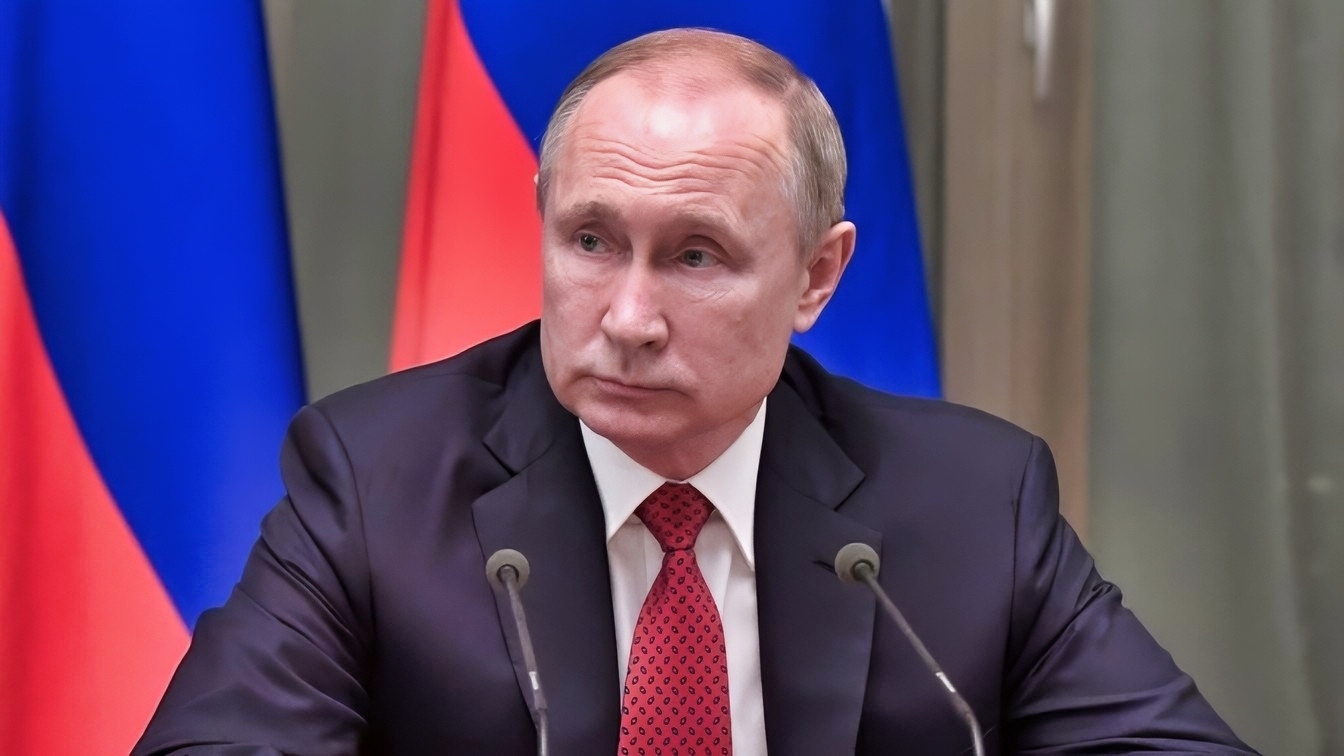
Although Russia is one of the world’s leading energy exporters, the country has been forced to take extreme measures to partially alleviate the fuel shortage. During a meeting with Russian President Vladimir Putin earlier this month, Russian Prime Minister Alexander Novak said Russia would ban the export of diesel fuel to prioritize Russian motorists.
Russia has also, incredibly, begun importing fuel from India, typically one of the biggest importers of Russian fuel, as well as Belarus. While Russia also attempted to import Japanese jet fuel from third countries, those attempts were quashed following Japanese Trade Minister Ryosei Akazawa’s clarification that its ban on fuel exports to Russia includes fuel sold via intermediaries as well as ship-to-ship transfers at sea.
About the Author: Caleb Larson
Caleb Larson is an American multiformat journalist based in Berlin, Germany. His work covers the intersection of conflict and society, focusing on American foreign policy and European security. He has reported from Germany, Russia, and the United States. Most recently, he covered the war in Ukraine, reporting extensively on the war’s shifting battle lines from Donbas and writing on the war’s civilian and humanitarian toll. Previously, he worked as a Defense Reporter for POLITICO Europe. You can follow his latest work on X.


MrObvious
July 14, 2026 at 6:56 pm
This ad hoc attempt by the Russians is an admission by Russia they are not the Overpowering force democrats believe them to be.
Russia can only stand toe to toe with others because of their nuke arsenal!
They have no defenses against the weapons they created HOW F’ing stupid is that?