

The war in the Middle East is officially back in full swing as the United States and Iran duke it out for control over the Strait of Hormuz. President Trump announced recently that the U.S. was reimplementing its blockade over the Strait, while Iran still claims to have full control over the valuable waterway. The two exchanged intense blows, with the U.S. claiming to have hit more than 100 targets over the weekend. Iran, meanwhile, responded with attacks against American bases in the region, causing still unknown amounts of damage. The situation is still rapidly developing, although the prospects of a peaceful settlement under the framework of the Memorandum of Understanding have all but vanished.
The Strait of Hormuz is Closed Again

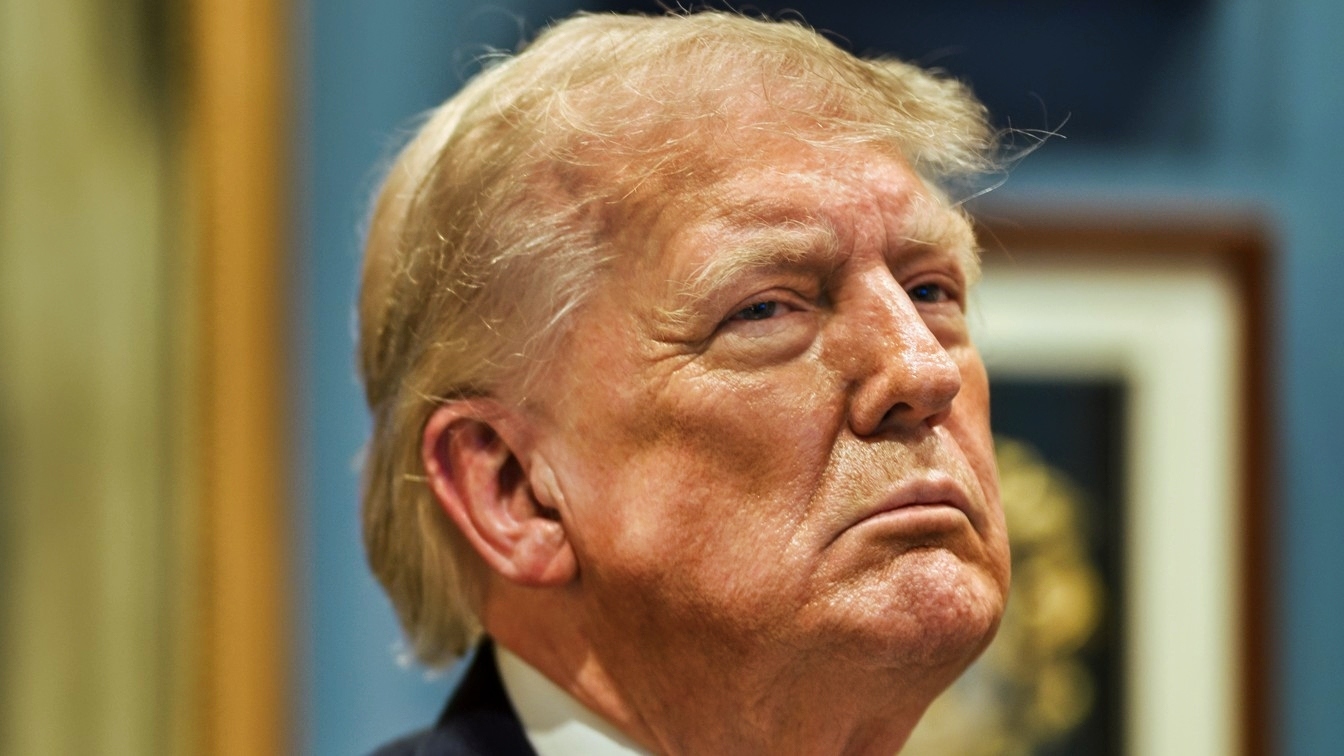
At sea (Mar. 1, 2007) – Capt. Craig “Animal” Williams (front) in a F/A 18C Hornet (front) and Capt. Richard “Rhett” Butler (back) in an F/A 18C Hornet look up for a photo as they fly over USS Ronald Reagan (CVN 76). Capt. Williams, a 22-year Naval Aviator who graduated from the United States Naval Academy, was relieved as Commander, Carrier Air Wing Fourteen (CVW-14) by 21-year Naval Aviator, Capt. Butler, a graduate of the University of Kentucky during an aerial change of command ceremony. The Ronald Reagan Carrier Strike Group is currently underway in the Pacific Ocean on a surge deployment in support of U.S. military operations in the Western Pacific. Official U.S. Navy photo by Lt. Cmdr. Tam Pham
(RELEASED)
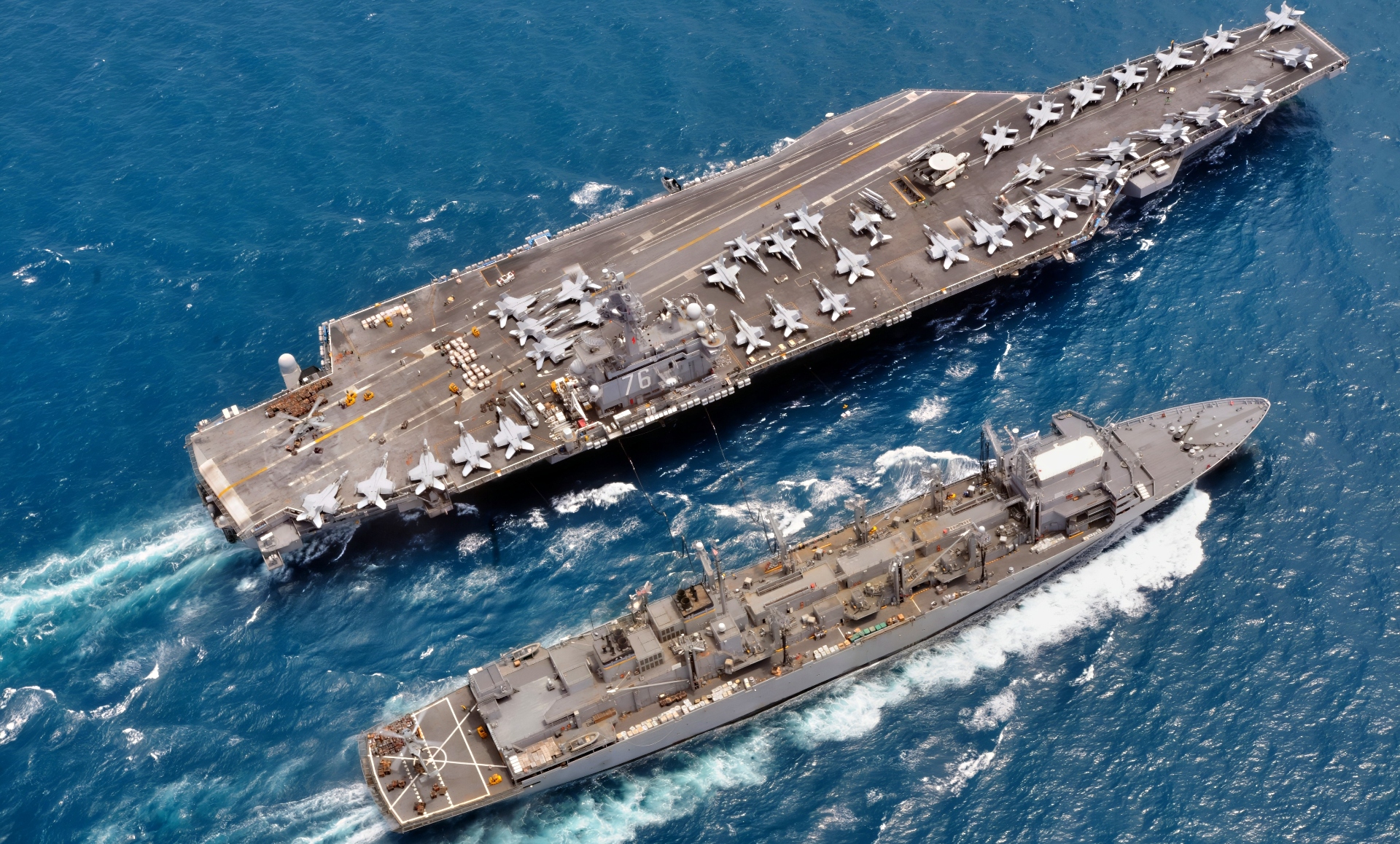
(August 15, 2008) With SH-60 helicopters moving pallets of supplies both USS Ronald Reagan (CVN 76) and USNS Bridge (T-AOE 10) work together during a replenishment at sea or RAS. With Reagan’s six galleys and approximately 4,100 Sailors it takes a lot of produce to feed that many folks and the Nimitz-class aircraft carrier got what it needed from USNS Bridge to do so.
The Ronald Reagan Carrier Strike Group is on a routine deployment in the 7th Fleet area of responsibility. Operating in the Western Pacific and Indian Ocean, the U.S. 7th Fleet is the largest of the forward-deployed U.S. fleets covering 52 million square miles, with approximately 50 ships, 120 aircraft and 20,000 Sailors and Marines assigned at any given time.
U.S. Navy photo by Senior Chief Mass Communication Specialist (SW/NAC) Spike Call
On July 13th, Trump announced that the U.S. would renew its blockade on the Strait of Hormuz. “The Hormuz Strait is OPEN, and will remain OPEN, with or without Iran,” the President wrote on social media. “We are reinstating THE IRANIAN BLOCKADE, so named because it is only stopping Iran’s ships or customers from entering or leaving. All other countries will have fair and open use of the Strait.” Trump also added that the United States would impose a 20% toll on all traffic through the Strait. CENTCOM later clarified that the U.S. Navy would officially enforce the blockade on the 14th. The U.S. imposed a blockade on the waterway in March in response to the Iranian blockade. It was officially removed in June as a goodwill measure in preparation for the signing of the MOU.
Iran’s Foreign Minister Abbas Araghchi also took to social media in reaction to Trump’s announcement. “POTUS is absolutely right,” he mockingly retorted. “Whoever provides secure and safe passage of commercial vessels through the Strait of Hormuz should be compensated for this service.” He went on to add that Iran would retain its control over the Strait as the sole protector of the vital chokepoint. “Iran has always been the GUARDIAN of the Strait and will remain so FOREVER,” Araghchi says. Until the most recent escalation, traffic through the Strait has been slowly increasing. But now, transit is once again at a standstill, and oil prices are rising, with Brent Crude at $84.45 per barell.
Chaos in the Middle East Again
Now that the ceasefire is officially off, the missiles are flying once again. Over the weekend, the U.S. launched some of its heaviest strikes since the beginning of Operation Epic Fury in March.
CENTCOM reported that U.S. forces had struck over 100 targets belonging to the IRGC. Interestingly, the Navy released footage of several unmanned naval drones performing a kamikaze attack against an Iranian mini-submarine while it was docked at the Bandar Abbas Naval Base. “Three Corsair unmanned surface vessels hit the port at Bandar Abbas Naval Base, marking the first time American forces have employed sea drones in combat operations,” CENTCOM wrote in an official post.
In response, Iran launched several missile and drone attacks, mainly targeting American military installations across Kuwait, Jordon, and Bahrain. According to official Iranian sources, the IRGC managed to hit radar installations and other military-related targets. As of right now, there is no way to corroborate these claims, but footage has been circulating online showing a large fire burning at what is presumably the U.S. Navy 5th Fleet Base in Bahrain.
This suggests that at least one missile or drone struck or damaged something on the base. Not wanting to miss out on any of the action, the Houthis in Yemen launched a strike against Saudi Arabia, following the Yemeni government’s strike on a Houthi-controlled airfield. The attack, according to the Saudi Ministry of Defense, was successfully intercepted.
The War is Back in Full Swing
On July 10th, Trump sent a letter to Congress declaring as much. “I directed this military action consistent with my responsibility to protect Americans and the United States’ national security and foreign policy interests,” the President wrote. No officials related to the White House or the U.S. Military have provided a timeline for how long they expect the war to last. When asked about the topic, Trump told CNN that “We’ve cut down their capability very substantially, but they’re going to fight for a while.” He also added, We were in Vietnam for 19 years. We’re here for four months, so I think we’ve done a lot.” The President also explained that negotiations were still ongoing, but as of yet, nothing has been agreed upon.
Meanwhile, the Strait of Hormuz remains closed. Despite U.S. efforts to keep it open, traffic through the Strait remains low. The longer the waterway remains closed, the greater the economic ramifications will be.
Oil prices are quickly recovering from their post-MOU depreciation, and materials like sulfur, which are an important component of many fertilizers, are also rising rapidly in price.
If the Strait is left closed for too long, the global economy could take a severe hit. Unfortunately, it does not seem the Strait will reopen anytime soon, as the U.S. and Iran continue to wage a high-stakes war over the future of Hormuz.
About the Author: Isaac Seitz
Isaac Seitz, a Defense Columnist, graduated from Patrick Henry College’s Strategic Intelligence and National Security program. He has also studied Russian at Middlebury Language Schools and has worked as an intelligence Analyst in the private sector.


