


June was one of the deadliest months in the entire Russo-Ukrainian War in terms of civilian death counts, according to recent reports. The UN Human Rights Monitoring Mission in Ukraine (HRMMU) reported that 293 civilians died in the month of June, marking it one of the deadliest months of the war since its initial months back in 2022.
Over the past month, Russia has been intensifying its war against Ukraine in response to Kyiv’s strikes on Russian oil refineries.
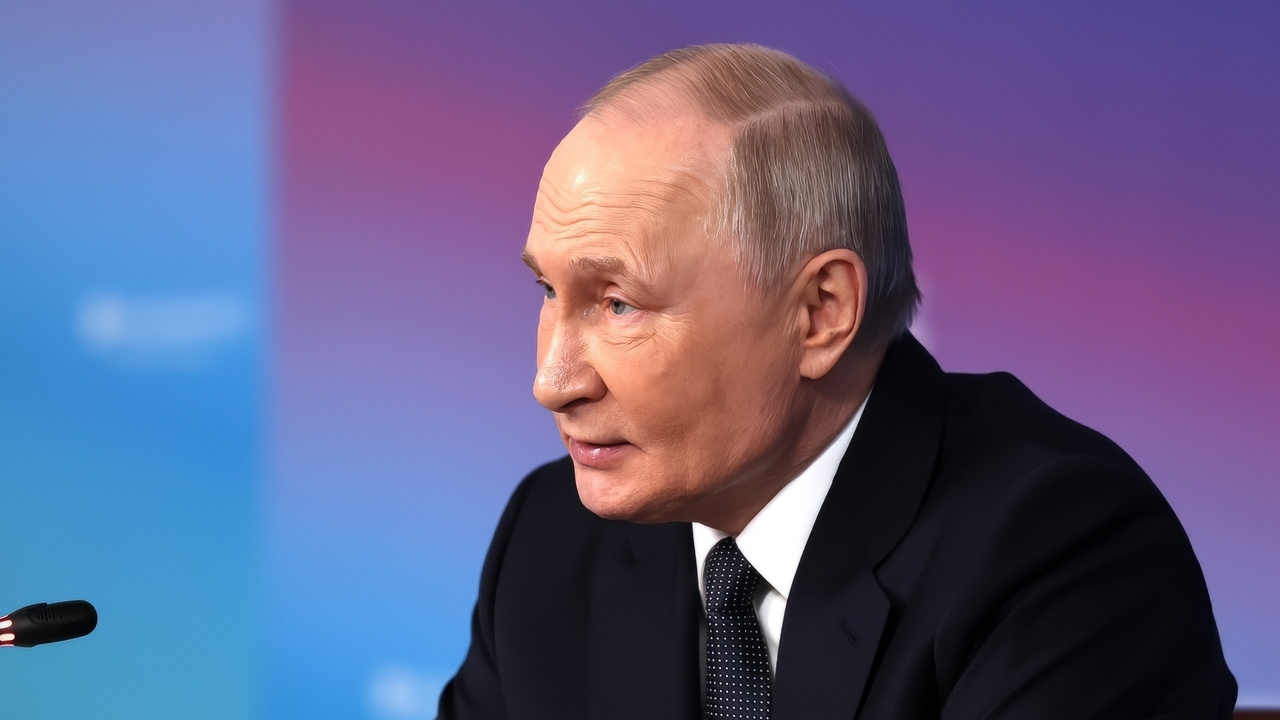
Vladimir Putin in Murmansk (2025-03-27). Image Credit: Creative Commons.
Throughout the war, the civilian death count has remained relatively low compared to previous wars, mainly due to personal restraint from Moscow.
However, as the war escalates, that restraint is vanishing, and civilians find themselves in the crossfire.
The Rising Civilian Cost of War
According to the HRMMU, June marked a dramatic uptick in civilian deaths, with 293 fatalities recorded. This brings the total number of civilian deaths for 2026 to 1,400. According to the organization, this is a 37% increase compared to the same time last year and more than double the figures from 2024.
These figures, Danielle Bell, the head of the organization, says, “show an alarming escalatory trend with mounting civilian toll, driven by the intensifying use of powerful weapons that are particularly deadly when used in densely populated urban areas.”
Between the months of January and June, civilian casualties rose by 60% compared to the same time period last year.
In the last month, Ukraine has depleted its stock of Patriot interceptor missiles, which has only exacerbated the threat of Russian missile attacks.
Over the past weeks, Kyiv and Odesa have been attacked relentlessly by Russian drones and missiles.
Despite Ukraine’s valiant efforts to protect its airspace from drones, the country is now virtually defenseless against ballistic missiles, an advantage that Moscow is currently taking full advantage of. Despite Kyiv’s appeals to boost deliveries, PAC-3 interceptor missiles are currently in short supply, especially as the war in the Middle East rages on.

President Donald J. Trump welcomes Russian President Vladimir Putin to Joint Base Elmendorf-Richardson, Anchorage, Alaska, August 15, 2025 (DoD photo by Benjamin Applebaum)
Threatening the Lives of Regular Citizens
However, according to the U.N., in areas closest to the front lines, the main threat is not long-range ballistic missiles but small FPV drones. Much like Ukraine, Russia has also been relentlessly targeting anything that could be interpreted as a military target.
Oftentimes, unfortunately, civilian cars and trucks are mistaken for military targets and are subsequently destroyed. “Many describe feeling hunted by short-range drones simply for attempting everyday tasks such as shopping for food, walking dogs, cycling, working in the yard or traveling to safety,” Bell said. As the conflict moves closer to larger cities like Kramatorsk and Sumy, more civilians are finding themselves under constant threat of Russian drones.
So far, the U.N. has identified over 65,000 civilian casualties, which equates to around 16,000 killed and another 48,000 wounded.
The actual number is likely higher.
The vast majority of the civilian deaths are attributable to Russia’s long-range missile attacks against densely populated cities like Kyiv, Lviv, and Odesa.
Even when Kyiv possessed a large stock of interceptor missiles, debris from intercepted drones and missiles has frequently resulted in damage to residential areas, killing and injuring civilians. Air defense failures cannot be overlooked either.
Throughout the years of fighting, air defenses around Kyiv have occasionally malfunctioned, resulting in interceptor missiles striking apartment buildings.
There have also been instances of Russian missiles/drones deliberately attacking civilian targets, which Moscow claims were used for drone assembly.
Ukraine vs Other Global Conflicts
Compared to other recent conflicts, the death toll in Ukraine has been comparatively light.
In the recent Gaza war, from 2023 to 2026, around 57,000 civilians were killed, with some estimates placing the death toll as high as 70,000 (this also excludes the hundreds of thousands of civilians injured). In the U.S. war in Afghanistan, some estimates speculate that around 46,000 civilians were killed as a direct result of the war during the ten years of fighting.
In comparison, civilian casualties in Ukraine are much lower, with civilians making up a small percentage of the total death toll.
This is not to demean the civilian casualty count in Ukraine. There are a number of factors that explain civilian casualties in other conflicts, such as population density, war duration, and so on.
Russian propagandists attribute the relatively low civilian death toll to the Russian Army’s restraint in waging the war.
Like most claims surrounding the war in Ukraine, this is only half true. While the Russians have shown some restraint when bombing civilian areas, in several other instances, the Russian Army has blatantly targeted civilian infrastructure or buildings sheltering civilians.
Russia is neither the most moral army in the world nor the genocidal horde that it is frequently depicted as. The fact of the matter is that any war will always exact a high civilian toll.
No matter how much any military tries to limit civilian casualties, there will always be intelligence errors or other malfunctions.
For Ukraine, however, as the conflict continues to escalate, the civilian death toll will likely increase as Moscow lashes out in response to Ukrainian attacks on Russia’s oil refineries and other infrastructure.
About the Author: Isaac Seitz
Isaac Seitz, a Defense Columnist, graduated from Patrick Henry College’s Strategic Intelligence and National Security program. He has also studied Russian at Middlebury Language Schools and has worked as an intelligence Analyst in the private sector.


