

Ukrainian long-range strikes continue to strike at the heart of Russia, with Moscow Mayor Sergei Sobyanin describing how 340 Ukrainian drones were launched at targets throughout the region in a 24-hour period.
In a statement issued on Telegram, Sobyanin confirmed that most of the drones were shot down by anti-aircraft units located outside of the city.
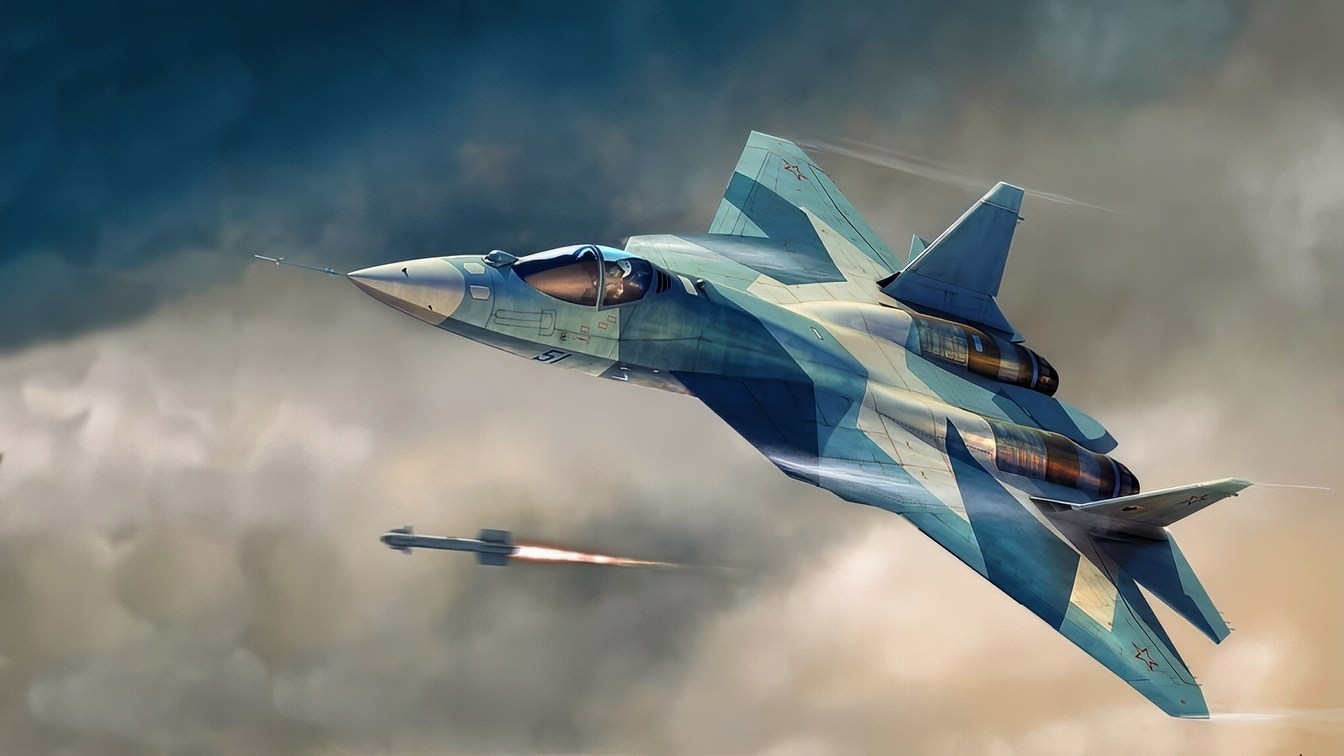
Su-57 Felon in the Sky. Image Credit: Creative Commons.

Su-57 Felon Stealth Fighter. Image Credit: Creative Commons.
What Sobyanin Said
“Most of them were neutralized by air defense forces on the outer approaches,” Sobyanin wrote on Telegram. “More than 50 enemy drones were destroyed on their way to Moscow.”
The news is not exactly new. Ukrainian drones are frequently launched at targets in and around Moscow, and Sobyanin’s Telegram account provides a running tally of the number of Ukrainian projectiles launched at the region and how many are shot down by Russian air defenses.
Moscow Under Pressure
Ongoing Ukrainian attacks are testing the defensive systems that Russia has established around its capital city.
Since Ukrainian drones first began reaching Moscow in 2023, the Kremlin has steadily expanded the city’s air defense network, deploying more Pantsir-S1 short-range air defense systems throughout the capital city and reinforcing its existing S-300 and S-400 batteries.
This year, satellite imagery published online appeared to show more than 40 new Pantsir systems around Moscow, with many dotted along the Central Ring Road and around strategic locations such as the Zhukovsky and Domodedovo airports.
The strengthened air defense network has created concentric defensive rings around the capital city, reminiscent of the setup that protected the Soviet capital throughout the Cold War.
A report from Bild described how Pantsir systems were being redeployed from other regions in Russia as Ukrainian forces became increasingly confident in their ability to strike at the nation’s heart.
Reports have also revealed that Russia has strengthened defenses within the city itself, with air defense systems installed on rooftops near the Ministry of Defense and other official buildings as a last resort for any projectiles that slip through the defensive systems surrounding the city and region.
Additional batteries have also been moved to protect key industrial sites following the June Moscow Oil Refinery strike.
As Ukrainian strikes caused massive explosions in Moscow, reports described how some air defense units were even being pulled from the frontline to help strengthen defenses around Moscow and other locations.
Citing Ukrainian officials, CBS News reported that Russia was moving air defense units to strategic locations amid a shortage of S-300 interceptors, leaving Moscow still vulnerable.
And despite Moscow’s efforts to defend the capital city, Ukrainian drones are still reaching the region on an almost nightly basis.
Oil Industry Under Pressure Again
While Moscow is a major prize for Ukrainian forces looking to strike high-value targets, Ukrainian forces continue to target the country’s most critical energy facilities.
Those strikes continued overnight into July 14 as Kyiv continued its campaign against the Russian fuel industry, with Ukraine’s General Staff claiming that drones struck the Gazprom Neftekhim Salavat petrochemical complex in the Republic of Bashkortostan, as well as the Afipsky Oil Refinery in Krasnodar Krai.
The two facilities play a major role in supplying fuel to both the Russian civilian economy and its military.
The Salavat complex, in particular, is highly valuable to Russia because it is one of the country’s largest petrochemical plants and a major producer of gasoline, aviation fuel, and diesel.
Speaking to Reuters, industry insiders said that operations at the facility were halted following the strikes. Videos shared on social media also showed enormous fires.
Those strikes overnight into July 14 were met with a Russian response, however, with Ukraine once again being hit by a barrage of missiles and drones overnight into July 15.
Russia Strikes Black Sea Ports
In the most recent overnight Russian barrage, much of the firepower was aimed at the Black Sea coast. A missile strike on the port city of Odesa reportedly killed three civilians after it hit a residential building.
A further three people were hospitalized, according to Oleh Kiper, the governor of Odesa Oblast.
Kiper said that the attack was part of a larger assault that targeted the region’s port infrastructure, which has come under sustained pressure from Russian attacks in recent days as Moscow apparently responds to similar Ukrainian attacks on Russian vessels and port infrastructure.
In a statement on Telegram, Kiper accused Russia of targeting civilian infrastructure – a claim that both sides now regularly make as missile and drone strikes ramp up.
In the city of Sumy, another three people were killed and 17 injured by guided aerial bombs, according to acting Mayor Artem Kobzar. An additional two casualties were also reported in Zaporizhzhia and Dnipropetrovsk.
With both sides targeting infrastructure far from the front lines, these stories are only going to become more commonplace as the war evolves into one of economic attrition, with energy infrastructure and ports becoming bigger targets.
About the Author: Jack Buckby
Jack Buckby is a British researcher and analyst specializing in defense and national security, based in New York. His work focuses on military capability, procurement, and strategic competition, producing and editing analysis for policy and defense audiences. He brings extensive editorial experience, with a career output spanning over 1,000 articles at 19FortyFive and National Security Journal, and has previously authored books and papers on extremism and deradicalization.


