
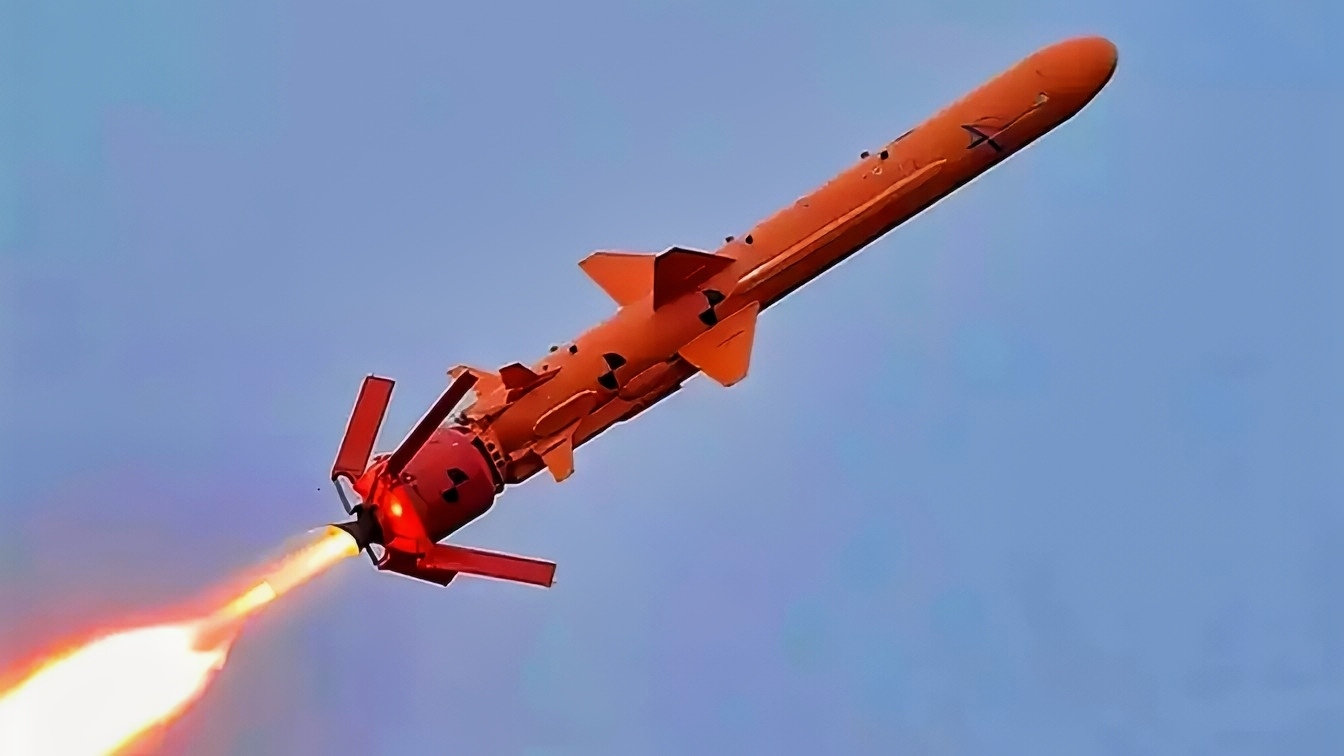
Ukrainian President Volodymyr Zelenskyy has claimed that China privately intervened in the Russia-Ukraine conflict and warned Moscow not to even consider using nuclear weapons.
The shock revelation would be the clearest reported intervention by the Chinese into the Ukraine invasion yet and reveals a significant rift between the two allies.
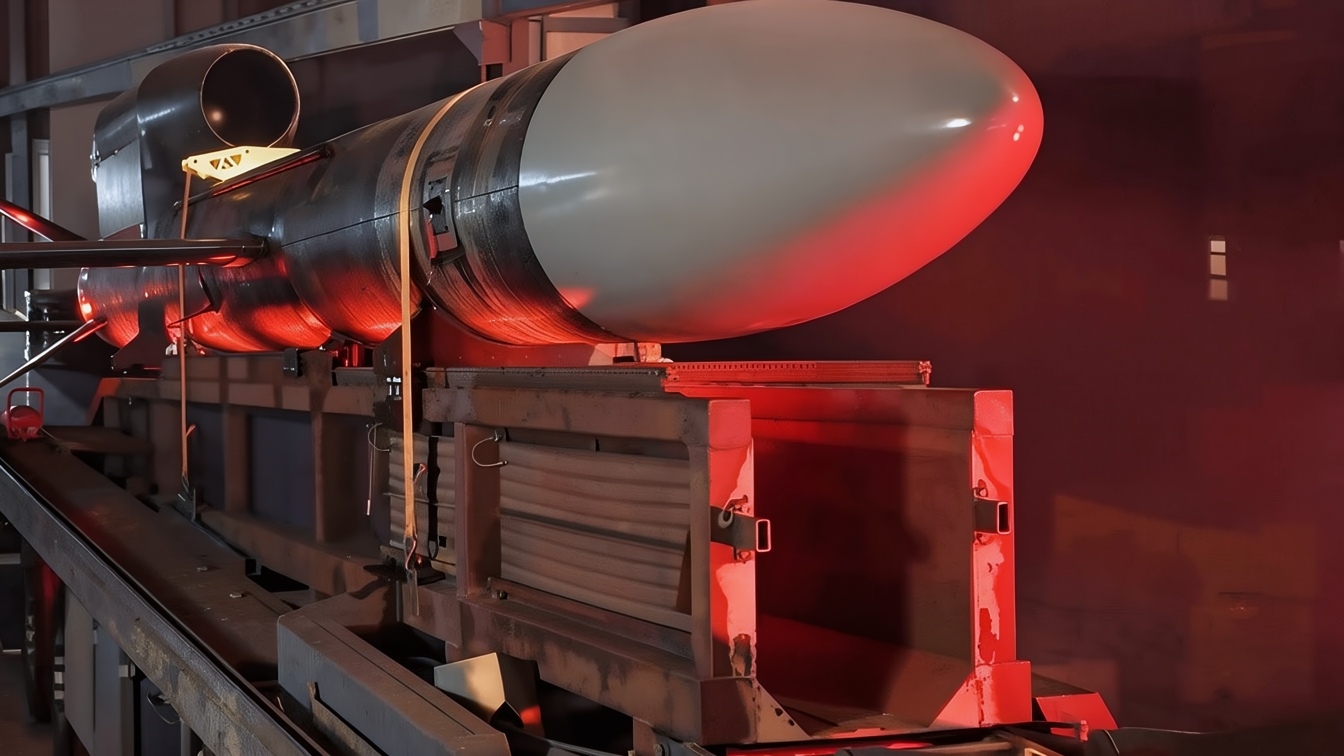
Ukraine Cruise Missile 2026. Image Credit: Creative Commons.
What Zelenskyy Said
Zelenskyy made the comment during an online press briefing, claiming that Beijing had responded directly to discussions with Russia about the possibility of using tactical nuclear weapons to make advances in eastern Ukraine.
“I think you heard such voices in Russian media: ‘What if we respond to Ukrainian strikes with nuclear weapons?’ And it seems to me that this was the first time China … directly responded in an ultimatum-like form — that there can be no thought whatsoever of using nuclear weapons,” Zelenskyy said.
He claimed that he had learned of the intervention from European leaders during meetings at the recent NATO summit in Ankara, Turkey, where they discussed China’s role in ending the war in Ukraine.
According to Zelenskyy, the topic was discussed by U.S. and European leaders, including President Donald Trump. He refused to elaborate on the precise nature of those discussions.
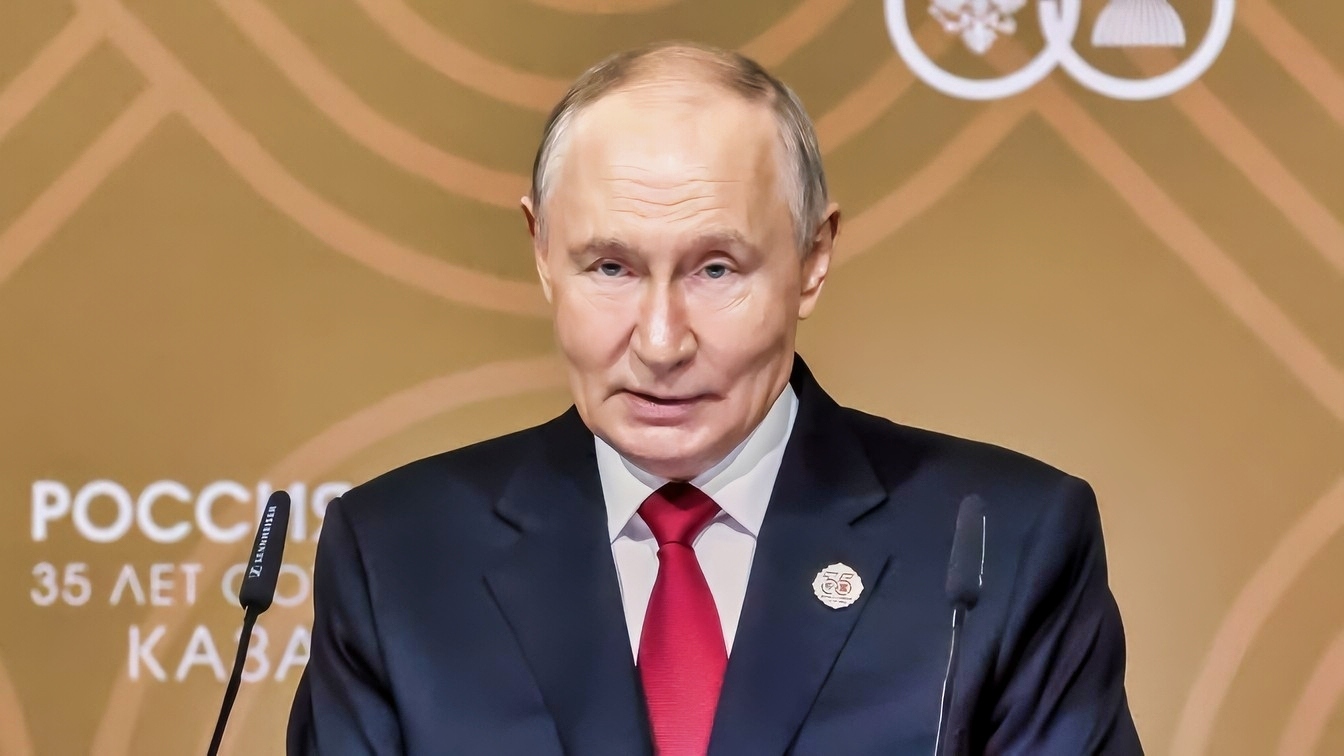
Russian President Putin Speaking at Summit Creative Commons Image
According to a Bloomberg report, senior Chinese officials later confirmed to a Western government that such a message had indeed been relayed to Moscow.
The outlet, citing a European official familiar with the discussions, may have uncovered a private point of contention between China and Russia at a time when Moscow needs every ally it can get.
“Senior Chinese officials confirmed they’d relayed that message to Moscow in talks with a Western government ahead of this week’s NATO summit, according to a European official with knowledge of the conversation.
The topic of Russia’s potential use of tactical nukes was also raised in at least one leader’s meeting with Zelenskyy at the summit, according to European officials familiar with the discussion, Bloomberg reported.
Cracks Appearing Between Moscow and Beijing
The news is just another example of the cracks that are emerging between Moscow and Beijing. Zelenskyy’s comments come only weeks after leaked Russian intelligence documents indicated that, behind closed doors, Moscow now sees China as both an intelligence threat and a partner.
While Presidents Vladimir Putin and Xi Jinping maintain a “no limits” partnership between their two countries, reports indicate that the relationship is becoming increasingly transactional as the war in Ukraine intensifies.
In June, the New York Times published what it described as an internal planning document from the Russian Federal Security Service (FSB).
The document, obtained with the support of cyber group Ares Leaks, suggested that Russian counterintelligence officers had warned that Chinese intelligence services were intensifying their efforts to recruit Russian officials, scientists, business leaders, military experts, and others to obtain classified information about Russian military operations in Ukraine.
The document also seemed to suggest that Beijing was attempting to acquire specific research on Russia’s ambitions in the Arctic, as well as on its most advanced defense technologies.
Arguably most shocking, the leaked document also reportedly instructed FSB officers to increase their surveillance of Chinese intelligence activity within Russia while avoiding any actions that could damage the Kremlin’s relationship with Beijing.
It suggests that Russia is well aware of Chinese activities within its borders, knows that Beijing is closely monitoring its military actions, and does not want to lose an ally by acknowledging it.
Why China Is Talking About Nuclear
The reported intervention comes as Ukraine’s long-range strike campaign starts to cause visible damage to the Russian economy.
After years of defending itself, Ukraine is now on the attack, placing extreme military and economic pressure on Russia.
Over recent weeks, Ukrainian drones and missiles have struck oil refineries, rail infrastructure, shipping in the Sea of Azov, energy infrastructure, ports, and more.
The strikes have forced Moscow to reassess its position in Crimea, and reports now suggest a new assault may be in the works from the north of Ukraine.
All of that means Moscow is looking for new ways to push back, exert pressure on Kyiv, and prevent additional strikes that risk undermining Russia’s ongoing efforts to mitigate the growing domestic crisis.
Since 2022, Russian officials – including Putin himself – have repeatedly indicated that nuclear weapons may be used if the Kremlin determines that Russia’s territorial integrity is at risk.
As Ukraine’s strikes become more effective, it is becoming easy for pro-Kremlin media, activists, and officials to define the so-called “terrorist” attacks as a threat to Russia’s territorial integrity.
That reality has sparked concern globally – apparently even in Beijing – that Putin may be considering deploying tactical nuclear weapons as a last resort to prevent a Ukrainian victory.
And for Beijing, any move toward nuclear escalation would carry huge risks.
China has consistently said that nuclear weapons should never be used in Ukraine, not just because of the humanitarian consequences but because such a move would fundamentally change the international response to the war and destabilize global trade and financial markets.
About the Author: Jack Buckby
Jack Buckby is a British researcher and analyst specializing in defense and national security, based in New York. His work focuses on military capability, procurement, and strategic competition, producing and editing analysis for policy and defense audiences. He brings extensive editorial experience, with a career output spanning over 1,000 articles at 19FortyFive and National Security Journal, and has previously authored books and papers on extremism and deradicalization.


