

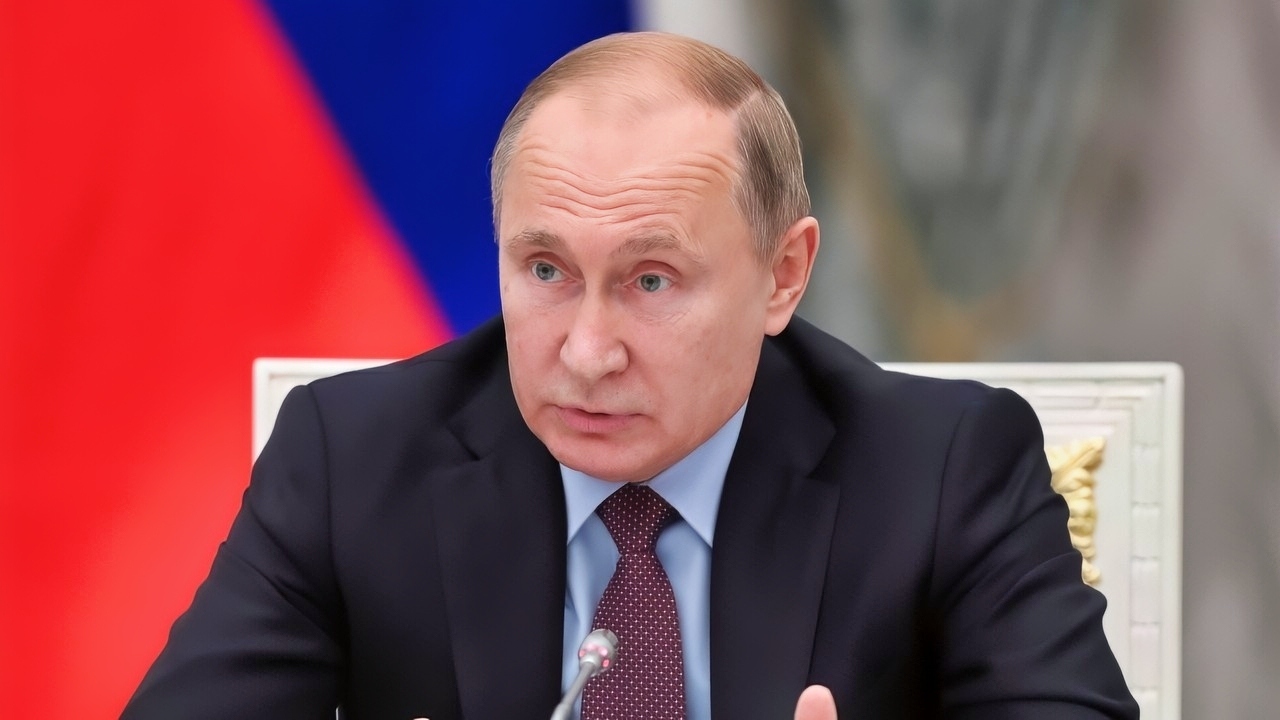
Beijing Is Preparing for Putin’s Death, Engaging with His Potential Successors: The PRC was once highly dependent on Russia for most of what made it a world power. But in 2026, not only does the Chinese Communist Party (CCP) General Secretary Xi Jinping feel no need to ingratiate himself with Russian President Vladimir Putin, but he and the other top leaders in Beijing are openly planning for what they will be demanding from Moscow once former KGB Lt. Col. Putin is dead or is deposed – or both.
More than four years of war with Ukraine and Russia’s isolation from the West have significantly altered the nature of Putin’s relations with the People’s Republic of China (PRC). There are several aspects to the significantly altered relationship that Putin now has with the CCP strongman

Sukhoi Su-33 launching from the Admiral Kuznetsov.
The most visible of these is that Putin is now the junior partner in the relationship between the two dictators. For more than ten years, this disposition has been expected, largely due to Russia’s continued decline. While the PRC has been advancing its position in the international community economically, militarily, and diplomatically, most of the advantages Russia once held over its Eastern neighbor are long gone, putting Moscow in a distant second place.
Whereas there was a time when Beijing depended upon Russia for assistance in multiple spheres – particularly in defense industrial technology – the Russian President is now increasingly placed in the position of making requests or asking favors from Xi. He no longer dictates the terms of their relations, as was once the case.
This is a complete reversal of fortune – one of the most complete transformations in bilateral relations in modern history.
Russia Left Behind
Consider that from the 1990s through the first decade of the 21st century, the main workhorse of the People’s Liberation Army Air Force (PLAAF) was a fighter aircraft produced by Shenyang Aerospace Corporation (SAC).
These were all also reverse-engineered copies of 1980s and 1990s Russian designs like the J-11, which was developed from the Sukhoi Su-27, the J-16, which was made by copying much of the design of the Su-30MK series, and the J-15, which was engineered from a test aircraft and documentation of the Su-33 carrier-capable fighter.
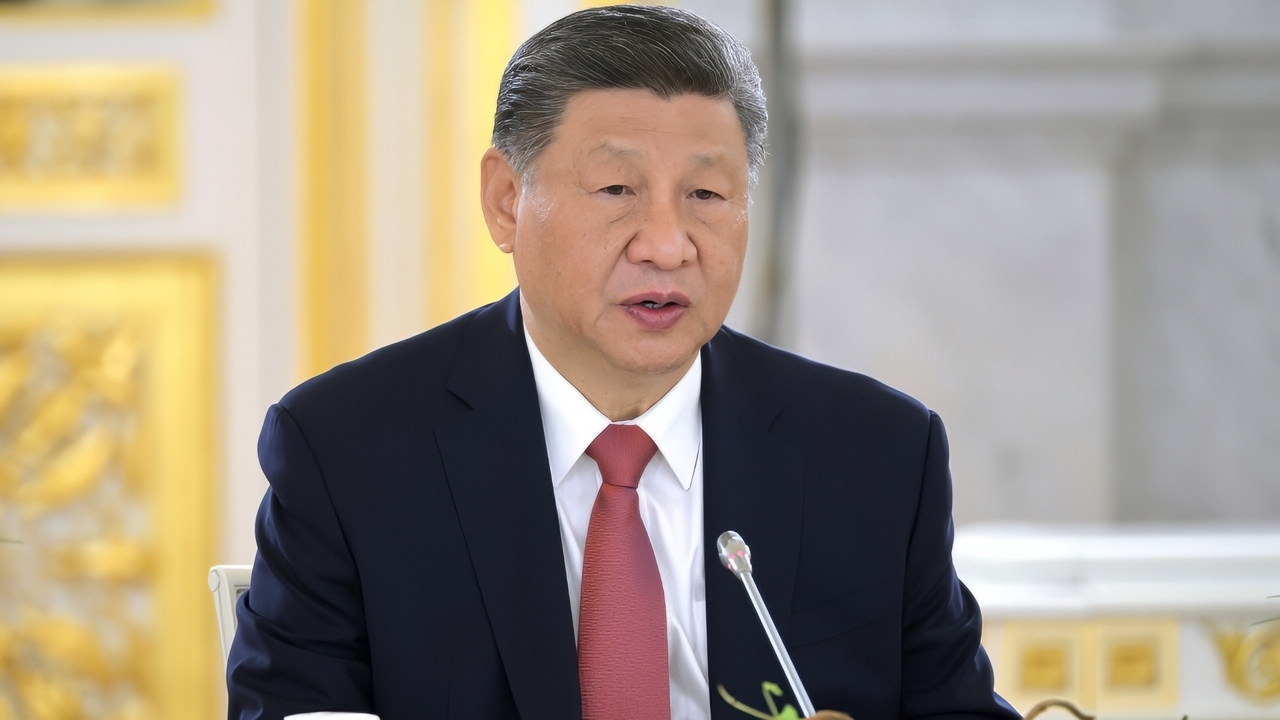
China’s Xi Jinping. Image Credit: Creative Commons.
But the new-age combat aircraft being flight-tested and produced in the PRC now bear very little resemblance to, or connection with, anything ever designed – even if only on paper – in Russia. Like so much of what has taken place between Beijing and Moscow, said a retired Russian aircraft designer who once worked at one of the most famous aircraft design bureaus in the USSR, “the Chinese took everything they wanted and could get from Russian industry. They then perfected what they learned; they developed their own capabilities.”
“When they were finished acquiring everything from Russian industry and our scientific community, they packed up and moved on, so to speak.” He continued. “In the end, they left Russia in their wake – and the more time that goes by, the more behind the progress being made by China this country becomes.”
China Preparing For a Change in Moscow
In May 2026, Putin made his 14th trip to meet with Xi in Beijing. Before the meeting, he publicly signaled that the two countries would strike a breakthrough agreement on energy. The highest priority of this May visit was to persuade Xi to sign up to a second natural-gas pipeline between Russia and China—known as the Power of Siberia 2. This project has been two decades in the making, and Moscow desperately needs to see it move forward.
But the Russian advance team that flew to Beijing ahead of the Russian leader was told “no dice” by the Chinese counterparts they met with. According to Russian sources familiar with what took place in these negotiations, Beijing would only sign the pipeline deal if Russia pledged to sell it gas at the same below-market rate that Moscow charges its domestic customers.
Not only were the Chinese asking Russia to subsidize the project, but they also told the Russians not to raise the subject of the pipeline again until the terms changed to meet their demands. Putin left a day later, not completely empty-handed, but the signed 42 agreements and joint declarations he carried with him did not include the pipeline agreement. Beijing has since made no public statement on the project.
The optics could not be clearer. The PRC now thinks that Putin, in power, offers very little for its purposes and neither expects nor cares whether he will be in charge for long. “Xi received Putin like an emperor receiving his visitor in his castle,” Joerg Wuttke, a veteran German business executive with long experience in PRC-Russia relations, told the Wall Street Journal, “and sent him home.”
Not only are the Chinese treating the Russian leader as if he no longer matters, according to the Journal, the CCP leadership is also making preparations for Putin’s exit from the scene.
Chinese authorities are reportedly quietly preparing for a potential political transition in Russia, at least as hinted at in the Wall Street Journal’s reporting. They are communicating with members of elite circles, regional leaders, and influential figures in the country’s elite who could shape Moscow’s future course in the aftermath of any change in leadership.
In late June, Beijing unexpectedly went off script and publicly called on Kyiv and Moscow to return to the negotiating table and end hostilities. At that time, Ambassador Sun Lei, the current Deputy Permanent Representative of the PRC to the United Nations, mentioned the suffering of Ukraine’s civilian population – the first such declaration by any Chinese official since the war began.
China Has Leverage on Russia
In the end, the biggest reason the PRC has little regard for Putin is that Beijing accounts for nearly 40 percent of Russia’s foreign trade, while Russia’s share of the PRC’s trade is not more than 4 percent. Moscow has no leverage.
The two countries’ economies have diverged to such an extent that the PRC is now openly solidifying its influence in Russia following a regime change in the Kremlin. Russia’s future relationship with the PRC is destined to be that of an increasingly dependent vassal. The once-powerful military behemoth will become little more than a puppet state and a resource colony for its Chinese masters.
About the Author: Reuben F. Johnson
Reuben F. Johnson has thirty-six years of experience analyzing and reporting on foreign weapons systems, defense technologies, and international arms export policy. Johnson is the Director of Research at the Casimir Pulaski Foundation. He is also a survivor of the Russian invasion of Ukraine in February 2022. He worked for years in the American defense industry as a foreign technology analyst and later as a consultant for the U.S. Department of Defense, the Departments of the Navy and Air Force, and the governments of the United Kingdom and Australia. In 2022-2023, he won two awards in a row for his defense reporting. He holds a bachelor’s degree from DePauw University and a master’s degree from Miami University in Ohio, specializing in Soviet and Russian studies. He lives in Warsaw.


