

A Results-Packed Six Months: What Fedorov Accomplished as Ukraine’s Defense Minister: The shockwaves of Volodymyr Zelenskiy’s dismissal of his Defense Minister, Mykhailo Fedorov, continue to reverberate through the political circles and are generating protests in the nation’s major cities. The young defense chief was known to many as being what some described as a “tech evangelist,” and he was famous for his Silicon Valley style of presentations of new innovations in weapons design and defense strategy – all of which added to his reputation and popularity.
Although he was only in his position for six months, a recounting of what he was able to accomplish at the Defense Ministry (MoD) in such a short period of time trumps that of most of his predecessors. He should be credited with major changes that positively affected the defense of Ukraine through his initiatives.
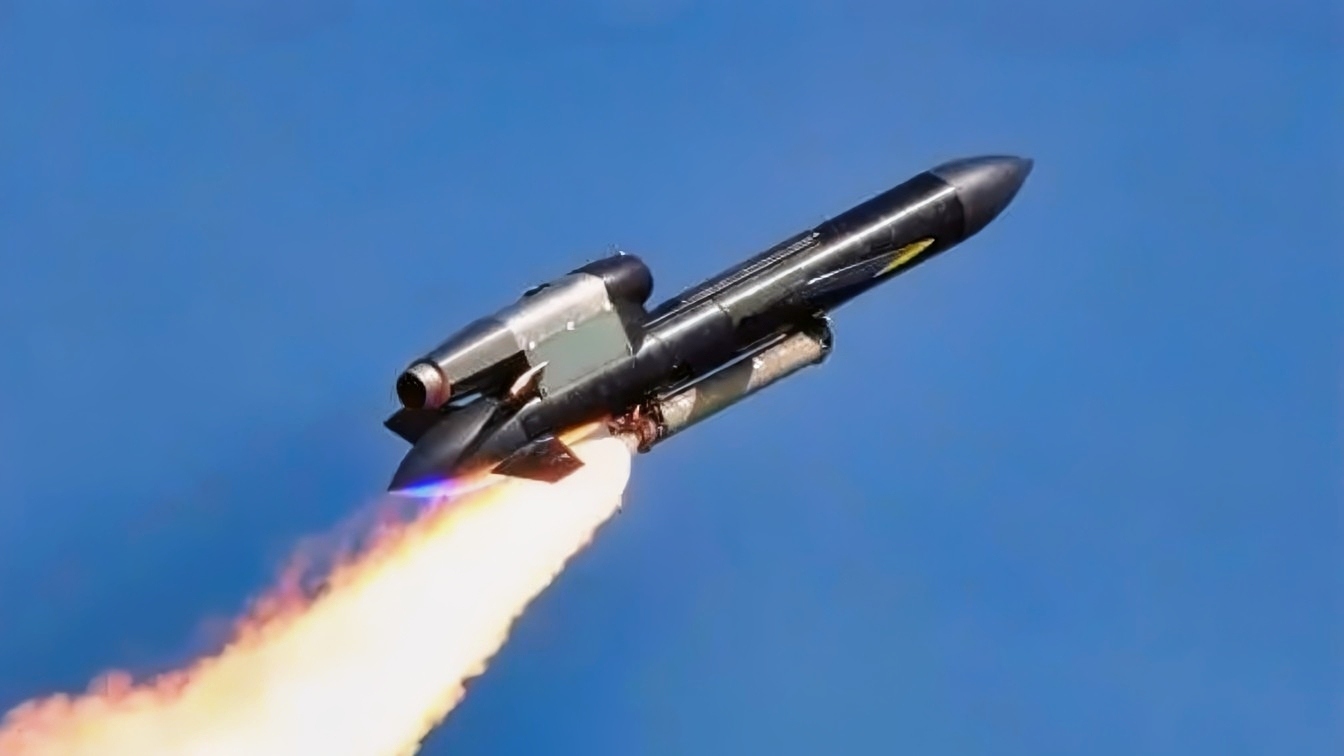
FP-5 Flamingo Cruise Missile. Image Credit: Ukraine Government
When he first arrived on the job at the MoD, he states that he found an army in which “no one is accountable for anything”. It was an army within which commanders are constantly replaced, those deemed disloyal are isolated, and major projects are blocked, as he described it.
Organizational changes, however, were just the beginning. The other was the question of how to generally orient operations against the Russian invader across the entire armed forces.
Fedorov determined, correctly, it turns out, that a symmetrical approach to taking on Moscow’s military would never work – going up against Russian units head-to-head and losing one tank for every one of theirs destroyed, one airplane for every one of theirs, etc., was a losing proposition. This was the genesis of the massive drone army that has now turned the tide in the war.
But what Fedorov also discovered early on was that changing that mindset within the military would be one of his greatest challenges. He told the Ukrainian President Volodymyr Zelensky at the beginning of his tenure that he saw the need for across-the-board personnel changes
These include the dismissal of Armed Forces Commander-in-Chief Oleksandr Syrskyi and the Chief of the General Staff, Andrii Hnatov. Without such changes, Fedorov said, Ukraine cannot defeat Russia “asymmetrically and with minimal losses”.

Sea Baby Drone Ukraine. Image Credit: Creative Commons.
Space-Based Solutions
Zelensky turned down the recommendation, to which the new young Defense Minister said he would “learn to work” with the Commander-in-Chief. The end result was that Fedorov found his own ways for Ukraine to seize the initiative in the war, but, ironically, his most effective measures were the products of success he had in dealing with foreign partners rather than with his own military leadership.
One of the most important of these was the young Defense Minister’s one-on-one diplomacy in which he convinced the SpaceX CEO, Elon Musk, to pull the plug on allowing Russia access to his Starlink satellites. Fedorov had made the request during a phone call to the South African-born tech billionaire when the first Shahed-type drone was flown at a target in Kyiv, controlled by an operator via Starlink.
“We understood that if we did not disable Starlink for the Russians now, it would become our problem,” Fedorov recalled. This was “because operator-controlled Shaheds that cannot be suppressed by electronic warfare would be able to destroy all of our air defenses, Patriots and F-16s.”
The Defense Minister explained that he then contacted Musk, who proposed that they discuss the issue via a video call. “There was a 1 percent chance that we would manage to do it,” Fedorov said. But, as he recalled, “Elon said: Let’s just talk on video. It was our first video call. We had always communicated by text before. He said: OK, I’ll do it.”
When he was dismissed as Defense Minister on 15 July, Fedorov listed the blocking of Starlink access for Russian forces as his top achievement during his tenure. He explained that this move was critical in reducing Russia’s ability to wage effective drone warfare.
License to BuildIronically, the day Fedorov was dismissed was the same day one of his more pivotal initiatives was officially approved. Lockheed Martin, the US manufacturer of the missiles for the Patriot air and missile defense system, announced that they supporting providing Ukraine with a license to manufacture this weapon on their own.
“We expect that by the end of 2026, our Ukrainian team will have the technical capability to produce US missiles,” President Volodymyr Zelensky also said on 15 July. Producing the interceptors domestically would permit Ukraine to channel its expanding defense-industry resources directly into production, while also reducing its reliance on US manufacturers’ annual output.
This follows the 8 July decision by US President Donald Trump at the NATO Summit in Ankara, Turkey, to extend the license to Ukraine. Again, Fedorov’s tech-savvy background and his previous dealings with other US officials were among the key factors in that license being granted.
About the Author: Reuben F. Johnson
Reuben F. Johnson has thirty-six years of experience analyzing and reporting on foreign weapons systems, defense technologies, and international arms export policy. Johnson is the Director of Research at the Casimir Pulaski Foundation. He is also a survivor of the Russian invasion of Ukraine in February 2022. He worked for years in the American defense industry as a foreign technology analyst and later as a consultant for the U.S. Department of Defense, the Departments of the Navy and Air Force, and the governments of the United Kingdom and Australia. In 2022-2023, he won two awards in a row for his defense reporting. He holds a bachelor’s degree from DePauw University and a master’s degree from Miami University in Ohio, specializing in Soviet and Russian studies. He lives in Warsaw.


