

Ukraine to Receive Blueprints to Build the MBDA Storm Shadow ALCM: France has announced it is providing Ukraine with the blueprints for its Système de Croisière Autonome à Longue Portée – Emploi Général Scalp-EG missile as part of a large defense deal. The air-launched cruise missile (ALCM) is also known as the “Storm Shadow” in the United Kingdom and is produced jointly by the Anglo-French air-launched weapons consortium MBDA.
The agreement extends to Kyiv the license to produce the weapon, which is a low-observable cruise missile that can be launched from tactical fighter aircraft like the Dassault Aviation Rafale fighter. The missile would, in theory, be manufactured at one of Ukraine’s main arms production factories.

Storm Shadow Missile. Image Credit: Creative Commons.
Earlier this year, Ukraine used British Storm Shadow missiles to destroy one of Russia’s leading military production plants. This was a multi-system, large-scale attack in which other missiles and drones launched by Ukraine also hit dozens of Russian oil facilities.
This agreement is said to create the precedent that would allow Ukrainian arms manufacturers to also build the Aster 30 air-defense missiles that are used in the Sol-Air Moyenne-Portée/Terrestre – Surface-to-Air Medium-Range/Land-based or SAMP/T air and missile defense system and the Armement Air-Sol Modulaire (AASM) or “Hammer” precision-guided air-to-ground bombs that are produced by SAFRAN.
SAMP/T has previously been promised to Ukraine and is regarded as capable of performing some of the functions performed by the US Patriot air and missile defense system. The Hammer has been put to effective use in Ukraine and has been integrated the weapon onto the Ukrainian Air Force (PSU) Mikoyan MiG-29.
Ukraine has been able to integrate the modern, precision-guided weapon onto the legacy-era MiG-29 by bypassing its previous-generation Soviet-designed onboard avionics. Ukraine therefore integrates the munition by mounting the weapon externally on specialized pylons and installing commercially available tablet computers, such as the Apple iPad, in the cockpit to process targeting inputs and control weapon release.

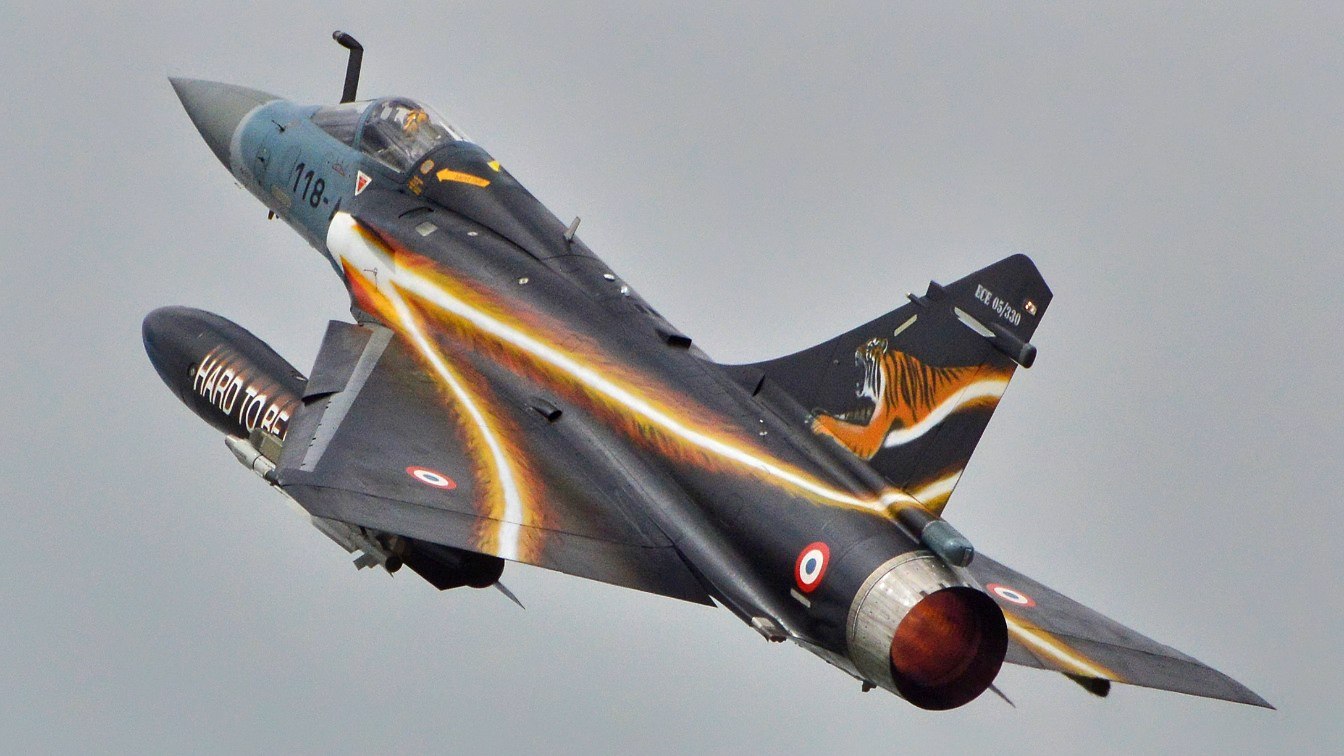
Mirage 2000 Fighter. Image Credit: Creative Commons.
The First of the Rafales
The complete package from France includes an order for 16 new French-made Rafale fighter jets and four SAMP/T surface-to-air and missile defense batteries. This will make Ukraine the first country to deploy the Franco-Italian system in combat.
The French and Italian partners on the program have also authorized licensed production in Ukraine of the next-generation Aster 30 interceptor missiles. The European partnership also states that this missile has an intercept envelope on par with the US-made PAC-3 MSE missile.
Volodymyr Zelensky, Ukraine’s president, who had traveled to Paris to sign the agreement, said it “reflects France’s true leadership in defense cooperation with Ukraine, in the interest of all of Europe”.
A potential complication is that the Franco-Ukrainian deal could cause the UK partners in the program to inquire as to whether their side has also authorized production of the Storm Shadow/SCALP in Ukraine. But it is another step forward for Ukraine in acquiring the capabilities to license-produce Western weapon systems. At the same time, the UK is also developing a cheaper but less accurate long-range missile for Ukraine that would be available within a year.
Zelensky signed the agreement just days after US President Donald Trump promised to provide the documentation that would allow Ukraine to produce its own PAC-3 interceptors for the American-made Patriot air defense system.
Timelines Made Mean Deliveries After a Peace Deal
The Rafales are expected to enter into operation in Ukraine only in 2028. That timeline is due to the backlog of orders that Dassault has for the aircraft, and the time the Ukrainian pilots will require to complete the extensive training to use them.
There are no proposed dates for when the French weapons would begin to come off Ukrainian production lines. However, the language of the agreement states: “France authorises the licensed production of AASM bombs and SCALP missiles in Ukraine before the end of 2026 and starting as soon as possible.”
Establishing production lines in a foreign country is also a very complicated and time-consuming process. Thus, it is likely that the first weapons will be produced only after a peace agreement has been concluded with Russia and hostilities have ceased. In this instance, the missiles, bombs, etc., would either be placed in Ukraine’s inventory as a security guarantee against any actions by a post-Vladimir Putin Russia or sold back into European stockpiles.
About the Author: Reuben F. Johnson
Reuben F. Johnson has thirty-six years of experience analyzing and reporting on foreign weapons systems, defense technologies, and international arms export policy. Johnson is the Director of Research at the Casimir Pulaski Foundation. He is also a survivor of the Russian invasion of Ukraine in February 2022. He worked for years in the American defense industry as a foreign technology analyst and later as a consultant for the U.S. Department of Defense, the Departments of the Navy and Air Force, and the governments of the United Kingdom and Australia. In 2022-2023, he won two awards in a row for his defense reporting. He holds a bachelor’s degree from DePauw University and a master’s degree from Miami University in Ohio, specializing in Soviet and Russian studies. He lives in Warsaw.


