


Ukrainian drones struck Russia’s Engels-2 air base, located in Saratov Oblast, according to reports in Russian and Ukrainian media. The base hosts Russia’s 184th Heavy Bomber Aviation Regiment as well as the 121st Guards Heavy Bomber Aviation Regiment. Residents of Saratov and Engels, which are close to the air base, are said to have reported the sounds of many low-flying drones followed by explosions, but Russian authorities have seemingly not confirmed the strikes on the base.
Engels is also home to some of Russia’s long-range strategic bombers, including Tu-95s, Tu-22s, and Tu-160s, all of which have been used to launch munitions at Ukrainian cities across the border. It was not immediately clear how extensive the damage to Engels-2 was.
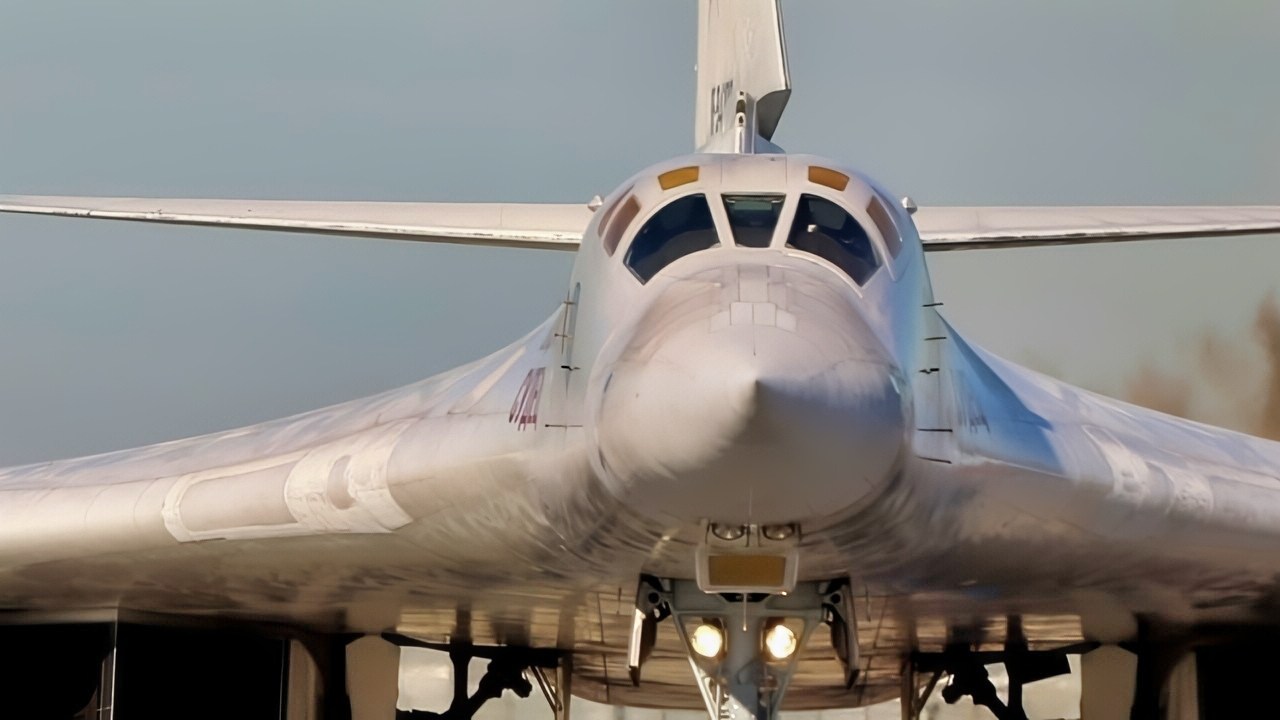
Tu-160 Up Close. Image Credit: Creative Commons.

Tu-160 bomber Creative Commons Image
The incident was, however, not the first time that Ukraine had successfully targeted and struck the Russian air base.
A String of Repeated Strikes
In fact, the air base has been one of Ukraine’s most important long-range targets. The base is home to Russia’s strategic bomber force, which includes Tu-95MS and Tu-160 aircraft that have repeatedly launched cruise missiles against Ukraine’s cities. Because of the role that those aircraft play for Russia in targeting Ukrainian civilian infrastructure, Kyiv has targeted the base on several occasions since 2022.
In December of 2022, the first Ukrainian attack on Engels occurred, marking a kind of turning point in the war. Ukrainian drones reached the base about 600-700 kilometers from Ukrainian-controlled territory, demonstrating that Russia’s rear areas could be successfully targeted.
Russia acknowledged that a drone had attacked the base, saying air defenses intercepted it but debris damaged two Tu-95 strategic bombers. Satellite imagery and independent analysis later indicated that at least two bombers were indeed damaged. On the same morning, Ukraine also struck Dyagilevo Air Base near Ryazan. But just three weeks later, at the end of December, Engels was hit again.
Russian authorities reported that air defense shot down another drone approaching the base, but said fallen debris killed three members of the technical staff. Explosions were heard around the airfield, although Moscow maintained that no aircraft were damaged. Ukraine did not officially claim responsibility.
About two years after a confirmed strike on the base itself, Russian officials reported another Ukrainian drone attack on Engels. Publicly available information about the damage was listed, but the attack reinforced that Ukraine retained the ability to threaten the installation deep inside Russia.
In January of 2025, Ukraine targeted fuel infrastructure supporting the base rather than striking aircraft directly. On the eighth, Ukraine’s General Staff said it had struck a fuel storage facility at the base, and on the fourteenth, the same facility was reportedly hit again, causing a large fire visible in satellite fire-detection data.
One of the most consequential strikes occurred in late March of 2025, when Ukraine launched a large drone attack that triggered massive secondary explosions and a fire at the air base. Verified videos showed a substantial blast, and Russian authorities evacuated nearby residents while declaring a local emergency. Satellite imagery later revealed large craters within the installation.
Ukraine said the attack destroyed ammunition storage areas, including stocks of air-launched cruise missiles awaiting use. Russian officials confirmed a fire and acknowledged damage in the surrounding area, though they did not confirm Ukrainian claims about the scale of military losses.
New Drone Design?
One Ukrainian outlet, citing photographs of the drone attack, raised the potential prospect of Ukraine introducing a new long-range, explosive-laden drone in the attack, potentially adding a new platform to Ukraine’s large selection of one-way attack drones.
More broadly, however, the attacks reflect Ukraine’s increasingly successful long-range strikes across Russia, part of a campaign that Ukrainian President Volodymyr Zelensky has dubbed his country’s “long-range sanctions” regime against Russia. That effort, which has seen attack drones drop down onto targets around the country, has focused on hitting the Kremlin hardest where it would hurt the most: the country’s ability to finance the war.
To that end, Russian drones have rained down on Russian oil infrastructure around the country, causing refineries and energy transport hubs to erupt into flames. The campaign has enjoyed a surprising measure of success, forcing long lines at the pump for Russian residents.
Russian authorities have attempted to mitigate the shortage by importing fuel from abroad, including from India and Belarus, and by relaxing environmental standards for fuel destined for domestic sale.
About the Author: Caleb Larson
Caleb Larson is an American multiformat journalist based in Berlin, Germany. His work covers the intersection of conflict and society, focusing on American foreign policy and European security. He has reported from Germany, Russia, and the United States. Most recently, he covered the war in Ukraine, reporting extensively on the war’s shifting battle lines from Donbas and writing on the war’s civilian and humanitarian toll. Previously, he worked as a Defense Reporter for POLITICO Europe. You can follow his latest work on X.


