

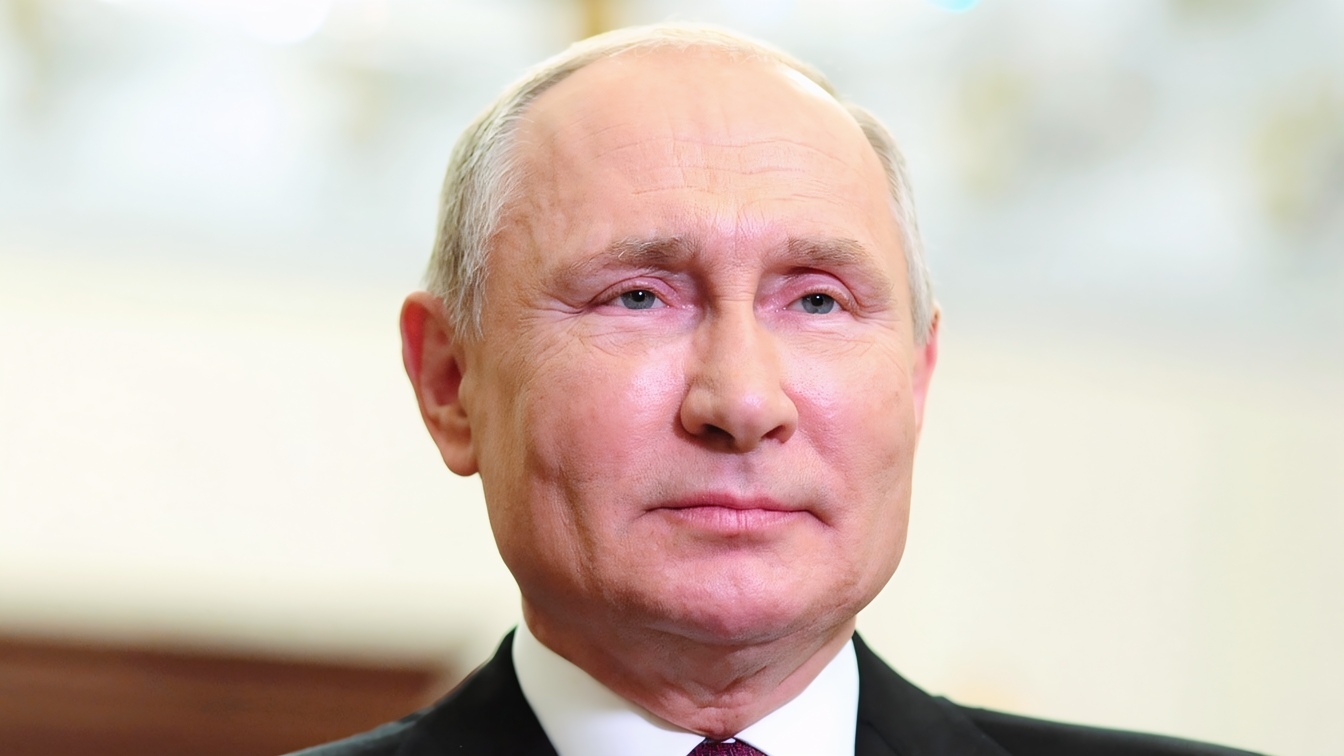
Independent polling in Russia is notoriously difficult. And while the Russian president’s position is hardly insecure given his iron grip on the reins of power in the Kremlin, he is facing multiple mounting crises both at home and abroad in Ukraine. The war, which he began with the full-scale invasion of Ukraine in February of 2022, is no longer limited to Ukraine but has spread widely into Russia itself.
Though there are no pitched battles within Russia proper, Kyiv’s burgeoning air prowess has bitten deeply into the lifeblood of the Russian state: the extraction, refining, and export of oil and related energy products. The Russian economy, retooled to further the war in Ukraine, appears to be slowing, with growth projections very modest and, according to some forecasts, eking out just a single percentage point of growth in 2026. Military spending continues, but labor shortages and inflation are hampering Russia’s dynamism and taking a significant toll on its longer-term economic prospects.

Su-35 Fighter X Screenshot
Peace talks, touted by American President Donald Trump during his reelection campaign and earlier this year in his second term, predictably led nowhere. But in the meantime, Ukrainian expertise has bolstered Kyiv’s position on the battlefield but has not yet extracted significant concessions from the Kremlin, which remains bent on seeing through its war aims, which include the annexation of the entirety of Ukraine’s eastern Donbas region.
Significant though these developments are, the Russian president’s rule remains secure. But the public’s confidence in Russia’s ability to fight — and win — its war in Ukraine, as well as the heretofore relative stability within the country, is crumbling.
Ukraine’s Strike Campaign
Ukrainian attacks on Russian targets have steadily expanded in recent months and include not just militarily significant supply depots, fuel and ammunition dumps, and Russian assets in Ukraine but also Russia’s shadow fleet, a collection of decrepit and clandestine tankers that shuffle Russian oil around the world.
Often transported under false documentation and transferred at sea, that fleet has become the target of Ukrainian military ire, as has Russia’s export of other products, including grain, fertilizer, steel, and other goods and commodities.
But the most significant pressure point pinched by Ukraine’s fleet of increasingly long-range drones and burgeoning crop of home-grown cruise missiles is Russian energy.

Su-35. Image Credit: Creative Commons.
Over fifty percent of Russian regions have activated air raid alarms on at least one occasion during 2026, a testament to how difficult it is for the world’s largest country to defend its considerable airspace.
Russian social media provides a further sign of how the war in Ukraine has come home: images of refineries across the country — even in the Russian capital, Moscow, and second city, St. Petersburg — have erupted in flames, the targets of Ukraine’s explosive-laden aerial weapons. Just last month, Russia’s largest oil refinery at Omsk, in Siberia, came under attack, knocking out a significant percentage of Russia’s total refining capacity. Remarkably, that refinery in Omsk was over 2,500 kilometers, or nearly 1,600 miles, from Ukraine.
Ukraine’s Long-Range Sanctions
It is part of what Ukrainian President Volodymyr Zelensky has dubbed his country’s “long-range sanctions” effort against the Russian state. That campaign is still ongoing — and its effects are remarkable. On Thursday, Moscow Mayor Sergei Sobyanin wrote on social media that over 200 Ukrainian drones had been launched toward Moscow, bringing the total number of drones launched at Moscow during the previous week to 1,200.
It is a remarkable turn of events for Russia, which, prior to the war, was one of the world’s top oil exporters. Now, however, thanks to Kyiv’s strike campaign, Russia has been forced to take drastic steps to ensure fuel availability for Russian drivers. In addition to banning the export of diesel fuel, Russian authorities relaxed environmental rules for refineries that process oil for domestic consumption, allowing higher sulfur content and green-lighting the import of lower-quality fuel for one year, until July of next year. In addition, Russia is seemingly scrambling to source fuel from abroad, importing gasoline from Belarus, India, and elsewhere to alleviate long lines at the pump.
The Longer Prognosis
While none of this is good news for Russia or the Russian president, it is unlikely to seriously shake the foundations of Vladimir Putin’s power in the Kremlin. They do, however, strip the veneer of control and authority he has thus far enjoyed, even despite the setbacks in Ukraine and the incredible cost the war has taken in blood and treasure.
Future predictions are fickle, but trends are easier to observe — and the trend for Russia on the battlefield, as well as for Putin’s popularity, both point downward.
About the Author: Caleb Larson
Caleb Larson is an American multiformat journalist based in Berlin, Germany. His work covers the intersection of conflict and society, focusing on American foreign policy and European security. He has reported from Germany, Russia, and the United States. Most recently, he covered the war in Ukraine, reporting extensively on the war’s shifting battle lines from Donbas and writing on the war’s civilian and humanitarian toll. Previously, he worked as a Defense Reporter for POLITICO Europe. You can follow his latest work on X.


