

While the United States struggles to rein in the economic impacts of the war with Iran, a second front seems to be opening up in the Red Sea, as the Houthis in Yemen declare a naval blockade on the Bab al-Mandeb Strait. The timing could not be worse for the U.S. or the global energy market as a whole. Oil prices have already been on the rise as Iran and the U.S. slug it out for Hormuz, but a second blockade could push prices beyond control and potentially trigger a global economic downturn. Worse still, with its hands tied up with Iran, it is uncertain whether the U.S. has enough forces in the region to adequately deal with the Houthis and the IRGC at the same time, leaving the U.S. Armed Forces in a precarious situation.
Why the Bab al-Mandeb Strait is so Important
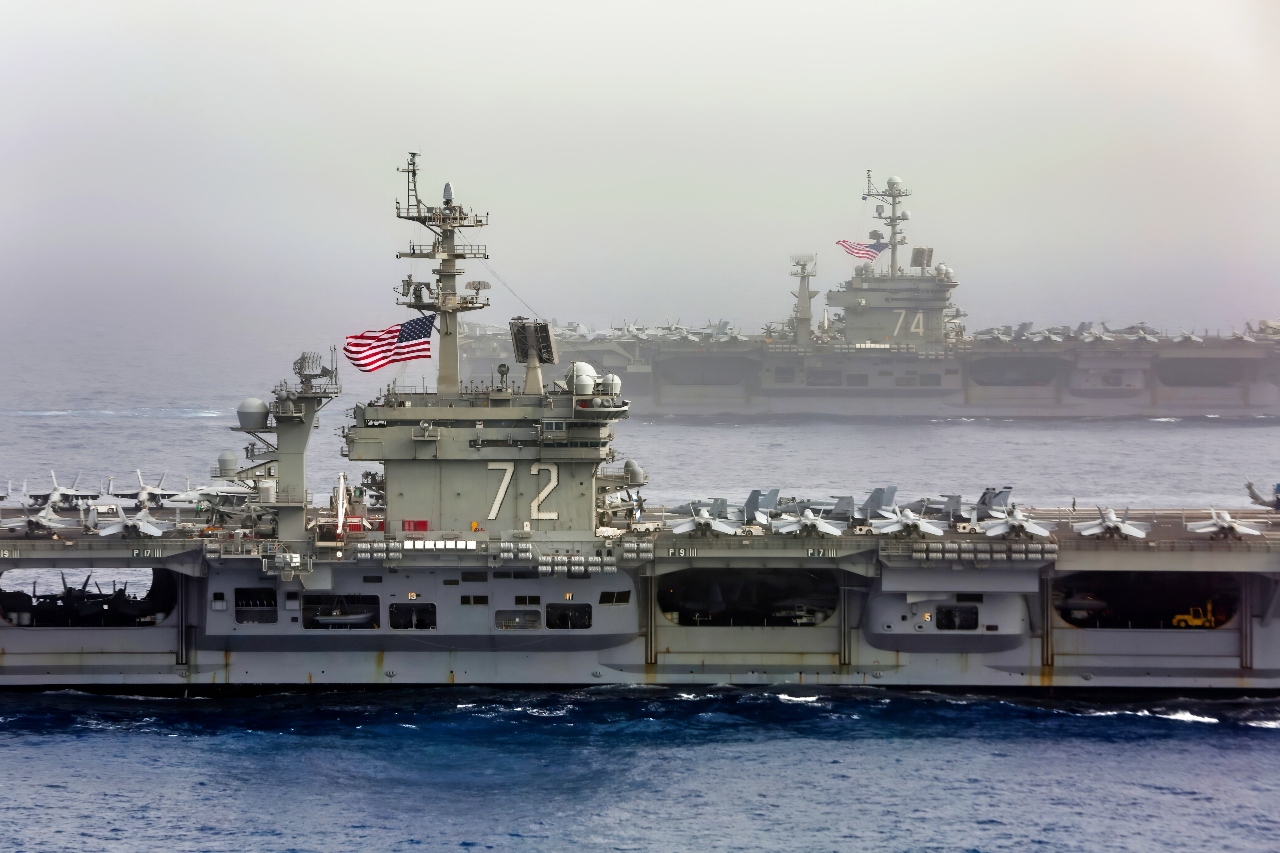
(April 24, 2019) The Abraham Lincoln and John C. Stennis carrier strike groups conduct carrier strike force operations in the U.S. 6th Fleet. Together, the strike groups will complete high-end warfighting training, enhancing interoperability with key allies and partners in the European theater. (U.S. Navy video by Mass Communication Specialist 1st Class Brian M. Wilbur/Released)
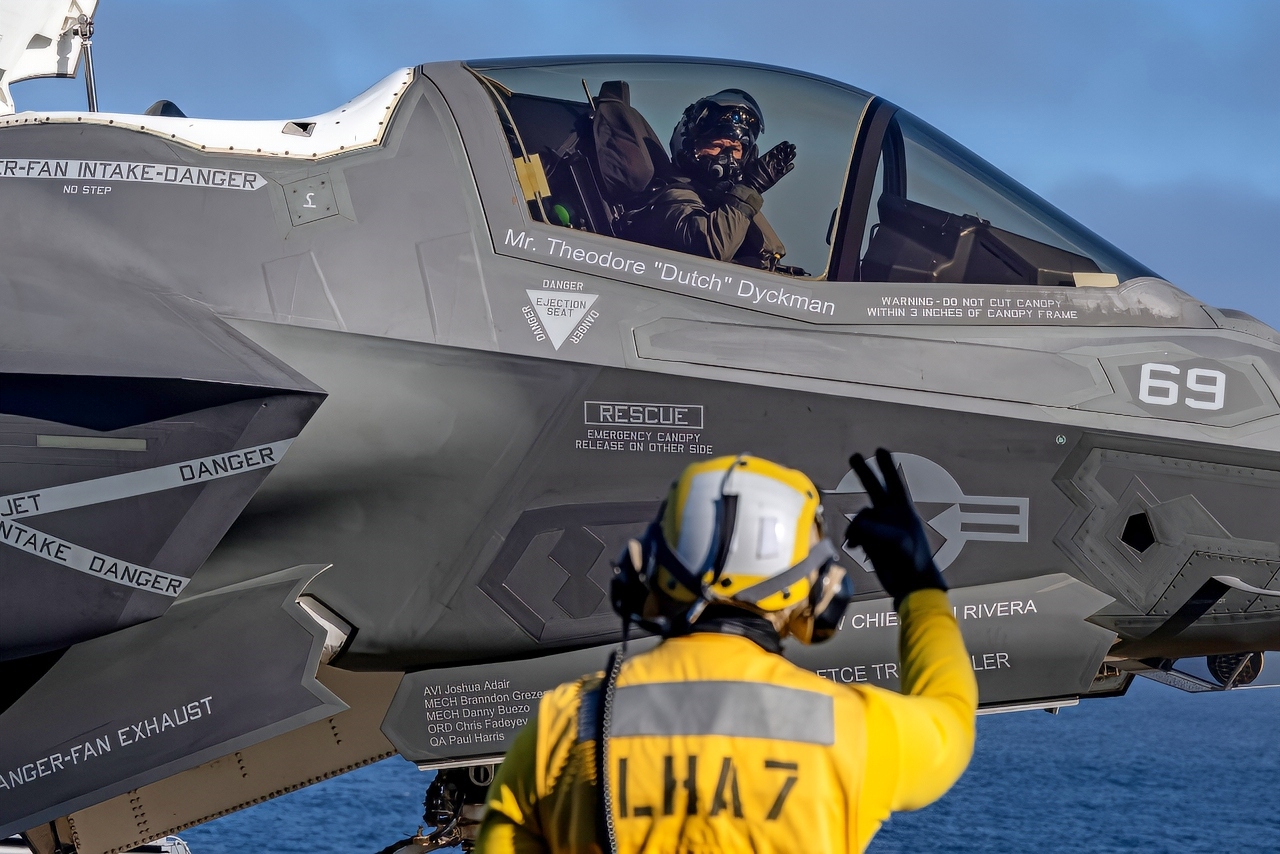
A joint team consisting of F-35 Patuxent River Integrated Test Force flight test members, U.S. Sailors and Marines, and the crew of the Japan Maritime Self-Defense Force Izumo-class multi-functional destroyer JS Kaga (DDH-184) are executing developmental sea trials in the eastern Pacific Ocean to gather the necessary data to certify F-35B Lightning II short takeoff and vertical landing aircraft operations. While aboard the MSDF’s largest ship, the Pax ITF flight test team has been gathering compatibility data for analysis in order to make recommendations for future F-35B operational envelopes, further enhancing the Japanese navy’s capabilities. The results of the testing will contribute to improved interoperability between Japan and the United States, strengthening the deterrence and response capabilities of the Japan-U.S. alliance and contributing to peace and stability in the Indo-Pacific region. Japan is an F-35 Joint Program Office foreign military sales customer planning to purchase 42 F-35Bs. The F-35 Joint Program Office continues to develop, produce, and sustain the F-35 Air System to fulfill its mandate to deliver a capable, available, and affordable air system with fifth-generation capabilities.
The Bab al-Mandeb Strait is a narrow waterway that connects the Red Sea to the Indian Ocean. At just 14 miles wide, the strait is narrower than Hormuz, making it easier for any potential militants to control. While Bab al-Mandeb doesn’t account for as much oil as Hormuz does, around 6.2 million barrels make their way through, according to Kpler. Additionally, the strait is a very convenient route for commercial shipping in general, thanks to its proximity to the Suez Canal. If the strait were closed, most east-bound cargo would be forced to travel around the Cape of Good Hope in Africa, which would drastically increase transit times and raise insurance prices.
Saudi Arabia is especially dependent on the Bab al-Mandeb Strait. With the closure of Hormuz, the Saudis have been redirecting about 5 million barrels per day to the port of Yanbu in the Red Sea via the East-West pipeline. Roughly 2.5-3.5 million barrels transit from Yanbu to Eastern customers across Southeast Asia. If the strait were to close, Saudi Arabia would be hit particularly, as a sizable portion of its oil exports would be forced to transit around the Cape of Good Hope. The oil market as a whole could suffer as prices rise beyond control. “If that route becomes inoperable, then the oil supply disruption becomes more serious, and we start talking again about a ‘no way out’ situation,” explains Helmia Croft, head of global strategy at RBC Capital Markets.
Another Shock to the Oil Market
The oil market is already reacting to the threats from Yemen.
As of writing this, Brent Crude is sitting at $94 per barrel. Yesterday, it was priced at $92 per barrel. The market was already feeling uneasy following the resumption of hostilities between Iran and the U.S. Now, with the Houthis announcing their blockade, the market is turning from uncertain to downright fearful. Since the announcement from the Houthis, five tankers departing from Yanbu have reportedly altered their routes to avoid the Bab al-Mandeb Strait. Another tanker departing from Yanbu to China made a complete U-turn at the Yemen border, supposedly under Houthi threat.
Tankers are scared of the Houthis in Yemen, and for good reason: the Houthis have a decent track record when it comes to attacking civilian cargo ships. In 2023, following the start of the Gaza war, the militant group launched multiple attacks on Israel-bound cargo ships, which prompted a harsh response from the U.S. Earlier this year, in fact, the Houthis have launched several attacks against Israel, although this was not directed against shipping vessels. The Houthis in Yemen, despite being lightly equipped compared to the U.S., are an ever-present thorn in everyone’s side. After a multi-year-long war with a Saudi-led coalition, the militant group managed to force the war into a stalemate. Even after receiving a harsh thrashing from the U.S., the group has still managed to survive and is now threatening to cause more trouble at the worst time possible.
Trump’s Options for Yemen
President Trump, meanwhile, has threatened to respond if the Houthis take any serious action against civilian tankers.
“So far, it hasn’t happened. Might happen, but we take care of things,” he said. “We’ve done that with the Houthis before, and we haven’t heard from them in a while since we did what we did originally.”
However, with the U.S. military focusing its attention on Iran, there are few forces in the region that can be spared to deal with the Houthis. There are currently two carrier strike groups in the region, and both are operating in the Arabian Sea near Iran. Already, the U.S. is struggling to protect shipping in the Strait of Hormuz; if the Navy were to divert some of its forces to Yemen, its ability to ensure shipping in the Arabian Sea would further deteriorate.
Trump is now faced with a difficult set of choices: he can choose to escalate the conflict further by diverting more forces to the region, he could divert some resources away from Iran, or he could ignore the Red Sea entirely. Each choice has its downsides, and neither option is particularly attractive.
The conflict is already facing heavy criticism from the home front, and escalating it further would come at great political cost
. As said earlier, the U.S. could divert resources from Iran to Yemen, but this could potentially hinder the war effort and give Iran the breathing room it needs. The U.S. could also call the Houthis’ bluff and do nothing, but if the Houthis are serious about their blockade, it could be disastrous for the global economy.
About the Author: Isaac Seitz
Isaac Seitz, a Defense Columnist, graduated from Patrick Henry College’s Strategic Intelligence and National Security program. He has also studied Russian at Middlebury Language Schools and has worked as an intelligence Analyst in the private sector.


