

Russia Halted One-Fifth of Its Seaborne Oil Exports as Ukrainian Drones Threatened Novorossiysk – Russia’s largest Black Sea crude terminal has stopped loading tankers during a surge in Ukrainian drone activity around Novorossiysk. The Sheskharis facility had not loaded a cargo since the morning of July 21, according to shipping and satellite data summarized in current reporting.
Sheskharis moved an average of about 650,000 barrels per day during the first seven months of 2026. That volume represents roughly one-fifth of Russia’s seaborne crude exports. No public report had confirmed serious new damage at the terminal by July 25, making the shutdown a security decision driven by the danger to tankers, crews and port operations.

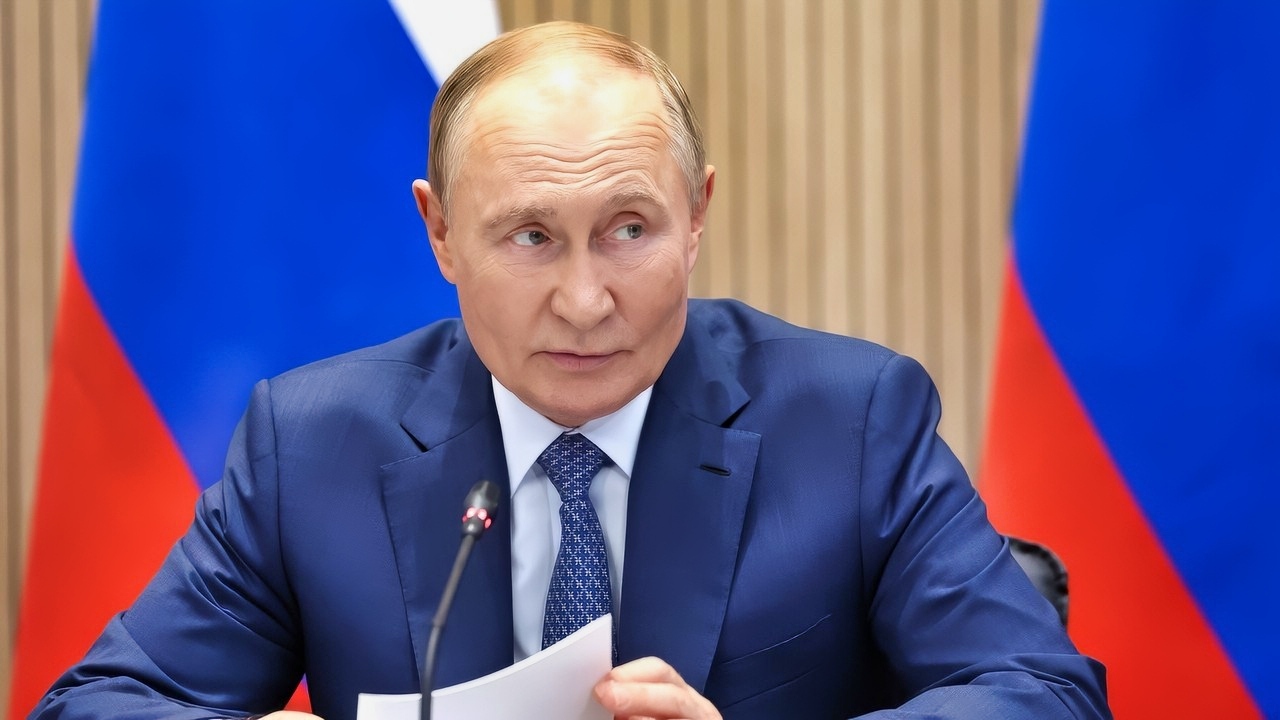
Putin in 2022. Image Credit: Creative Commons.

President of Russia Vladimir Putin at the at the BRICS+ meeting (via videoconference). Image Credit: Creative Commons.
Russian authorities warned vessels in the country’s Black Sea exclusive economic zone that aerial and naval drones created an unsafe operating environment. The warning changes the commercial calculation even when the loading berths remain intact. A tanker cannot earn money while waiting offshore, and owners and insurers do not need a direct hit before delaying a voyage.
The disruption is spreading beyond Russian crude. Drone attacks also stopped operations at the nearby Caspian Pipeline Consortium terminal, the main outlet for Kazakh oil. Kazakhstan reduced national production after storage filled and the Tengiz field cut output sharply.
Ukraine Has Turned Novorossiysk Into a Maritime Denial Problem
Ukraine does not have to demolish every berth at Novorossiysk to reduce exports. Repeated drone alerts, attacks on nearby tankers and restrictions on ship movement can lower throughput by making scheduled loading unreliable. The widening campaign against Russian maritime logistics now reaches cargo handling, tanker availability and port safety as well as naval ships.
Kyiv has also begun targeting vessels tied to Russia’s shadow fleet. Those operations raise war-risk premiums and increase the chance that owners will avoid Russian Black Sea ports. President Volodymyr Zelensky has described the wider effort as Ukraine’s long-range sanctions, linking physical disruption to the financial pressure already imposed on Russian energy exports.
Russia Can Reroute Oil, but Every Alternative Has a Cost
Russia can send more crude toward Baltic terminals, domestic refineries or other Black Sea facilities. It used those options after an April attack damaged Sheskharis and forced Rosneft to divert barrels toward Tuapse and other routes. The earlier diversion kept some oil moving but left Novorossiysk operating below normal capacity.
Alternative routes require pipeline space, rail capacity, storage and available tankers. Russia’s seaborne crude exports remained near 3.9 million barrels per day in May, according to the KSE Institute’s June oil tracker. Removing 650,000 barrels per day from one terminal creates a large scheduling problem even when some cargoes can be shifted elsewhere.
The pressure is more severe when export terminals and refineries are disrupted together. Ukraine’s campaign against the machinery that turns crude into usable fuel has already contributed to domestic shortages. A terminal shutdown adds trapped crude, tanker delays and lost export revenue to the refining problem.
Novorossiysk Is a Wider Russian Trade Chokepoint
Novorossiysk handles oil, petroleum products, grain, metals and container cargo while also supporting Russia’s Black Sea naval presence. The port operator’s development strategy envisioned annual cargo turnover approaching 168 million metric tons, according to Interfax reporting on the expansion plan.
Russia now has to protect a commercial hub and military refuge in the same exposed coastal area. Grain exporters are already seeking alternatives to vulnerable Azov routes, which places more pressure on Novorossiysk just as tanker loading has stopped.
The Length of the Sheskharis Shutdown Will Decide the Damage
A brief pause would create a backlog that Russia could work through after tankers return. A longer suspension would fill storage, force producers to slow output and redirect cargoes toward ports with limited spare capacity. The nearby CPC stoppage has already shown that production cuts begin when pipelines keep delivering oil that terminals cannot load.
Sheskharis remained idle as of July 25, with no public timetable for resuming tanker operations. Russia still has alternative export routes and large oil reserves. Ukraine has nevertheless shown that a drone threat can interrupt hundreds of thousands of barrels per day without destroying the terminal itself. The next evidence will come from tanker arrivals, loading schedules, pipeline nominations and any production cuts ordered while Novorossiysk remains unsafe.
About the Author: Harry J. Kazianis
Harry J. Kazianis (@Grecianformula) is the former Senior Director of National Security Affairs at the Center for the National Interest (CFTNI), a foreign policy think tank founded by Richard Nixon based in Washington, DC. Harry has over a decade of experience in think tanks and national security publishing. His ideas have been published in the NY Times, The Washington Post, The Wall Street Journal, CNN, and many other outlets worldwide. He has held positions at CSIS, the Heritage Foundation, the University of Nottingham, and several other institutions related to national security research and studies. He is the former Executive Editor of the National Interest and the Diplomat. He holds a Master’s degree focusing on international affairs from Harvard University.


