
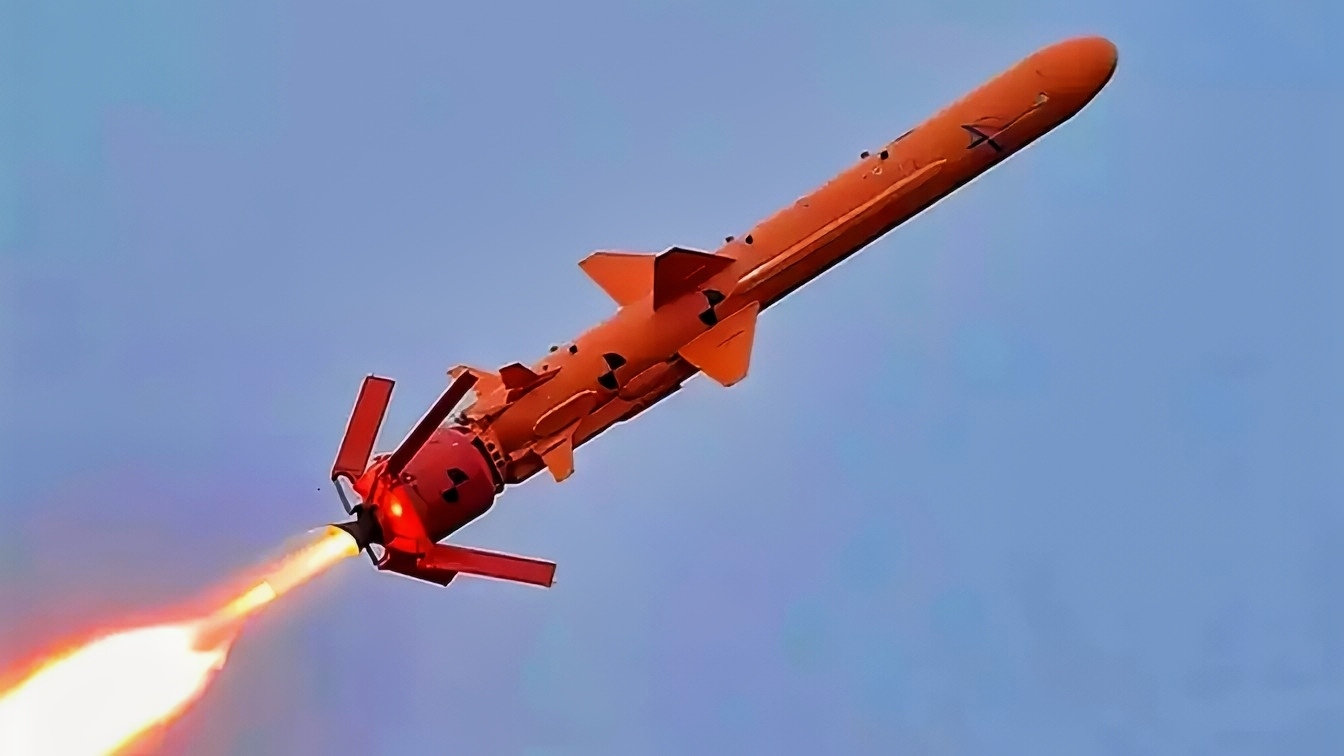
Ukrainian drone forces have struck more than 180 vessels and other maritime targets around Russian-occupied Crimea over the past three weeks, revealing yet another arrow in Kyiv’s quiver as it attempts to isolate the peninsula and disrupt Moscow’s military logistics.
The campaign began in the Sea of Azov before expanding into the Black Sea, targeting everything from oil tankers and cargo ships to floating cranes supporting Russian operations. Drone forces commanded by Robert “Magyar” Brovdi have reported hitting approximately six vessels per day since the operation began earlier this month, and the offensive escalates as a report published Friday by The Atlantic revealed a bitter feud inside Ukraine’s drone leadership.
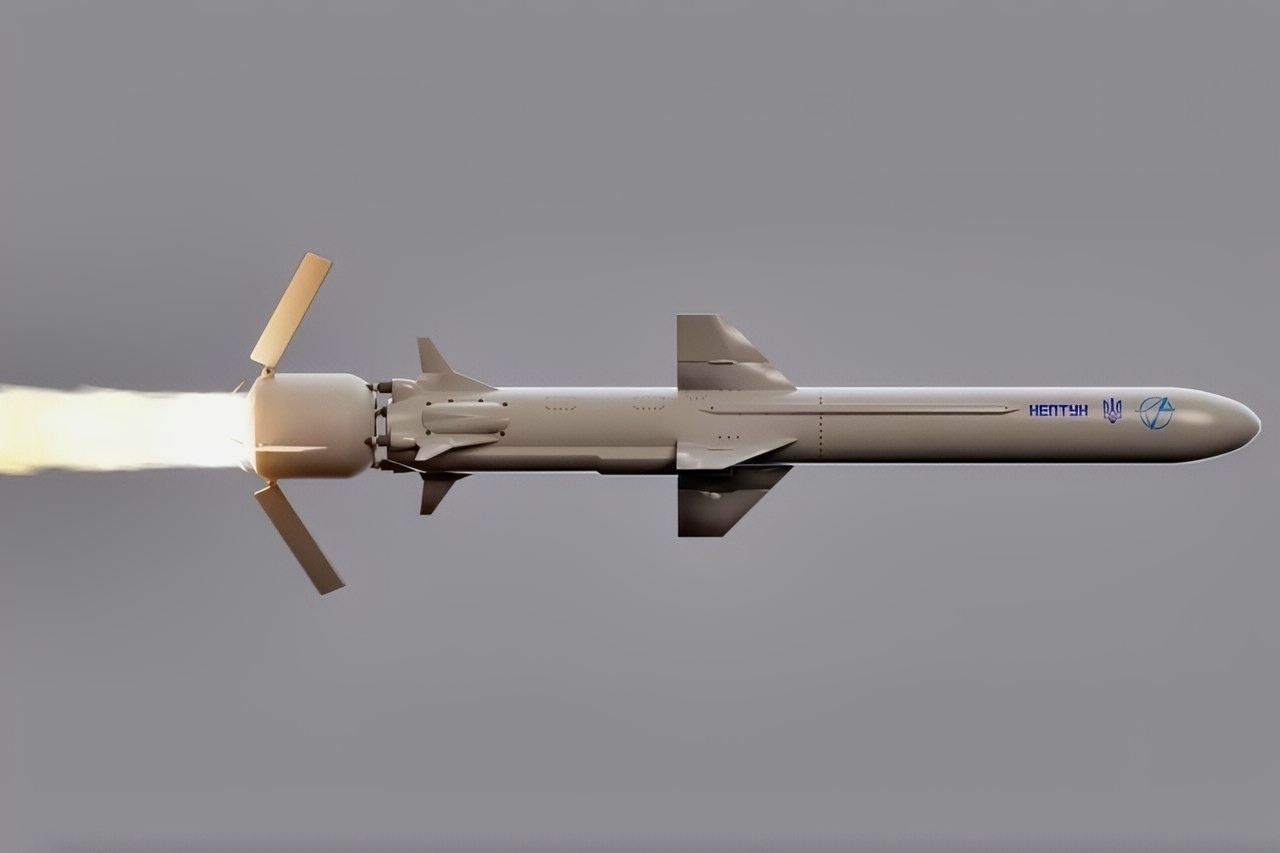
Neptune Missile. Image Credit: Government of Ukraine.
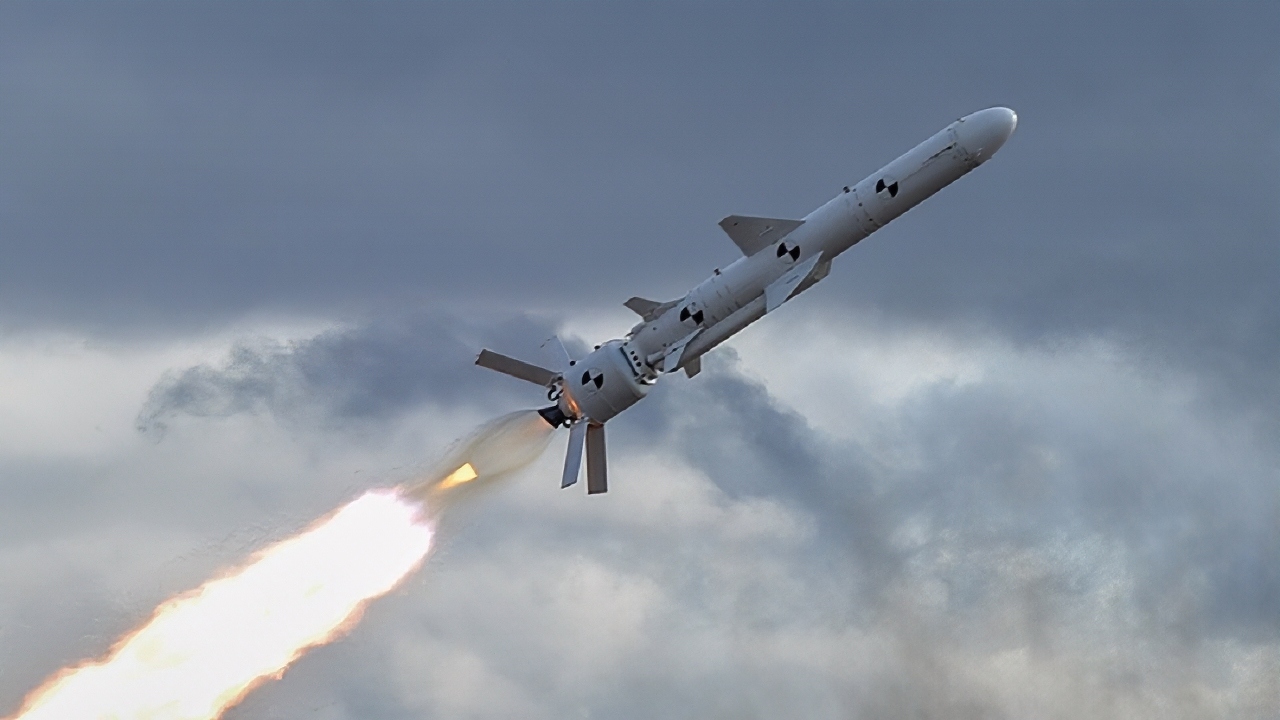
Neptune Missile. Image Credit: Creative Commons.
Ukrainian Drone Crews Hunt Russian Ships
Drones have become one of the defining features of Ukraine’s war effort – if not the defining characteristic. Ukraine now estimates that unmanned systems are responsible for the vast majority of Russian battlefield casualties, while domestically produced aircraft have enabled Kyiv to sustain long-range strikes despite uncertainty over the delivery of foreign systems. And the campaign has expanded rapidly in scale.
In June, Brovdi, the commander of the 414th Separate Unmanned Strike Aviation Brigade, said that Ukraine’s mid-range drone sorties had increased 28-fold over the last year, while long-range strikes deep inside Russia had also nearly quadrupled.
Having already targeted Russian airfields and oil infrastructure successfully, Ukrainian drone forces are now turning their attention to logistics facilities, as well as maritime targets around occupied Crimea as part of an effort to disrupt Moscow’s supply routes and challenge its control of the Black Sea.
After observing a Ukrainian drone unit operating from an undisclosed location in southern Ukraine, more than 62 miles from the frontline, Reuters reporters described how soldiers known as “Magyar’s Birds” operate 24 hours a day.
“We work day and night, every day, without time off,” one battalion commander, identified by his call sign Ray, told the outlet.
During the visit, soldiers launched Ukrainian-made FP-1 and FP-2 deep-strike drones from catapults every few minutes.
Small boosters propelled the propeller-driven aircraft into the air before they flew automatically toward designated operational zones.
Pilots positioned elsewhere could then assume control during the final stage of an attack.
The crews also said that the mission witnessed by Reuters struck a cargo ship, a floating crane and an electrical substation in southern Crimea, though the outlet could not independently confirm the attacks.
The Maritime Campaign to Isolate Crimea
The maritime strike campaign designed to isolate Crimea from the Russian mainland, known as “Molochko,” began in the Sea of Azov before it expanded into the Black Sea.
According to Reuters, Brovdi’s unit claims to have struck more than 180 vessels and other maritime targets over the past three weeks, averaging roughly six vessel strikes per day.
The campaign has so far produced a series of high-profile attacks.
On July 13 and 14, Ukraine said it struck 11 vessels in the Sea of Azov, including five oil tankers, five dry-cargo ships and a tugboat.
Earlier, on July 6 and 7, Ukrainian forces claimed attacks on 12 fuel tankers transporting supplies toward occupied Crimea.
The campaign is the product of a much bigger shift in Ukrainian strategy after successfully attacking Russia’s Black Sea Fleet, forcing many warships to relocate from occupied Sevastopol to Novorossiysk.
With major Russian naval assets now operating farther away from Crimea, Ukrainian forces have begun to focus on commercial shipping and fuel deliveries as part of an effort to hurt the Russian economy and raise the cost of sustaining the war.
The Atlantic Reveals Bitter Drone Leadership Feud
The seemingly rapid expansion of Ukraine’s drone campaign against Russia follows months of reported infighting over how the country’s unmanned forces should be developed.
According to The Atlantic, former Defense Minister Mykhailo Fedorov pushed to rapidly expand drone production and decentralize procurement through the Brave1 defense technology platform, while Commander-in-Chief Oleksandr Syrsky had different ideas.
For Syrsky, a more conventional military approach made more sense, with the commander-in-chief arguing that drones should not dominate Ukraine’s war strategy.
Staff writer Simon Shuster reported that the dispute over drones intensified when Fedorov became defense minister in January, with both men reportedly appealing to President Volodymyr Zelenskyy as the drone campaign grew.
According to the report, Zelenskyy dismissed both officials, replacing them with new military leaders following months of internal disagreement.
The report of the long-running feud comes as Ukraine’s drone strategy proves to have been the most consequential decision made in the conflict, or perhaps in any modern war.
Over the past two years, domestically produced Ukrainian drones have struck everything from Russian air bases and ammunition depots to major oil refineries and logistics hubs hundreds of miles from the front line.
All of Russia has been impacted, its fuel economy has been hurt badly, and new maritime strikes now threaten its grain exports. Fedorov’s vision, it seems, has been vindicated.
About the Author: Jack Buckby
Jack Buckby is a British researcher and analyst specializing in defense and national security, based in New York. His work focuses on military capability, procurement, and strategic competition, producing and editing analysis for policy and defense audiences. He brings extensive editorial experience, with a career output spanning over 1,000 articles at 19FortyFive and National Security Journal, and has previously authored books and papers on extremism and deradicalization.


