

On Sunday, President Trump shared a series of AI-generated images depicting a strike on Kharg Island, bearing the message “Strike on Kharg.”
Quality of the images aside, the comments from Trump have once again raised the possibility of an operation to seize Kharg Island from Iranian control.
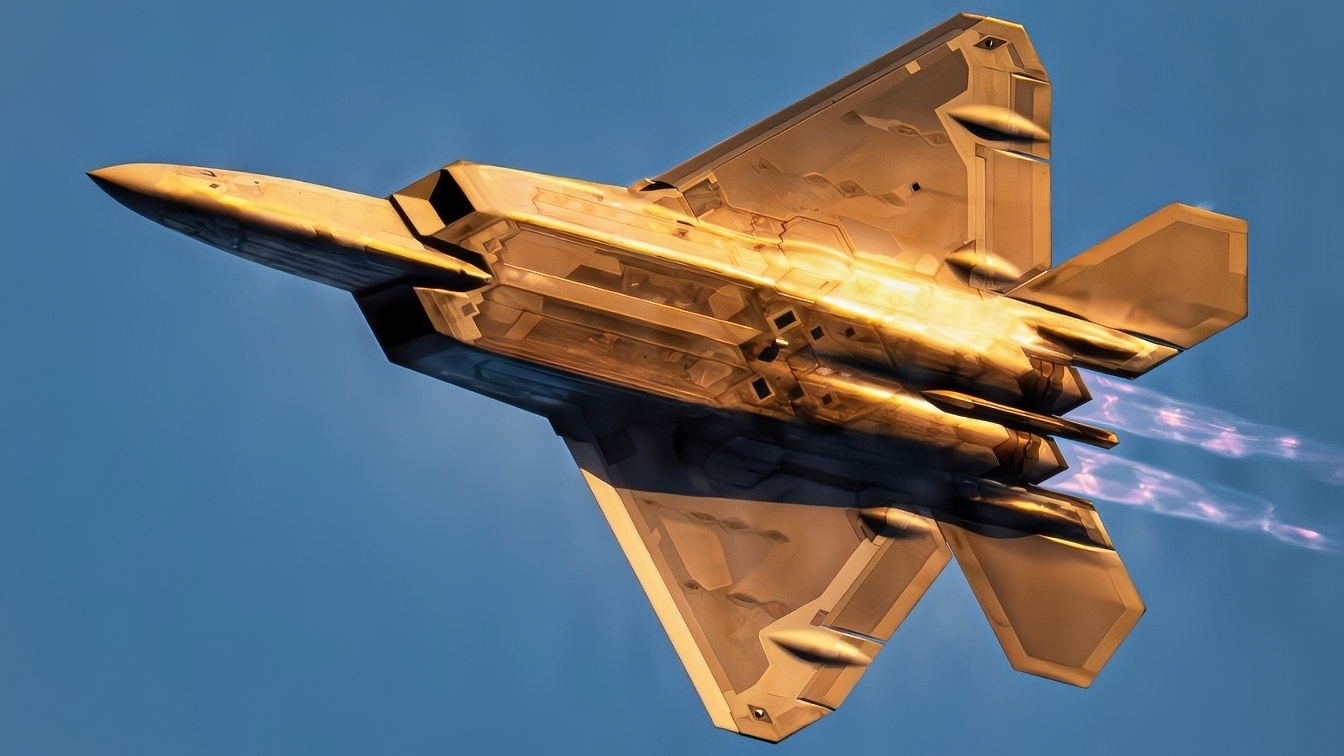
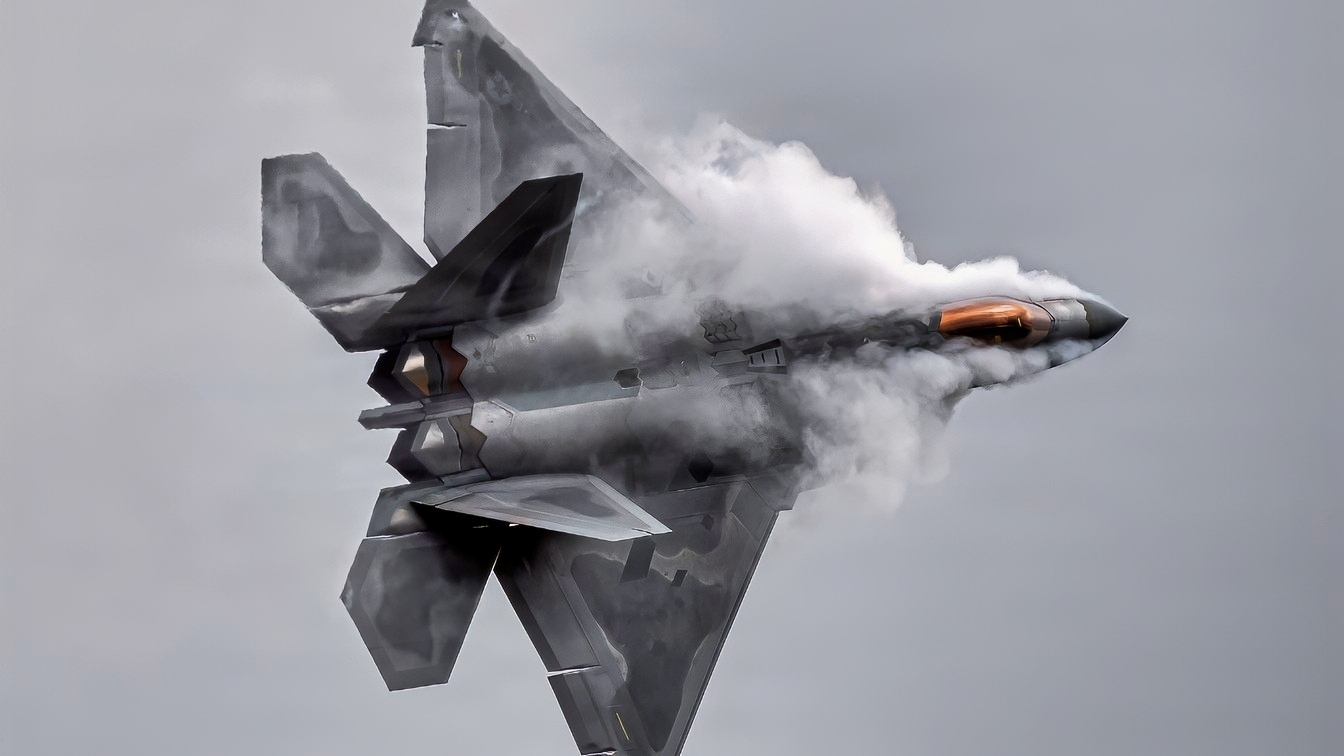
U.S. Air Force Capt. Nick “Laz” Le Tourneau, pilot and commander of the F-22 Raptor Aerial Demonstration Team, performs an aerial demonstration during the 52nd Annual SUN ‘n FUN Aerospace Expo in Lakeland, Florida, April 15, 2026. Capt. Le Tourneau showcased the unmatched capabilities of the F-22 to the SUN ‘n FUN crowds by performing multiple series of combat maneuvers. (U.S. Air Force photo by Staff Sgt. Mary Bowers)
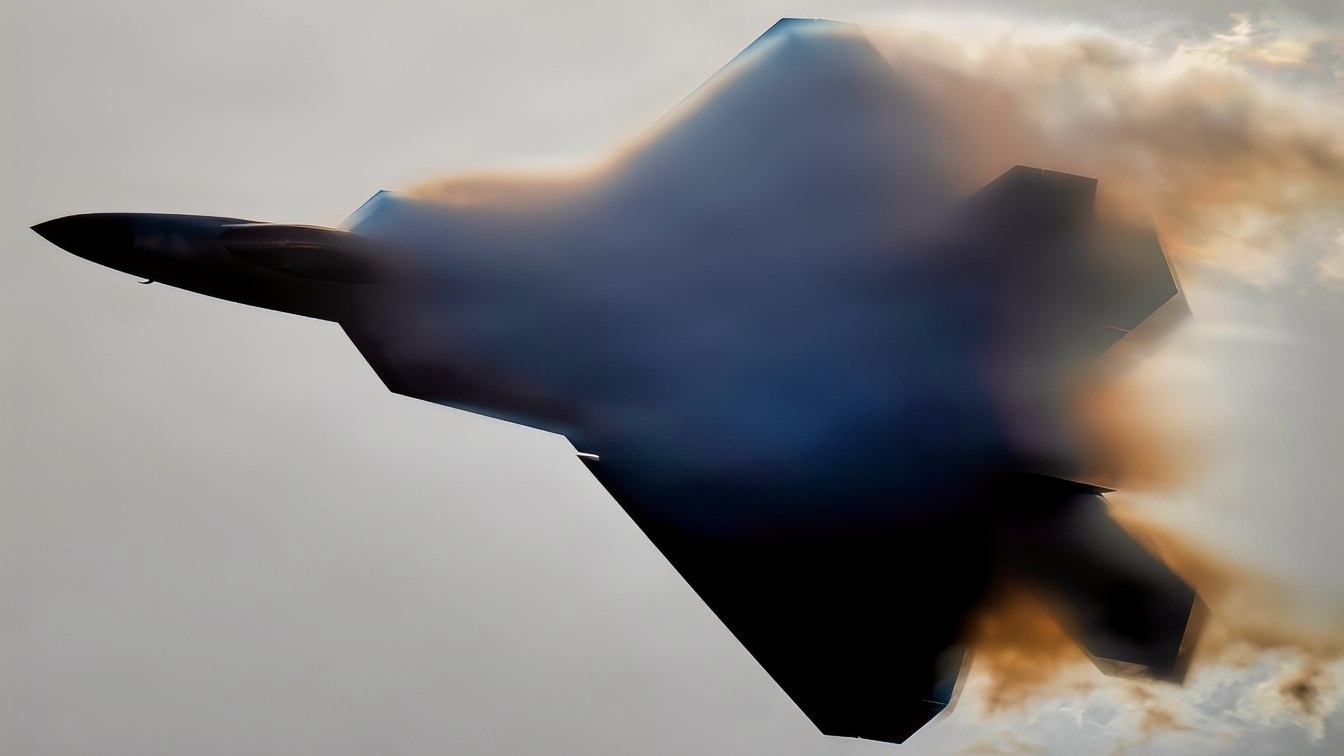
A U.S. Air Force F-22 Raptor emerges from a cloud of vapor during an aerial demonstration at Naval Air Station Meridian, Mississippi, March 27, 2026. The F-22 is designed to perform high-performance maneuvers that showcase its maneuverability and control in flight. The visible vapor forms when rapid changes in air pressure and humidity around the aircraft cause water vapor in the air to condense. (U.S. Air Force photo by Staff Sgt. Lauren Diaz)
Kharg Island is one of the most important hubs for the Iranian economy.
Located roughly 400 miles from the Strait of Hormuz, the island is responsible for roughly 90% of Iran’s oil exports, processing around 950 million barrels of oil per day prior to the start of the war.
The island is therefore of vital importance to the Iranian economy. An operation to seize the island, however, would pose a considerable risk for both the U.S. and Iran, and would escalate the conflict to a whole new level.
Why Kharg Island Is So Important for Iran
Kharg Island has been on Trump’s mind since 1988. The island sits close to the Iranian coast along the Persian Gulf and houses some of the largest oil terminals in the entire country.
As said earlier, the island is responsible for processing 90% of Iran’s oil exports and is of extreme importance for the country’s economy.
After Iran imposed its blockade on the Strait of Hormuz, the U.S. imposed a retaliatory blockade on ships bound for Iran, specifically Kharg Island.
Two weeks ago, the U.S. carried out an attack against a tanker that was sailing towards the island.
The island has been struck several times, though it is unknown whether any of the oil infrastructure has been damaged or destroyed.
Trump’s latest posts on Kharg Island are… difficult to decipher and probably shouldn’t be interpreted as a sign of any potential military operations.
That being said, losing the island would be a significant blow to Tehran. “Kharg Island is the single-most important chokepoint for the energy industry in Iran,” said Andreas Krieg of King’s College. “So if you take that, you basically take away the ability of the Iranians to sell oil and thereby make money, which over time, long term, would completely destabilize the regime.”
If the U.S. wanted to deal a major blow to the Iranian regime, seizing Kharg Island would be one of the strongest options available to Trump.
Could the U.S. Military Seize the Island?
From a military perspective, seizing the island would be risky, but not impossible for the U.S. In an interview with Fox News, retired Vice Admiral Robert Howard, former deputy commander of U.S. Central Command, gave his thoughts on what a potential assault on Kharg Island could look like.
The U.S. could send in a Marine Expeditionary Unit under the cover of U.S. air assets while the Navy provides supporting fire.
The main goal would be to seize the island without destroying the major oil infrastructure on the Island.
“The real objective at the end of the day is to minimize risk,” Howard said. “Not only to your own forces, but to the people you’re coming in contact with [while limiting damage to facilities that could eventually be handed over to] a government of Iran that is focused on supporting its people, as opposed to proliferating the Islamic Revolution.”
However, as many military experts have pointed out, the real challenge is not taking the Island, but holding it.
Located just a couple of miles from the Iranian coast, Kharg Island is well within the range of Iranian ballistic missiles, anti-ship missiles, and drones.
With not much room to maneuver on the relatively small island, American forces on the island could find themselves easy pickings for Iranian munitions if the U.S. fails to establish complete air superiority.
Another big question is whether any of the U.S.’ Gulf allies will allow their territory to be used as a staging base for the operation, which would also be within Iranian ballistic missile range.
If the Island falls, there is also a risk that the Iranian regime decides to destroy the oil infrastructure on the island, thus jeopardizing any value that the Americans can exploit.
Is it Worth the Risk?
Thus far, Trump has been surviving on the claim that the war with Iran has produced a relatively small number of American casualties.
So far, the Pentagon has only acknowledged 18 deaths since the beginning of the war, though some speculate that the real number may be much higher.
If the U.S. commits ground troops to an amphibious landing on Kharg Island, however, the casualty figures are bound to spike significantly.
Even if the operation were successful, if the casualty rates are high, then support for the war, which is already notably low, could dip even further.
Considering the fact that midterm elections are coming up in November, an amphibious assault is likely too large a political risk.
An assault on Kharg Island would signify a major escalation in the war with Iran. As one of the most important oil hubs in the country, the regime is unlikely to hand the island over without a fight.
In the best-case scenario, seizing the island would provide ample leverage, which could pressure the regime into agreeing to end the war once and for all.
In the worst-case scenario, American forces find themselves in a kill box and face constant threats from Iranian drones and missiles.
With reports that Iran may be receiving intelligence from Russia or China, there’s a large possibility that the IRGC finds out about the operation beforehand and prepares accordingly.
While there is a chance the operation could go as planned, there is an equal chance that it becomes the next Bay of Pigs disaster. The decision ultimately rests in President Trump’s hands.
About the Author: Isaac Seitz
Isaac Seitz, a Defense Columnist, graduated from Patrick Henry College’s Strategic Intelligence and National Security program. He has also studied Russian at Middlebury Language Schools and has worked as an intelligence Analyst in the private sector.


