

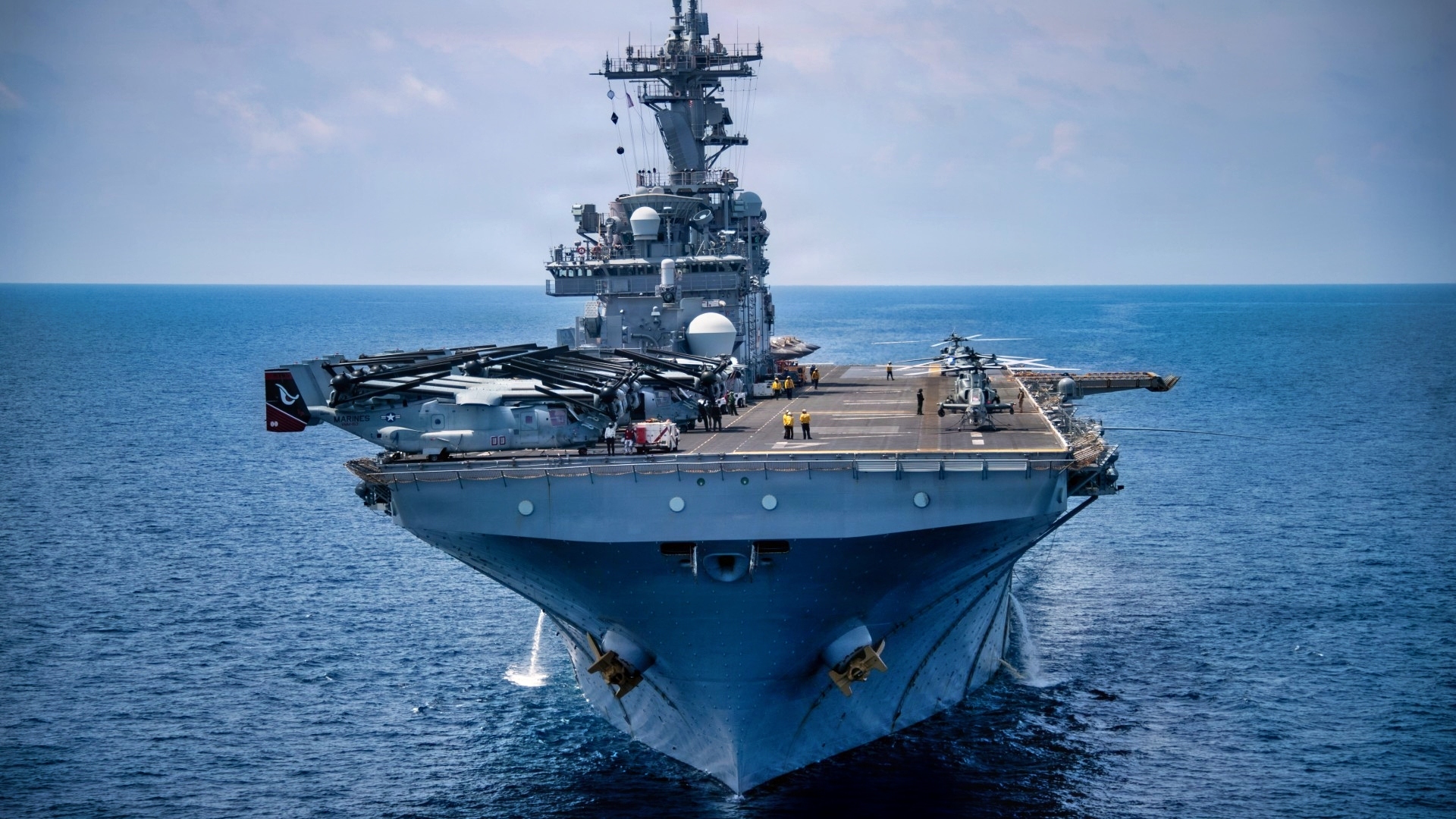
Recently, I participated in a panel discussion with several notable people, some of whom were from the technology sector, others were from the finance industry, and a handful (like me) were geopolitical nerds. There was overlap among us in these areas, too.
One of the guests saw fit to explain that, per his sources in the administration and the Pentagon, the United States intended to conduct a Marine amphibious landing on Kharg Island in the Strait of Hormuz (SoH) as well as a landing with Airborne Rangers.
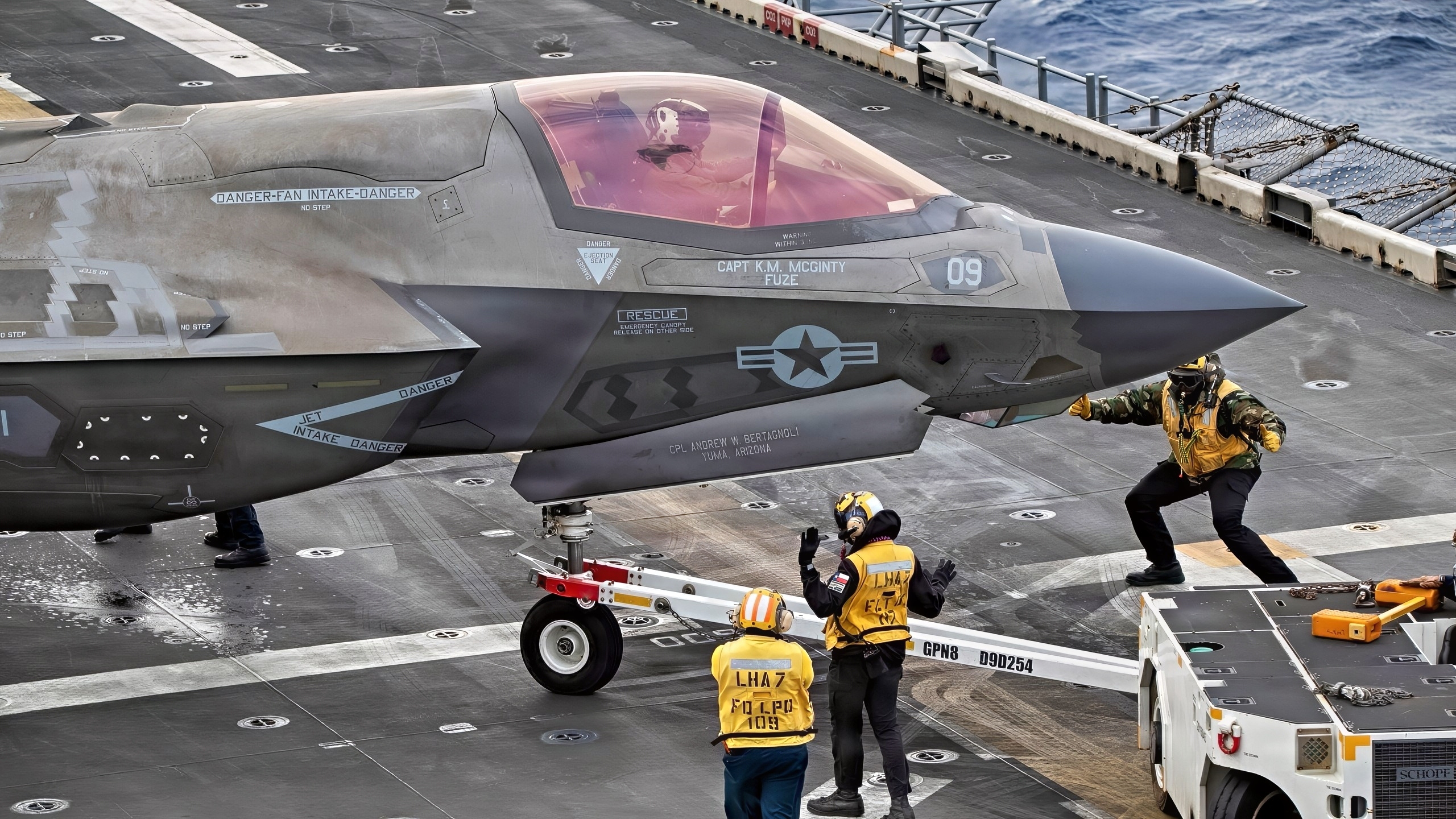
Sailors help move an F-35B Lighting II attached to Marine Fighter Attack Squadron (VMFA) 121 on the flight deck of America-class amphibious assault ship USS Tripoli (LHA 7), Mar. 05, 2026. Tripoli Amphibious Ready Group (ARG), composed of America-class amphibious assault ship USS Tripoli (LHA 7), San Antonio-class amphibious transport dock ships USS New Orleans (LPD 18) and USS San Diego (LPD 22), along with the 31st Marine Expeditionary Unit (MEU), are underway conducting routine operations in the U.S. 7th Fleet area of operations. U.S. 7th Fleet is the U.S. Navy’s largest forward-deployed numbered fleet, routinely interacts and operates with allies and partners in preserving a free and open Indo-Pacific. (U.S. Navy photo by Mass Communication Specialist Seaman Apprentice Reese Mitchell Taylor)
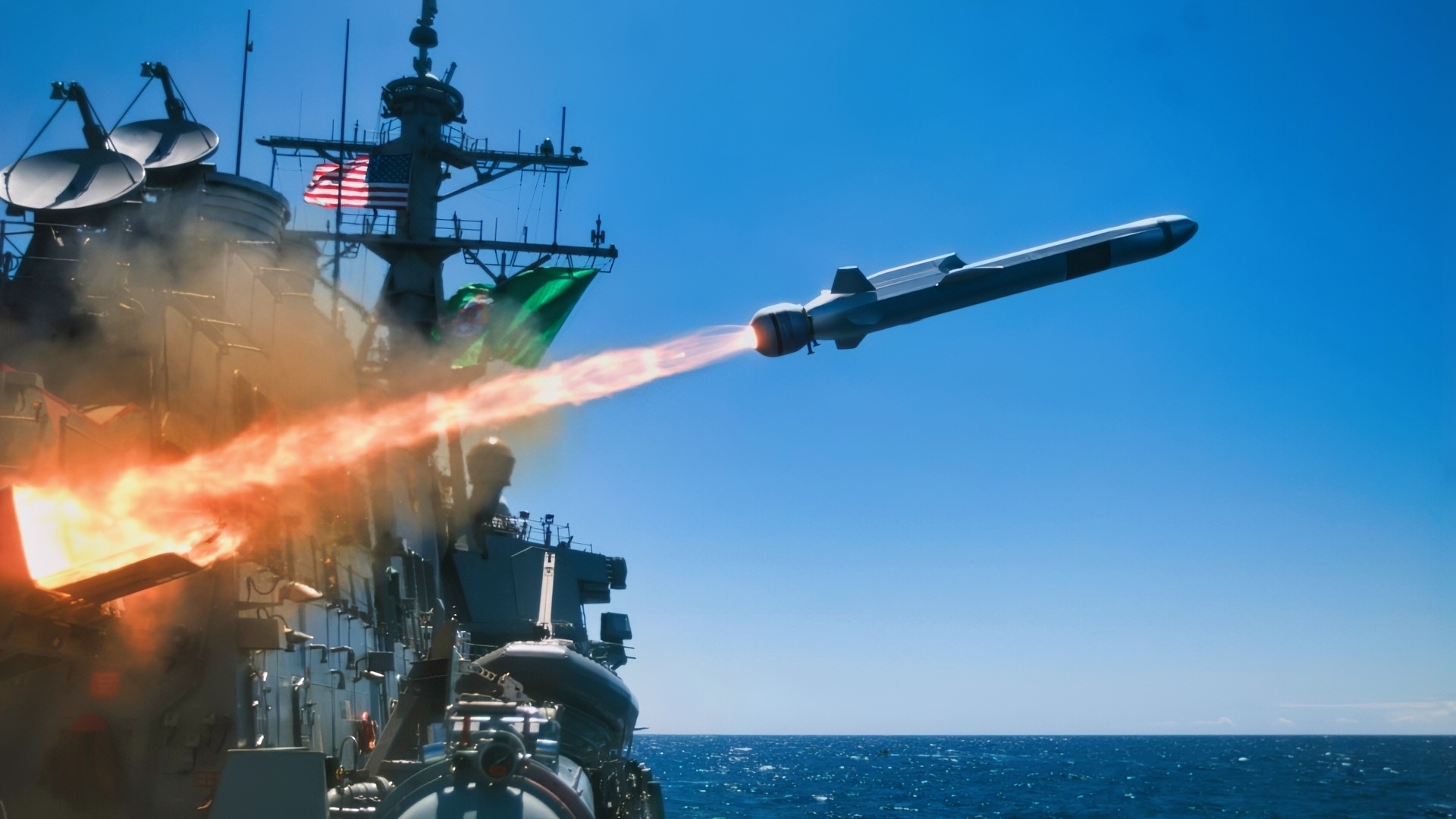
The Arleigh Burke-class guided-missile destroyer USS Fitzgerald (DDG 62), while participating in Exercise Rim of the Pacific (RIMPAC) 2024, fires the first naval strike missile from a U.S. destroyer July 18. Twenty-nine nations, 40 surface ships, three submarines, 14 national land forces, more than 150 aircraft, and 25,000 personnel are participating in RIMPAC in and around the Hawaiian Islands, June 27 to Aug. 1. The world’s largest international maritime exercise, RIMPAC provides a unique training opportunity while fostering and sustaining cooperative relationships among participants critical to ensuring the safety of sea lanes and security on the world’s oceans. RIMPAC 2024 is the 29th exercise in the series that began in 1971. (U.S. Navy photo by Mass Communication Specialist 2nd Class Jordan Jennings)
The idea is that the Trump administration is effectively taking Kharg over to deprive Iran of its ability to produce energy.
By removing that capability, the White House assumes that the Islamic Republic of Iran will have no choice but to negotiate in good faith with the Americans, and it will then abandon whatever pretensions of control over the SoH they’ve had since the war began.
If the panelist I spoke with is at all accurate, the attack could commence as early as within the week. Of course, there are significant complications to any such plan–notably, this time of year is a bad time to start a ground operation, especially on a heavily fortified and defended island like Kharg.
But the administration believes that the Marines and the US Army Airborne Rangers can take the island relatively quickly.
Once they are on the island, the Americans will cut the Iranians off from 90 percent of their refining capacity (which is on Kharg Island).
When I pressed the panelist about what might happen in the event the Trump administration truly acted on these claims, given Iran’s preponderance of power along its expansive coastline with the SoH (they have swarms of thousands of missiles and drones at the ready), the panelist explained that the administration thinks the Iranians won’t risk damaging their production facilities on the island in a sustained campaign.
The Danger of Repeating Failed Assumptions
There are many (bad) assumptions implicit in these views. And it raises the question of whether those assumptions are reliable.
All the assumptions thus far in the more than 100-day war have been wrong. And the decisions made based on those assumptions have led to a drastic worsening of the situation on the world stage for the United States and its allies.
If past is prologue, as it so often is in foreign affairs, why would this administration assume that things will go according to their plans if none of this current war with Iran has thus far transpired per their designs?
Hubris, as always, is both intoxicating and presages the fall, it seems.
From Plan A to Plan C
David E. Sanger of the New York Times recently asked his readers if the Trump administration has a “Plan C” for the War in Iran, since plan A–war–and plan B–a ceasefire–did not work.
The administration is clearly answering that its Plan C is essentially a fusion of Plans A and B. Basically, it’s the worst of both bad plans that preceded it.
Former senior US diplomat Richard N. Haass told the NYT that Washington has reached a “strategic dead-end.”
He reasons that US strikes provoke the very retaliation from Iran that the Trump administration must seek to avoid (because Iran can disrupt shipping through the SoH).
The United States still lacks an effective way to fully protect shipping and Gulf energy facilities.
Each escalation, therefore, produces another escalation, leading to an inconclusive conflict that increasingly disfavors the United States (because of the economic fallout from military escalation).
The Strait of Hormuz Miscalculation
Plus, there was a fundamental misinterpretation between the United States and Iran over the SoH. Washington believed the Memorandum of Understanding (MoU) would prevent Iran from exerting operational control over the SoH while allowing commercial traffic through the Strait to resume.
Iran, on the other hand, assumed that Iran would administer the SoH and ships would use Iranian-controlled routes, all of which would lead to the creation of a toll regime.
When US Navy ships escorted vessels through the Oman route of the SoH, Iran treated it as a violation of the agreement. That ambiguity became one of the major reasons the agreement unraveled.
Another Intelligence Failure?
More importantly, Washington underestimated the divisions within Iran’s society at the start of the war.
Watching protests unfold, the Americans and Israelis believed all they had to do was attack the top layer of leadership in the Islamic Republic and, once it was gone, the assumption was that the people would rise up and replace their hated regime with a friendlier one.
That did not happen. As evidenced by the upwards of 15 million people who attended the funeral of Ayatollah Ali Khamenei, it’s now obvious that the Iranian people were not as opposed to their regime as the Trump administration assumed.
Just as with the Iraq War 20 years ago and the disastrous withdrawal from Afghanistan in 2021, US intelligence failed in its most basic functions: providing accurate information on an enemy’s capabilities and intentions as well as its internal political disposition.
Can Capturing Kharg Change the Strategic Reality?
Under existing conditions, at best, the war is in a stalemate. Yet, it is clear that the Iranians believe they’ve won–and many other countries think Iran won.
On every major negotiating point that Washington wanted to resolve with Iran (or that Washington wanted to resolve in its favor via war), Washington has failed.
Uranium enrichment is still very much a capability that Iran refuses to surrender. Inspections are not on the table. Tehran refuses to negotiate on its missile and drone capabilities. And now they’re demanding control over the SoH.
Trump wants none of this.
He wants to “finish the job.” So, he is apparently going to try to land on Kharg Island to reset the conditions of negotiations.
You see, right now, with Iran having some semblance of control over the SoH, they can dictate what ships go through.
Thus far, the Iranians have moved their energy supplies.
Further, Iran has been using the Belt and Road Initiative (BRI) railway in northern Iran to move its goods, thereby avoiding the SoH blockades.
Recently, the US military bombed that railway. Now, they plan to land and deprive Iran of its critical energy production at Kharg.
As Sanger rightly pointed out in his NYT piece, the assumptions underlying the earlier phases of the war were wrong.
Why assume less of this potential round of warfare?
About the Author: Brandon J. Weichert
Brandon J. Weichert is Senior National Security Editor. He also manages The Weichert Brief on Substack. Weichert also hosts “National Security Talk” on Rumble. He is the author of four bestselling national security books, the most recent of which is A Disaster of Our Own Making: How the West Lost Ukraine (Encounter Books). Follow him via Twitter/X @WeTheBrandon.


