

The war in Ukraine is entering another troubling stage of escalation. In recent weeks, the Russians have moved into one of the four main Ukrainian “Fortress Cities” in the contested eastern part of the country.
Meanwhile, Ukraine has launched a seemingly relentless wave of drone attacks on critical infrastructure, transportation, and energy nodes throughout the Russian Federation.

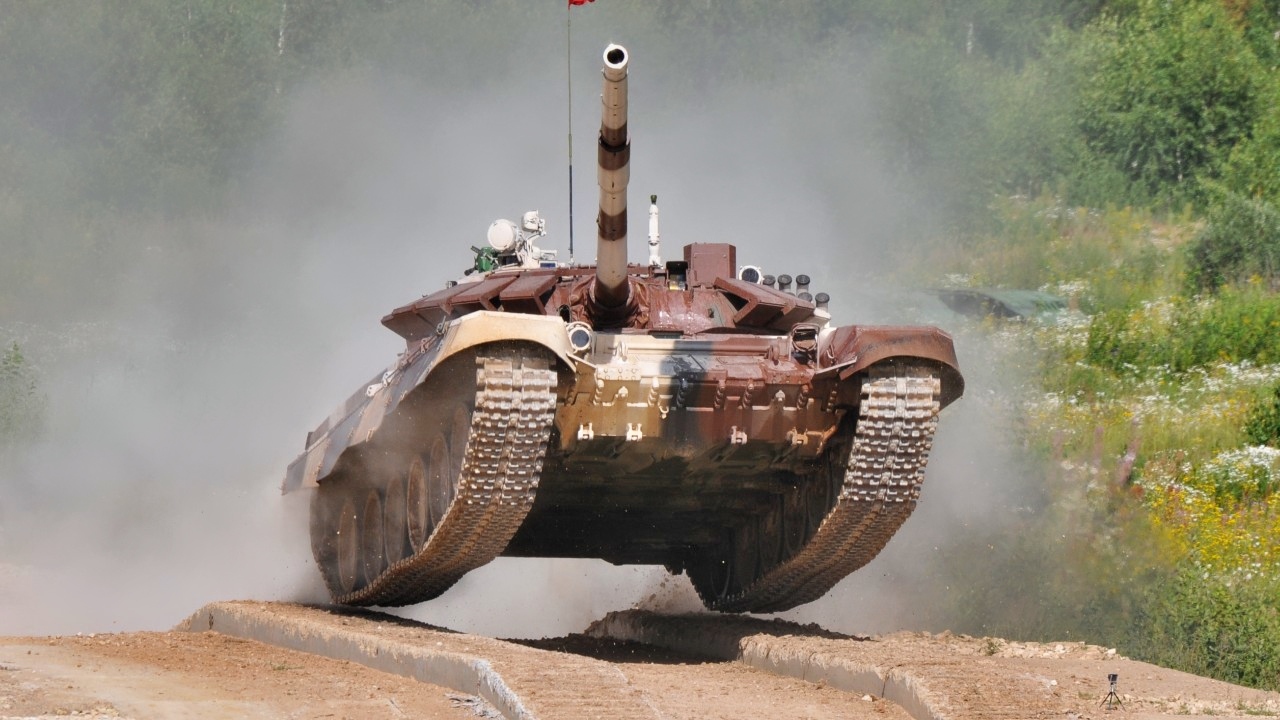
Tim Murry, a foreign threats compound contractor, drives a T-72 battle tank into position to serve as adversary targets for a joint service exercise, Emerald Flag, at Eglin Air Force Base, Fla., Nov. 30. Emerald Flag is a multi-service exercise aimed to unify information sharing across joint domain platforms. (U.S. Air Force photo/1st Lt Karissa Rodriguez)
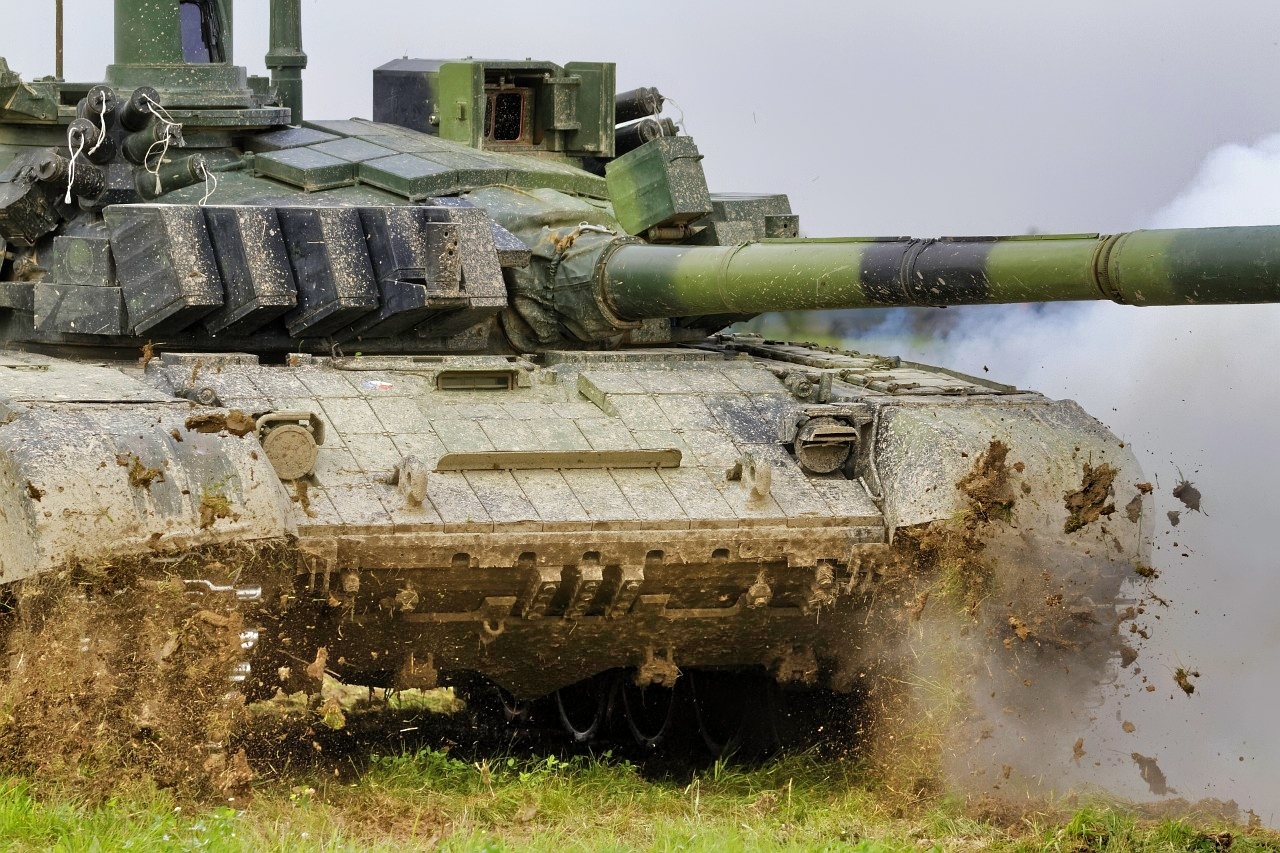
T-72 Tank. Image Credit: Creative Commons.
Now, it looks like the Russian Armed Forces might be exercising their numerical advantages in terms of troop levels over the Ukrainians, who have long struggled with the complex problem of having access to fewer people to continue their war effort (high-tech solutions, like the drones, have helped offset these complications until recently).
Is Russia Mobilizing?
Ukrainian President Volodymyr Zelenskyy has warned publicly that Russia may draft up to 500,000 additional troops following September’s parliamentary elections.
The Ukrainian leader claimed that his country’s intelligence services assess that Moscow is preparing the conditions for a significant new round of mobilization in response to the increased pressure Kyiv has exerted on the Russian state in recent weeks.
No official word of mobilization has come from the Kremlin. And former Russian President Dmitry Medvedev, who is still close to President Vladimir Putin, rejected reports that another draft was imminent.
Of course, that could all be misdirection.
John Hardie, the deputy director of the Russia Program at the Foundation for Defense of Democracies (FDD), told Newsweek that further mobilization would likely help Russia prolong the conflict.
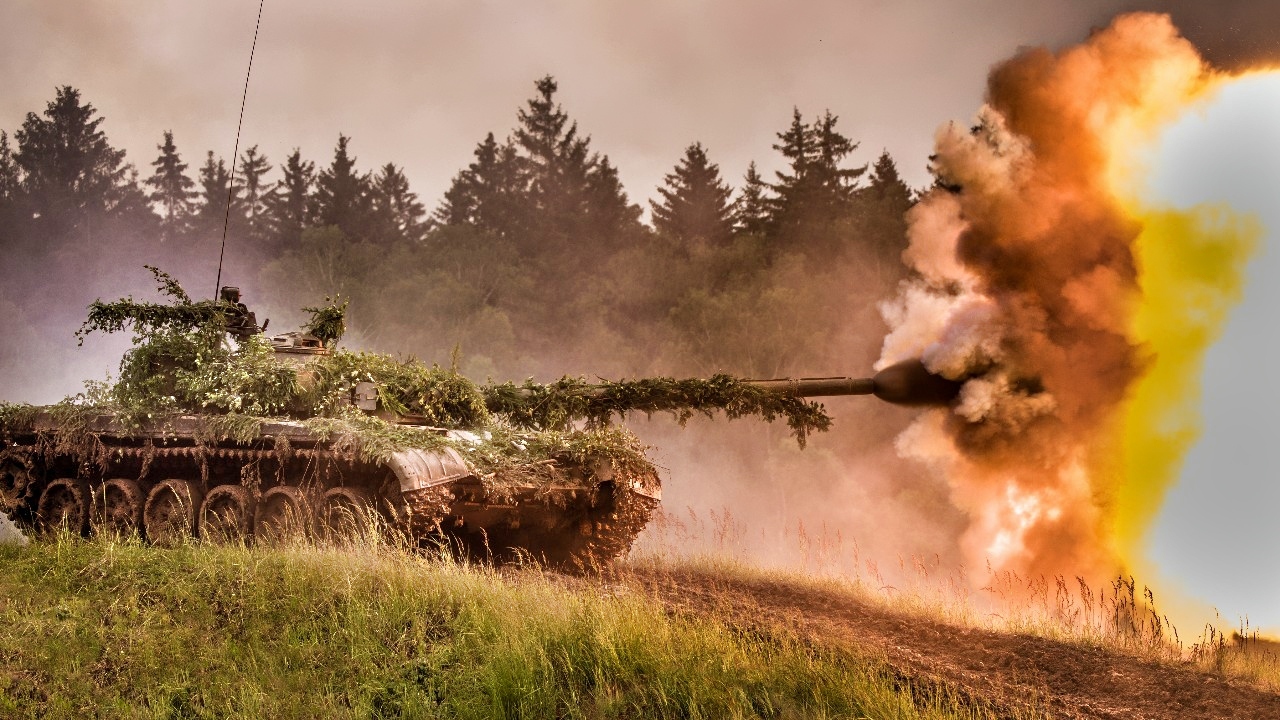
T-72 Like Those Fighting in Ukraine.
Ultimately, however, FDD assesses that this move by Russia would not fundamentally change the war’s outcome.
Hardie explained that the additional Russian troops would likely increase the endurance of the Russian Armed Forces at the front, but that the Ukrainians appear to have achieved victory.
While popular among Washington think tank experts and elements of the Trump administration, that assessment is not universally shared.
Indeed, Yuriy Boyechko, the chief executive of the humanitarian organization Hope for Ukraine, believes another round of Russian mobilization does matter.
A Strategy of Attrition Still Favors Russia
If the Russians really are engaged in a strategy of attrition against the Ukrainians, then having longer endurance on the front might be the thing that Russia needs to, at the very least, kick the Ukrainian military out of the frontline in the east.
Whether the Russians can advance beyond Eastern Ukraine–or if they even want–is another matter entirely.
Although Russia is not an all-volunteer force, if Moscow really needed to churn out recruits via conscription, it could.
Most military analysts agree that manpower alone does not guarantee battlefield success. Russia would still face the added challenges of training, equipping, and integrating hundreds of thousands of additional recruits (likely conscripts) while sustaining operations across a lengthy front–all with Ukraine continuing to pummel Russian infrastructure with its drone swarms.
In fact, some analysts believe that having subpar Russian troops forced to the front decreases Russia’s combat effectiveness.
The same arguments, though, should be made about Ukrainian conscripts.
Ukrainians have relied so heavily on technology as a force multiplier because of the significant disparity in raw manpower between the Ukrainian and Russian militaries.
Yet, even in that case, there are limitations to what technological accouterments can provide Ukraine in the face of possibly another 500,000 fresh Russian troops (regardless of whether they’re poorly trained conscripts).
Regardless of what happens, manpower has become a key factor in the war in Ukraine. Both sides continue to conduct offensive maneuvers against each other.
Both continue performing defensive operations rather effectively (hence why neither side has won the war). In such a war, endurance really becomes key.
In For the Long-Haul
The war’s outcome, though, hinges on manpower. This is a war of attrition, no matter what the Western experts want to admit. And wars of attrition, historically, favor Moscow.
That’s not a guarantee this one will.
But it does mean that logistics and production of men and weapons matter far more to the war effort in both countries than any piece of technology or sanctions.
For now, the threat of 500,000 additional Russian troops being mobilized in Russia remains the work of unverified Ukrainian intelligence.
Still, it makes perfect sense that Moscow would give the war one last round of escalation, given that Moscow is clearly engaged in a war of attrition against Ukraine.
About the Author: Brandon J. Weichert
Brandon J. Weichert is Senior National Security Editor. He also manages The Weichert Brief on Substack. Weichert also hosts “National Security Talk” on Rumble. He is the author of four bestselling national security books, the most recent of which is A Disaster of Our Own Making: How the West Lost Ukraine (Encounter Books). Follow him via Twitter/X @WeTheBrandon.


yeye
July 30, 2026 at 10:41 pm
Herr zelenskyy is lying through his teeth on this one.
Russia has no need to draft half a million men to fight the ukro nazis. No need at all. Where to summon half a million. From the graves of eastern Ukraine ?
All Russia needs to do is to be totally clear-eyed, and thereby discover that it, all along, has a dangerous enemy tucked away in its midst.
Just eliminate that hidden enemy, and voila, eureka !, Russia wins absolute victory over the dirty dreaded grimly unwashed nazis.
Who, that bloody evil cruel hidden enemy, who is it. Who.
His name is – vladimir ilyich Putin. May Russia finish him off. Now. Quickly.