
Ukraine continues its long-range drone strikes, targeting Russian logistics facilities overnight into July 29. Drone strikes hit a major Wildberries fulfillment center in Ryazan alongside an oil refinery and other industrial facilities.
Wildberries, Russia’s largest online retailer, confirmed that it had evacuated the Ryazan warehouse following the strike and temporarily suspended operations at the site while emergency crews responded to a fire and assessed damage.
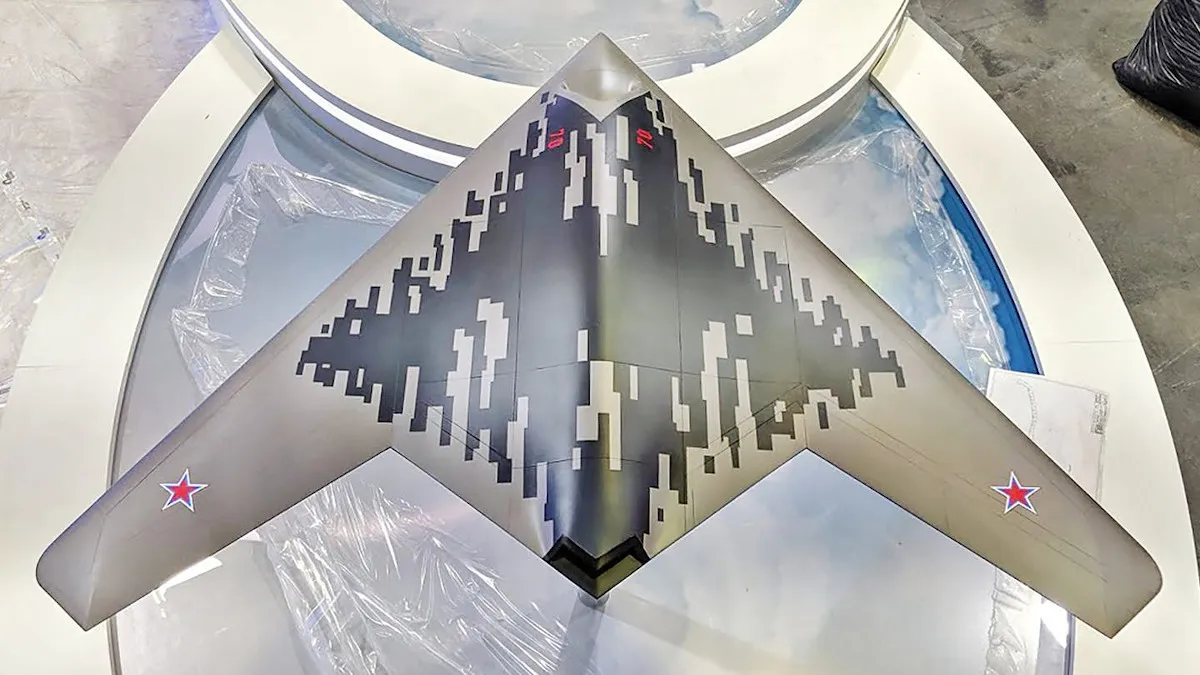
S-70 Drone VIA X Screenshot. Image Credit: X Screenshot.

Shahed Drone from Ukraine. Image Credit: Creative Commons.
The company said that the safety of its employees remained its priority and that work would resume only once the facility had been secured, but the attack is one of several in recent weeks, and there are no signs that Ukraine is willing to stop targeting the company’s facilities.
The company now reports that seven warehouses have been damaged in recent days, affecting around 10% of its total logistics capacity.
The strikes are impacting not just Wildberries itself, but daily Russian life, with hundreds of thousands of merchants depending on the company to sell goods online, and an even larger number of Russians using it to purchase them.
That disruption to daily life, however, is just one element of the Ukrainian campaign that is piling pressure on Russian President Vladimir Putin to end his invasion of Ukraine.
Why Wildberries Is Being Targeted
Ukraine’s focus on Wildberries comes after weeks of successful strikes on major oil refineries and energy infrastructure deep inside Russia.
For much of the past year, Kyiv has concentrated its strikes on infrastructure essential to keeping the Russian economy moving, thereby raising the cost of sustaining the war.
It has also targeted ammunition depots, airfields, and military-industrial sites.
Wildberries, as an online retailer, looks like a different kind of target – but according to Ukrainian officials, the e-commerce company has been used to move components required by the Russian military to launch drone strikes in Ukraine.
Ukrainian President Volodymyr Zelenskyy has repeatedly stated that the warehouses being struck store drone components, navigation equipment, and other goods that are destined for Russian military units.
Destroying logistics hubs, then, not only disrupts military supply chains but imposes high economic costs on one of Russia’s largest private companies and disrupts the daily lives of millions of Russians.
In a July 28 report, Reuters cited two sources familiar with discussions inside the Russian government who said Moscow is considering a financial support package for Wildberries following Ukrainian attacks.
The sources said that the state-controlled VTB Bank is expected to play a central role in any potential rescue package.
Ukraine Wants Russians to Feel the Cost of the War
Targeting Wildberries is a smart strategic decision for multiple reasons.
Not only is it causing military supply chain problems, but the attacks exploit Wildberries’s unique role inside Russia – a role so important that Moscow is considering the aforementioned financial support package.
Often described as Russia’s Amazon, the company employs around 48,000 people directly and supports hundreds of thousands of merchants that rely on its platform.
It is a major driver of the Russian civilian economy, and the damage inflicted on the company compounds problems already caused by fuel supply problems across Russia.
Together with its rival Ozon, online marketplaces like this account for a substantial share of all Russian retail activity and support millions of jobs throughout the country.
Even small disruptions to businesses like Wildberries can ripple across other sectors of the economy, including manufacturers, transport companies, warehouse operators, and ultimately, consumers.
The impact is already being felt, too, with Reuters reporting that around 300 Russian businesses have sought loan restructuring after their merchandise was destroyed or otherwise affected by the attacks.
Can Russian Businesses Survive?
Chatham House researcher Natalya Kovaleva also said in an article published on Tuesday that Russian businesses may not be able to absorb this latest shock as well as they did previous ones, including the imposition of Western sanctions and higher taxes.
“Western sanctions fractured supply chains.
Tax increases squeezed margins. Internet blackouts disrupted operations. And recent fuel shortages drove up costs while adding to inflationary pressures,” Kovaleva wrote.
“Russia’s business owners have largely absorbed these shocks.
But Ukrainian strikes on Wildberries present a significant new development, reflecting Kyiv’s broader effort to ratchet up economic pressure on business and ordinary Russians,” she continued.
Ukraine appears to be targeting Russian infrastructure that has maximum impact on both military and civilian life, while avoiding targets that do not have any legitimate military purpose.
Wildberries, in this sense, is the ideal target; the company has reportedly facilitated the movement of components crucial to Russian military operations while also driving the Russian civilian economy.
Causing disruption now, as fuel shortages drive discontent with the Kremlin and change everyday life, will generate exactly the kind of backlash Ukraine needs to pressure Putin to reconsider continuing the war.
About the Author: Jack Buckby
Jack Buckby is a British researcher and analyst specializing in defense and national security, based in New York. His work focuses on military capability, procurement, and strategic competition, producing and editing analysis for policy and defense audiences. He brings extensive editorial experience, with a career output spanning over 1,000 articles at 19FortyFive and National Security Journal, and has previously authored books and papers on extremism and deradicalization.


