
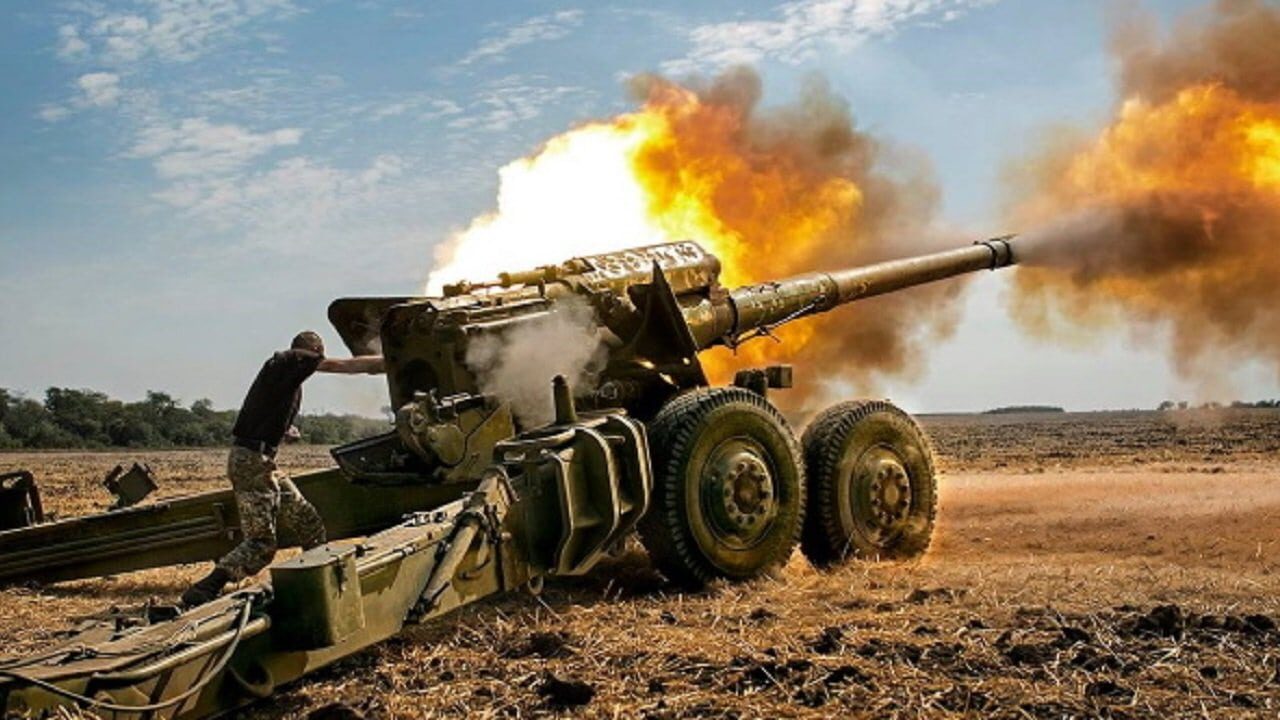
Ukraine continued its long-range strike campaign against Russia overnight into Friday, July 24, once again targeting logistics hubs belonging to Wildberries, Russia’s largest online retailer.
The strikes are the fifth consecutive attack on the company over the last week as Kyiv looks to disrupt logistics and infrastructure supporting the Russian war.
Putin Back in 2016. Image Credit Creative Commons
Putin In March 2016 Image Credit Russian Federation
The Ukrainian attacks reportedly hit Wildberries facilities in St. Petersburg, Tver, and Russian-occupied Simferopol in Crimea.
Videos of the strikes quickly began circulating on social media, with large fires and thick columns of black smoke seen rising from several warehouse complexes.
Russia also reported separate strikes elsewhere in the country, while Ukrainian President Volodymyr Zelenskyy confirmed that Ukrainian forces had also targeted a military operation in Kirov and an oil facility located roughly 840 miles from Ukraine’s border.
The largest of the fires reported occurred at the Utkin Zavod logistics park in Novosaratovka, immediately south of St. Petersburg, where a Wildberries warehouse appeared to have been struck directly.
Russian independent outlet ASTRA also reported a strike against an additional Wildberries logistics facility in the Shushary district of the city.
Russian Confirms Damage
St. Petersburg Governor Alexander Beglov acknowledged that drones had struck what he described as “civilian infrastructure facilities on Moskovskoye Highway,” although he did not initially identify the Wildberries warehouses by name.
Later, Leningrad Oblast Governor Alexander Drozdenko confirmed that the Novosaratovka Wildberries facility had been hit and confirmed that three people were injured in the attack.
Wildberries then confirmed that its logistics centers in Utkin Zavod and Shushary had temporarily suspended operations following the strikes.
But the disruption caused by the strikes extended beyond the Wildberries logistics network, with Russian authorities also reporting that approximately 50 flights were delayed at St. Petersburg’s Pulkovo Airport during the drone attack as air defenses responded to the incoming projectiles.
The company also confirmed that a warehouse was hit in Simferopol, the administrative center of Crimea; however, Russian officials did not immediately offer a full assessment of the damage at the location, or indeed at the Tver hub that was hit.
Zelenskyy Defends Warehouse Strikes
Although Ukraine has not formally claimed responsibility for every individual strike, President Volodymyr Zelensky has publicly confirmed that Ukrainian forces continue to target Russian logistics infrastructure that supports Moscow’s military campaign.
The Ukrainian president and other Ukrainian officials have previously indicated that Wildberries and other civilian warehouse operations have been used to support Russian military operations and supply chains.
“Today, Ukraine’s defense forces struck one of the key military enterprises in Russia’s Kirov.
It supplies components for the occupier’s aircraft and missile systems, which are used, in particular, in the massive attacks against our cities and communities,” Zelenskyy said in a statement.
“Our long-range sanctions also proved effective against an oil facility nearly 1,350 kilometers away. There were other successful strikes as well.
Importantly, the operation against Russian logistics, which supplies the occupying army with drone components, navigation equipment, and military gear, remains underway,” the statement also reads on X.
The social media post was also accompanied by video footage showing huge, thick, and black columns of smoke rising into the air from the warehouse complexes, as well as video footage of Ukrainian drones reaching the target.
Following an earlier strike on July 18, Zelenskyy described exactly why Ukraine continues to strike what appears to be civilian logistics infrastructure, noting, “These are Russian logistics facilities, specifically warehouses used to supply war materiel: navigation equipment, components for drone production, and other supplies for the Russian army.”
A Week Of Relentless Attacks
The latest strikes are part of an ongoing Ukrainian campaign against Wildberries’ nationwide logistics network – and the extent of the damage done suggests that the attacks will only keep coming.
On July 18, Ukrainian drones struck Wildberries warehouses in Kotovsk, Tambov Oblast, killing seven workers according to Russian authorities.
Another facility in Elektrostal near Moscow was also damaged, while Reuters reported that dozens of people were injured in the strikes.
Then, on July 22, Ukrainian drones reportedly struck Wildberries facilities in Krasnodar Krai and Stavropol Krai.
The following night, another warehouse in Voronezh came under attack before the latest strikes reached St. Petersburg, Tver, and Crimea.
Why Wildberries Matters
Wildberries is often described as Russia’s equivalent of Amazon.
It is the country’s largest online retailer and operates an extensive nationwide network of fulfillment centers and logistics hubs.
The company moves millions of parcels around Russia every single day, and now, Moscow’s war is impacting the lives of ordinary citizens and businesses.
Ukraine says that part of the logistics network supports Russia’s defense industrial base by transporting components for drones and navigation systems, among other forms of military equipment, making the warehouses legitimate targets.
Wildberries’ online marketplace also openly lists various military-related products, including body armor.
The strikes therefore prevent the movement of military equipment, but serve a dual use: they disrupt civilian life in new ways, placing domestic political pressure on Putin to bring the war to an end.
About the Author: Jack Buckby
Jack Buckby is a British researcher and analyst specializing in defense and national security, based in New York. His work focuses on military capability, procurement, and strategic competition, producing and editing analysis for policy and defense audiences. He brings extensive editorial experience, with a career output spanning over 1,000 articles at 19FortyFive and National Security Journal, and has previously authored books and papers on extremism and deradicalization.


Meremortal
July 25, 2026 at 9:11 pm
It’s very noticeable that Putin does things to win while Zelensky does things for show. And now Z has lost the use of the Black Sea, which will kill his economy.