


The Ukrainian Ambassador to the UK has been quoted as saying that his country stands no chance of joining the NATO alliance – at least not anytime soon.
The Ambassador, General Valeriy Zaluzhnyi, was formerly the Commander-in-Chief of the Armed Forces in Ukraine until he retired and was replaced by General Oleksandr Syrskyi in February 2024.

Switchblade Drone. Image Credit: Industry Handout.
His removal has been attributed to differences he had with the Ukrainian President.
However, there is a large body of public opinion that says Zaluzhnyi was becoming too popular a figure—more popular than Zelensky himself.
It was also reported that he was planning to run for President when Ukraine next holds elections.
This set of circumstances is generally regarded as the reason Zaluzhnyi, a military figure with no diplomatic experience and only rudimentary knowledge of English, was relegated to such a position far from Kyiv.
Syrskyi himself was removed last month by Ukraine President Volodymyr Zelensky after days of protests broke out in Ukrainian cities.
The popular protest movement was over a cabinet reshuffle that saw the Defense Minister, Mykhailo Fedorov, removed.
Fedorov, who had only been in the position for six months, was highly popular and respected for his record of high-tech innovation and connections with major international technology industry leaders like Elon Musk.
Zaluzhnyi was quoted by the Ukrainian news website Evropeiskaya Pravda, as telling a meeting of Ukrainian ambassadors on Monday in Kyiv during a discussion on Euro-Atlantic integration that Ukraine in no way meets the military standards required to join the alliance.
Ukraine Comes Up Short For NATO Qualifications
“I know NATO really well. For about 12 years I personally worked on making sure we met NATO standards, and every year I heard tales about how we would join NATO any day now. Unfortunately, we will never actually join,” Zaluzhnyi was quoted as saying.
“[It’s] impossible with the level of development that the Ukrainian Armed Forces have, to join an organization guided by the doctrines of World War II,” Zaluzhnyi continued.
He acknowledged that “Ukraine needs technologies that NATO countries currently possess.”
But in the end, he said, there is a greater possibility that Ukraine would join one or more alliances that have yet to be formed. “Most likely, we’re talking about a European military-political security bloc,” he said.
Zaluzhnyi also said he has repeated regrets that Ukraine is not today actively working to join the Joint Expeditionary Force (JEF), a military coalition led by the United Kingdom, but has become a “partner” to the group.
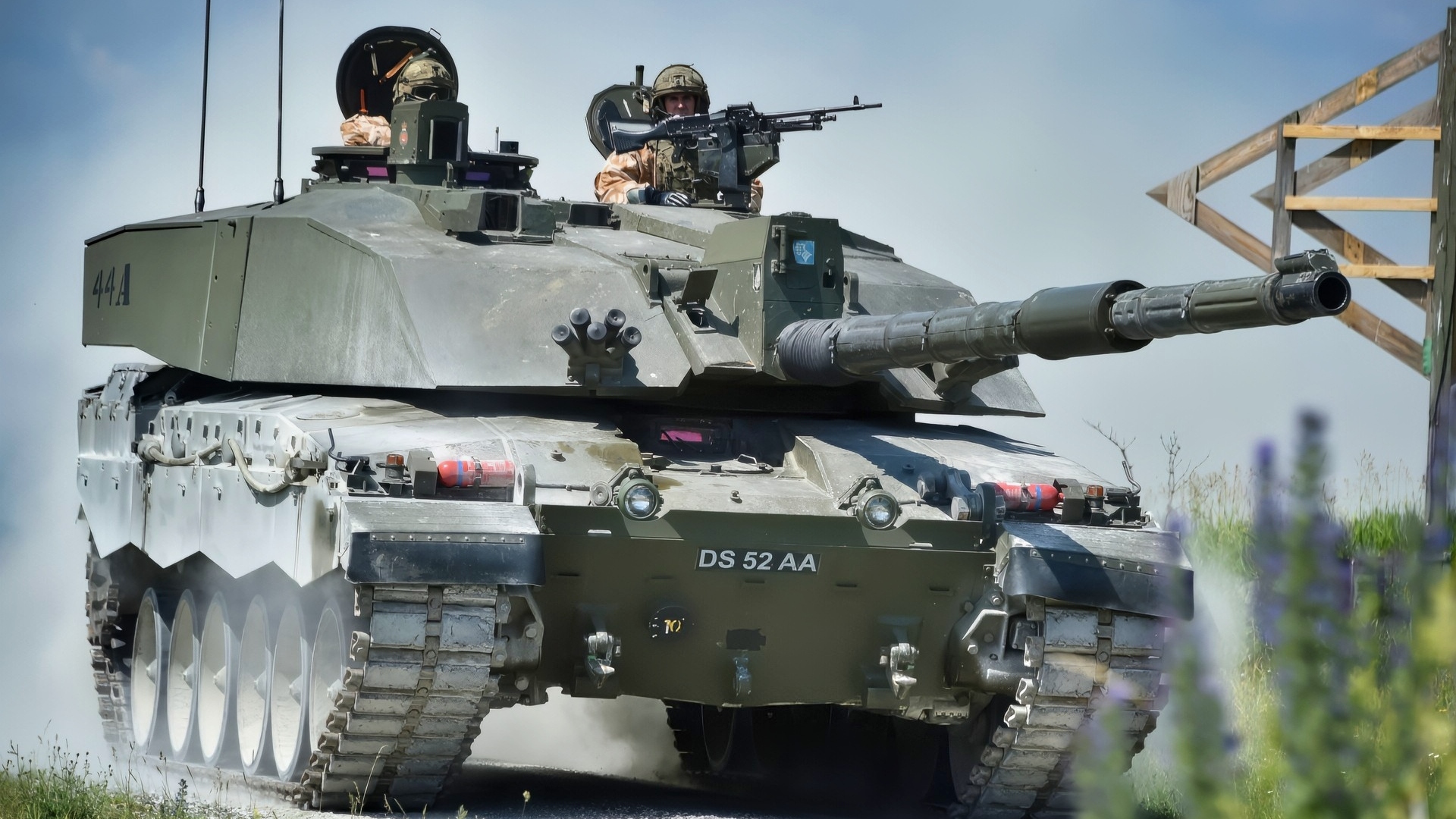
British soldiers with the Queen’s Royal Hussars move a Challenger II main battle tank down range during the Strong Europe Tank Challenge at the 7th Army Training Command’s Grafenwoehr Training Area, June 4, 2018. The U.S. Army Europe and the German Army co-host the third Strong Europe Tank Challenge, which is an annual training event designed to give participating nations a dynamic, productive and fun environment in which to foster military partnerships, form Soldier-level relationships, and share tactics, techniques and procedures. (U.S. Army photo by Gertrud Zach)
However, unlike NATO, the JEF has no codicil similar to NATO’s Article 5 section of the organization’s charter that requires its members to come to each other’s aid if attacked.
A recent essay on the JEF explains that the multinational force is created in the hope that “NATO will remain the principal guarantor of collective defense in the Euro-Atlantic space. The vacuum that currently exists between European efforts to build joint capabilities in the defense industry and the uncertain prospects for the employment of NATO’s military structure calls for the creation of a purely European military structure – one less cumbersome than NATO, yet with a clear political status.”
What Is Ukraine’s Future With NATO
One of the reasons for wanting Ukraine in the JEF and to have it cooperate with NATO is that the four-and-a-half-year war with Russia has caused Moscow to build up a military of immense size. There have also been sweeping organizational changes instituted.
Many NATO member state political leaders and intelligence officials are openly forecasting that Moscow is preparing to challenge the alliance by attacking a NATO country by the end of the decade.
If so, they will need Ukraine’s active assistance.
Zaluzhnyi’s unusually outspoken criticism that Ukraine’s military should work to join the JEF signals a shift in the alliance’s relationship with Ukraine.
At the beginning of the war, the country was heavily reliant on European military support. But today, Ukraine is one of the continent’s most capable and technologically advanced militaries — and also one of the largest.
Kyiv is also far more capable than almost all Western nations in surging defense industrial production of drones, missiles and other key systems.
As one Ukrainian defense industry executive told National Security Journal recently, “NATO now needs us more than we need them.”
“Ukraine contributes to transatlantic security,” stated NATO’s 32 leaders in a joint declaration at the alliance’s Ankara summit in July.
In recent military exercises where NATO has invited Ukrainian troops to participate as the OPFOR, allied forces have repeatedly been unpleasantly surprised by how their tactics and drone use have caused NATO member forces to end up on the “losing” side of the exercise.
About the Author: Reuben F. Johnson
Reuben F. Johnson has thirty-six years of experience analyzing and reporting on foreign weapons systems, defense technologies, and international arms export policy. Johnson is the Director of Research at the Casimir Pulaski Foundation. He is also a survivor of the Russian invasion of Ukraine in February 2022. He worked for years in the American defense industry as a foreign technology analyst and later as a consultant for the U.S. Department of Defense, the Departments of the Navy and Air Force, and the governments of the United Kingdom and Australia. In 2022-2023, he won two awards in a row for his defense reporting. He holds a bachelor’s degree from DePauw University and a master’s degree from Miami University in Ohio, specializing in Soviet and Russian studies. He lives in Warsaw.


