
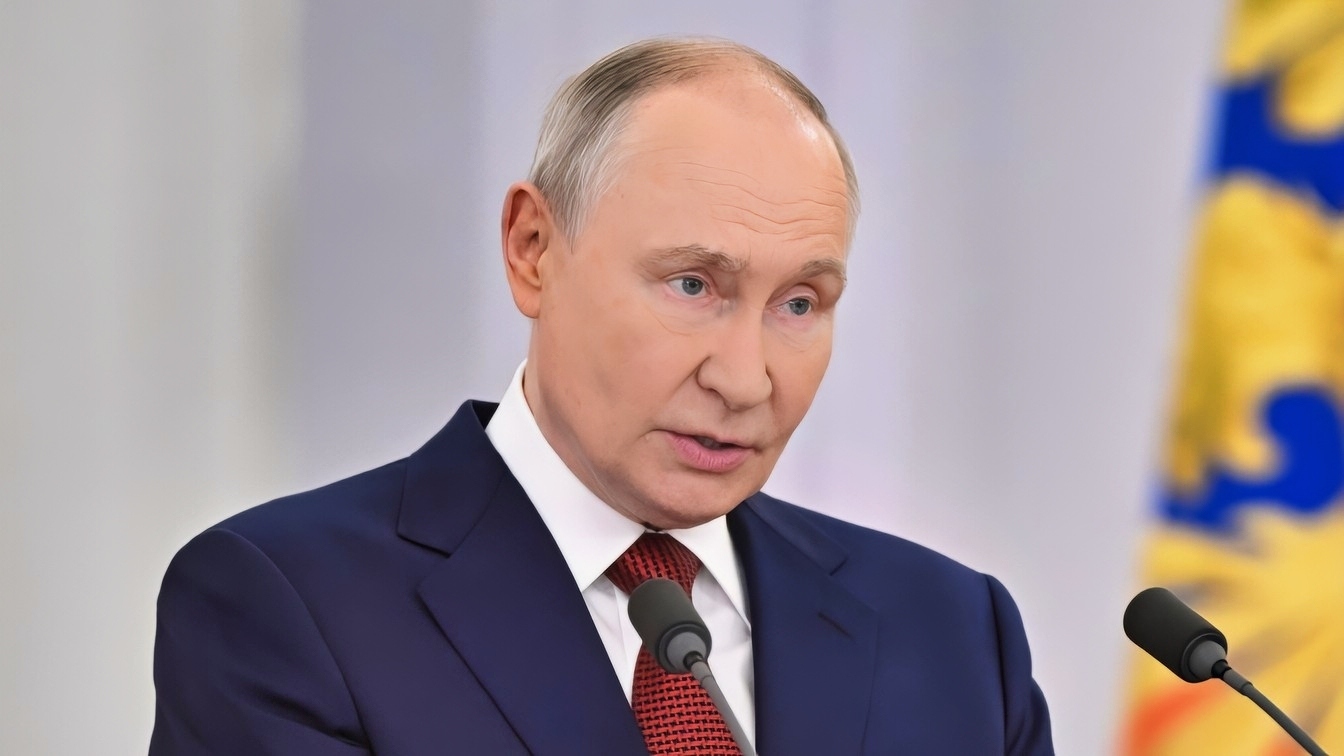
Russia’s Missile Campaign Is Leaving Ukraine At Risk – Russia launched more missiles at Ukraine in July than during any other month since the full-scale invasion began, according to new data analyzed by ABC News. The last several weeks suggest that Moscow’s long-range strike campaign is intensifying in response to Ukraine’s own long-range attacks, with the Kremlin now relying more heavily on missiles—particularly ballistic missiles that Ukraine struggles to intercept—as Ukraine warns that its supplies of Patriot interceptor missiles are critically low.
The data, which is based on reports from the Ukrainian Air Force, showed that Russian forces launched 381 missiles of all types during July – averaging just over 12 per day.
Putin Interview from Back in 2012 Image Credit Creative Commons
Putin Back in 2012 Creative Commons Image
Missiles also accounted for a record share of Russia’s combined drone and missile strikes, suggesting that Moscow is now more willing to expend its valuable supply of missiles at just the right time, with Kyiv still calling on international partners to speed up the delivery of Patriot interceptors.
Russia Fires Record Number Of Missiles
According to the ABC News analysis, Russia’s 381 missiles launched in July represent the highest monthly total of the war as well as the fastest sustained rate of missile attacks since the invasion began in February 2022. The data also showed that missiles made up just over 7% of all long-range weapons launched during the month – another wartime record.
The figures also show that Moscow is complementing its massive drone attacks with larger numbers of missiles, many of which are more difficult for Ukrainian defenses to defeat. The strikes typically see Ukrainian air defenses intercepting drones and slow moving projectiles while ballistic missiles are fired at high-value targets. Moscow is now frequently combining drones with cruise missiles and ballistic missiles in coordinated overnight assaults – and the tactic is working.
ABC News also noted that Ukrainian Air Force statistics include a wide range of missile types, from expensive ballistic missiles to lower-cost cruise missiles like the Banderol. Moscow, meanwhile, publishes only claims regarding the number of Ukrainian drones and missiles that it says it has intercepted, making direct comparisons difficult to do.
Ballistic Missiles Are Harder to Stop
Ukraine is struggling to intercept Russian ballistic missiles, both individually and at scale. Ballistic missiles travel at extremely high speeds and follow trajectories that make them much more difficult to intercept than cruise missiles or drones, and Kyiv doesn’t have the interceptors it needs to even attempt to stop many of them.
According to the July data, Ukraine prevented only around 28% of Russian ballistic missiles from reaching their intended targets, compared with an overall missile failure rate of roughly 58%—a figure that also includes missiles that malfunctioned or failed to reach their targets.
Kyiv has been telling its allies for months now that its forces are running out of U.S.-made Patriot systems – the only consistently reliable defense against Russian ballistic missiles available. During a visit to Washington in late July, President Volodymyr Zelenskyy said Ukraine was seeking the delivery of an additional 300 Patriot interceptor missiles before winter, warning that existing stocks were insufficient to counter Russia’s missile campaign. President Donald Trump has since declined to approve additional deliveries and has even walked back an earlier commitment to allow Ukraine to manufacture Patriot interceptors domestically.
The consequences of that shortage are ongoing.
After a deadly Russian missile strike on July 31, Zelenskyy wrote on X that “only one ballistic missile was intercepted, simply because there are no interceptors for the Patriot systems.”
Looking Beyond the Patriot
Ukraine knows that while more Patriot interceptors may be on the way, those deliveries will not arrive quickly enough. In response, Ukraine’s defense industry is accelerating efforts to build its own interceptors to counter the Russian ballistic missile threat.
Ukraine is developing a domestically produced interceptor known as Freyja, which is intended to become part of a European anti-ballistic missile shield that is capable of protecting Ukraine – and European countries – from future ballistic missile barrages. The first prototype is expected to arrive in early 2027, meaning it could well serve as a replacement for the Patriot next year, but leave Kyiv in severe danger until then.
Russia is, unsurprisingly, widely expected to continue exploiting this gap.
Olha Polishchuk of the Armed Conflict Location & Event Data Project (ACLED) told ABC News that Moscow has recognized the effectiveness of its ballistic missile campaign and is likely to continue relying on those weapons until Ukraine develops a more effective means of intercepting them.
“Now, Russia sees that it’s effective, it exploits it as much as possible,” Polishchuk said. “But it will have to stop at some point to again accumulate those missiles, to then again launch similar attacks. Until Ukraine becomes effective in intercepting them, which will likely take a while.”
With July setting new records for ballistic missile strikes, Kyiv is now racing to ensure that future offensives are met with a much stronger defense.
About the Author: Jack Buckby
Jack Buckby is a British researcher and analyst specializing in defense and national security, based in New York. His work focuses on military capability, procurement, and strategic competition, producing and editing analysis for policy and defense audiences. He brings extensive editorial experience, with a career output spanning over 1,000 articles at 19FortyFive and National Security Journal, and has previously authored books and papers on extremism and deradicalization.


