
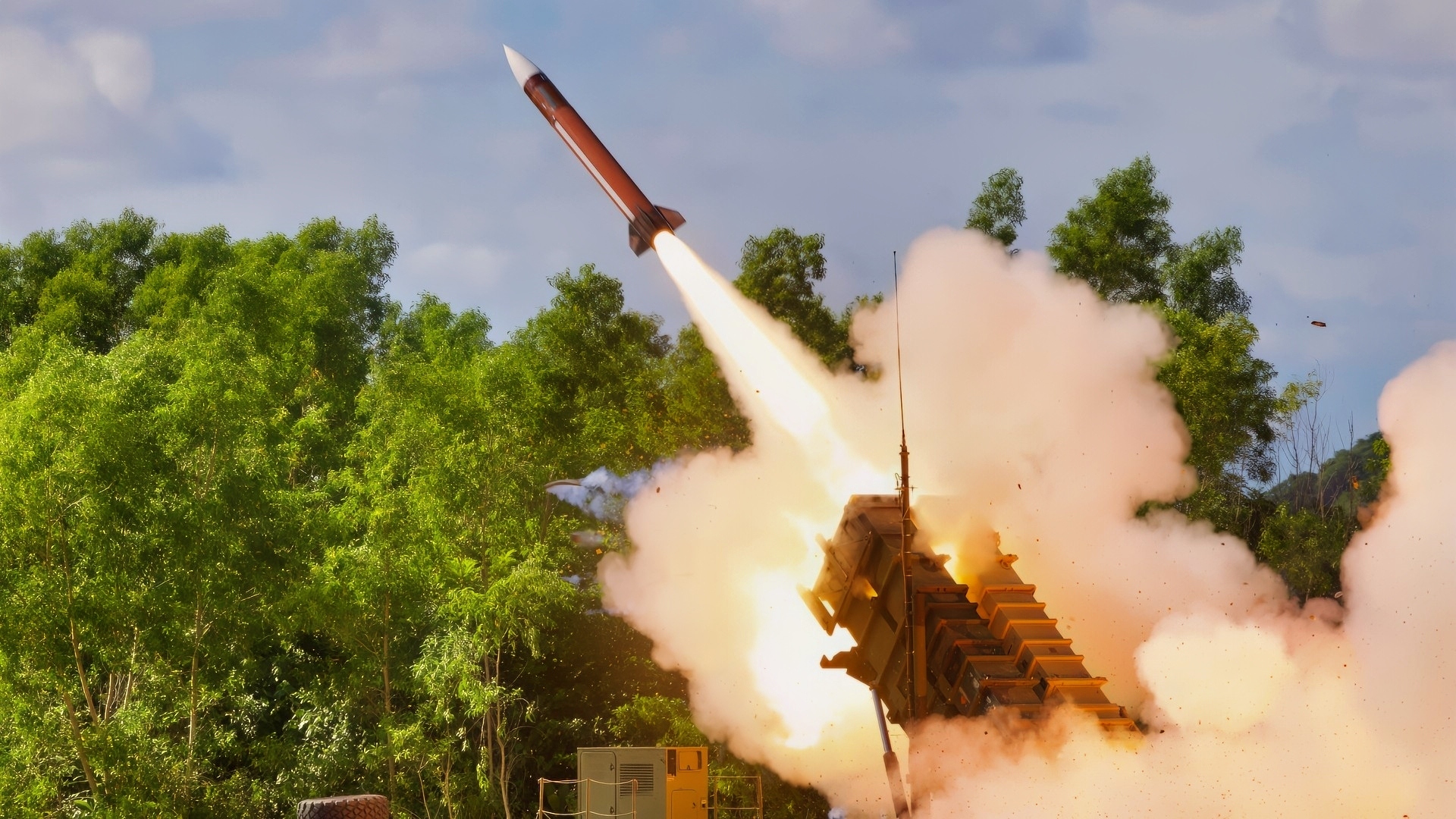
Ukraine appears to have launched one of the largest long-range strike operations of the entire war, with Russian officials claiming that the country’s air defenses intercepted an incredible 1,750 Ukrainian drones and 17 Flamingo cruise missiles in a 24-hour period that ended on Tuesday, October 6.
The figures have not been independently verified, but the scale of the operation is clearly enormous.
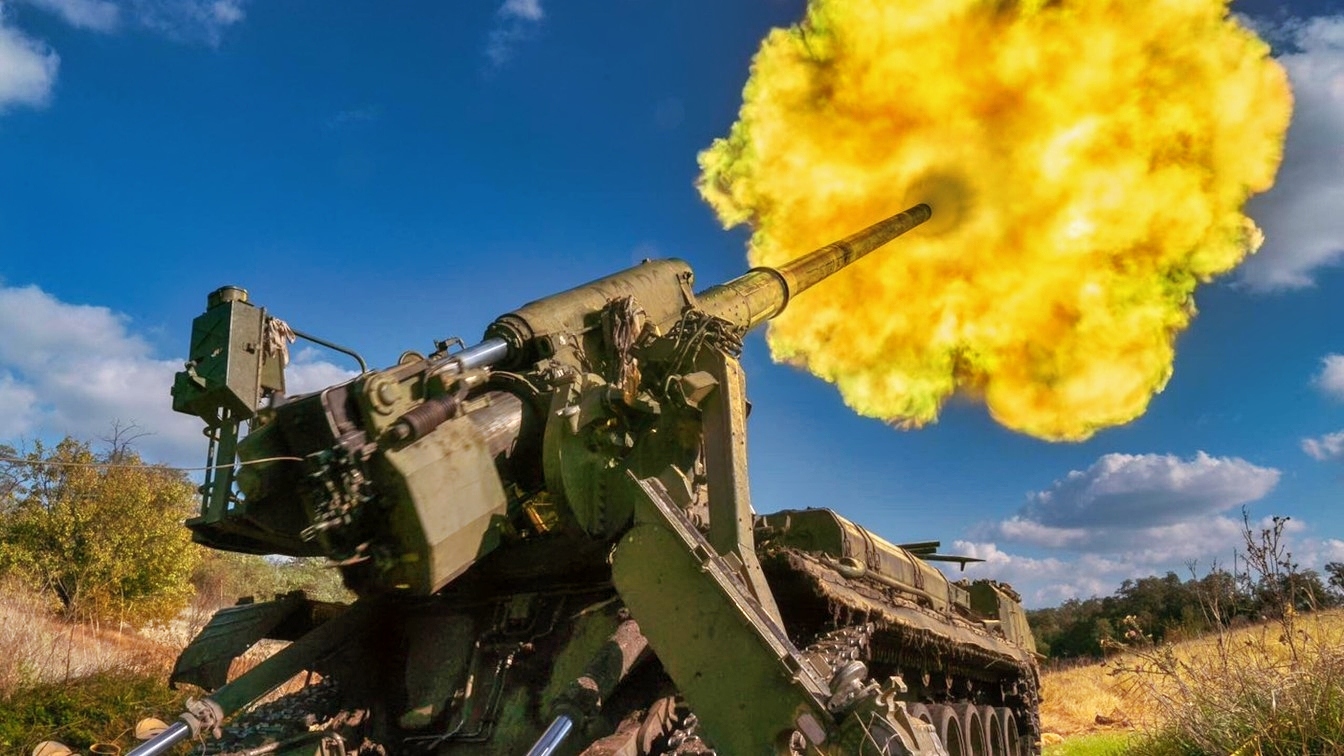
Ukraine Artillery Strike. Ukraine Armed Forces Photo.
Hundreds of drones were reported around Moscow, with two people killed in the surrounding region.
A major fuel distribution facility was also reportedly set on fire.
According to the Russian Defense Ministry, air defenses also intercepted two guided aerial bombs and one U.S.-made HIMARS rocket during the same period.
If Moscow’s numbers are right, then the operation represents a dramatic expansion of Ukraine’s ability to conduct long-range strikes.
Hundreds Of Drones Target Moscow
Moscow and the surrounding region were among the operation’s main targets.
Moscow Mayor Sergei Sobyanin said that roughly 650 drones were launched toward the capital during the operation, with most reportedly intercepted before reaching the city.
Sobyanin initially reported that 105 drones had been destroyed as they approached Moscow, then later on Tuesday announced dozens more interceptions.
Andrei Vorobyov, the Moscow regional governor, said that another 185 drones were destroyed or neutralized throughout 16 municipalities, though not all of them were stopped.
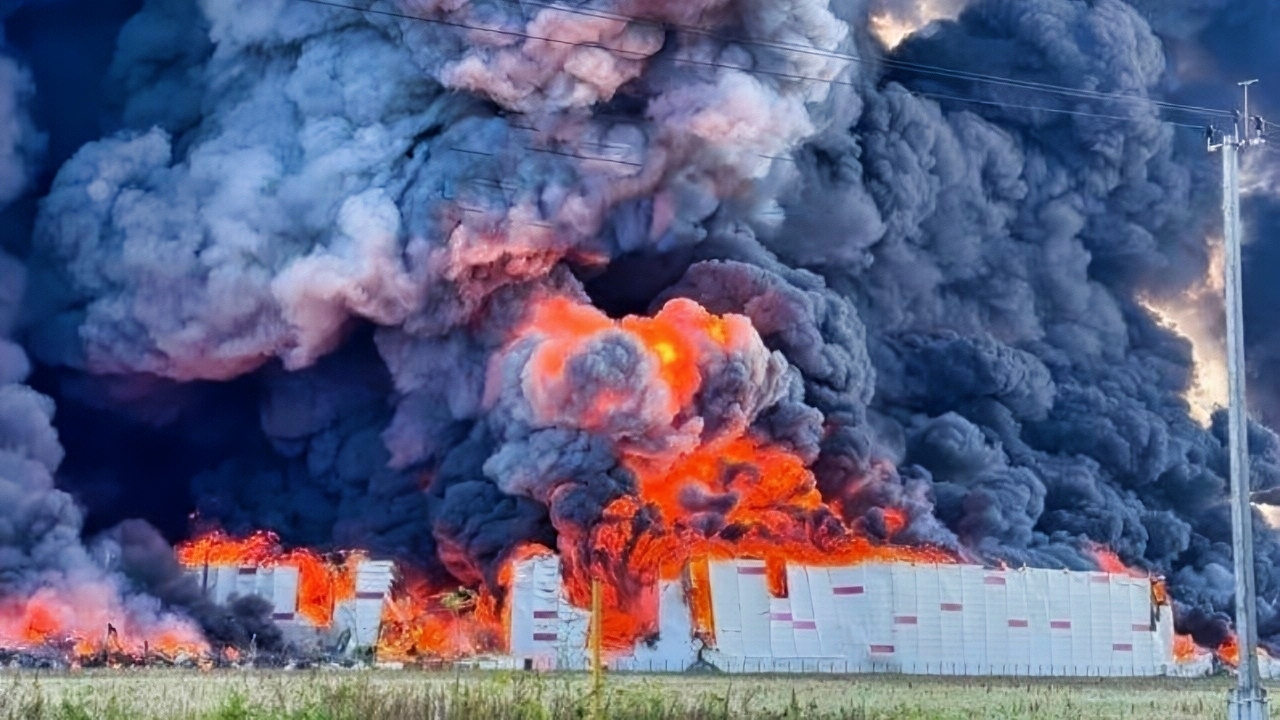
Moscow Warehouse Fire X Screenshot
Russian authorities say that two people were killed and at least seven others were injured. The fire damaged 47 residential properties, as well as four apartments and three vehicles.
Deaths were reported in Radumlya, north of Moscow, and Barybino, south of the city.
The victims were identified as a 20-year-old man and a 71-year-old man.
Major Moscow Fuel Hub Hit
Among the biggest targets was the Volodarskaya Linear Production and Dispatch Station – a major oil storage and distribution facility in the Moscow region.
Russian military bloggers reported that a storage tank at the facility was hit in the strike, and images and video circulating online in the wake of the strike appear to show a large fire.
The damage has not been independently verified.
The Volodarskaya site is significant because it is understood to be the largest fuel storage facility of its kind in the Moscow region.
It also forms part of the Transneft pipeline network.

Putin New Year’s Message. Image Credit: Russian Government.
The facility handles up to 3 million metric tons of petroleum products annually and receives gasoline, diesel, and aviation fuel from Moscow and Ryazan refineries.
The fuel supplies Moscow’s major airports, meaning the strike could disrupt air transport in and out of the city.
The strike comes after Ukraine promised to expand its already extensive campaign against Russia, with President Volodymyr Zelenskyy saying on October 3 that Kyiv would intensify attacks in response to recent Russian strikes against Ukrainian infrastructure.
Moscow Airports Impacted
The barrage caused immediate chaos to civilian aviation around the capital, with more than 200 flights reportedly delayed or canceled across Moscow airports.
Authorities imposed airspace restrictions as drones began approaching the region.
Sheremetyevo International Airport suffered the worst disruption, with dozens of departing flights and more than 100 arrivals affected.
Vnukovo and Domodedovo also experienced cancellations and delays. Russian aviation authorities repeatedly restricted operations at Moscow’s airports throughout the attack as air defenses attempted to intercept incoming drones.
This is another example of Ukraine disrupting the Russian economy in various ways—not just in its oil sector.
Even when drones are intercepted, Ukraine is forcing Russia to expend projectiles, to close airspace, and waste resources managing the chaos that ensues.
Normal economic activity is being regularly disrupted, and the campaign still isn’t over.
Russia Says 17 Flamingo Missiles Destroyed
Among the drones and missiles used in the strike are many domestically developed Ukrainian weapons, including the FP-5 Flamingo.
17 Ukrainian Flamingo cruise missiles were reportedly intercepted during the strike — and if accurate, it would represent the largest known use of Flamingos in a single day.
Developed by Ukrainian defense company Fire Point, the Flamingo is a domestically produced ground-launched cruise missile designed specifically for long-range strikes.
The weapon has a claimed range of approximately 3,000 kilometers and carries a warhead weighing roughly 1,150 kilograms.
Flamingos have been used on many occasions already to target facilities deep inside Russia, but previous reports have generally described the attacks as using only several missiles at a time.
17 would therefore suggest that Ukraine is beginning to deploy the weapon in far greater numbers, increasing the chance of successfully striking the intended target and forcing Russia to expend more interceptors to stop them.
Using Flamingos in far greater numbers also suggests that Ukraine continues to expand production of its domestically developed drones and missiles — barely a year after Ukraine announced plans to begin mass production of the Flamingo.
About the Author: Jack Buckby
Jack Buckby is a British researcher and analyst specializing in defense and national security, based in New York. His work focuses on military capability, procurement, and strategic competition, producing and editing analysis for policy and defense audiences. He brings extensive editorial experience, with a career output spanning over 1,000 articles at National Security Journal, and has previously authored books and papers on extremism and deradicalization.


