


Less than a month after Zelenskyy dismissed Mykhailo Fedorov as Minister of Defense and Oleksandr Syrskyi as the Commander-in-Chief of the Armed Forces of Ukraine, Moscow seems to be conducting its own “shake-up” in the Ministry of Defense.
Yesterday, Vladimir Putin announced that some changes were being made in the command structure of the Russian Armed Forces “aimed at improving the systems of materiel and military-technical support for the troops.” The aim is to strengthen the Russian backline, logistics, and procurement systems to better support troops at the front lines.
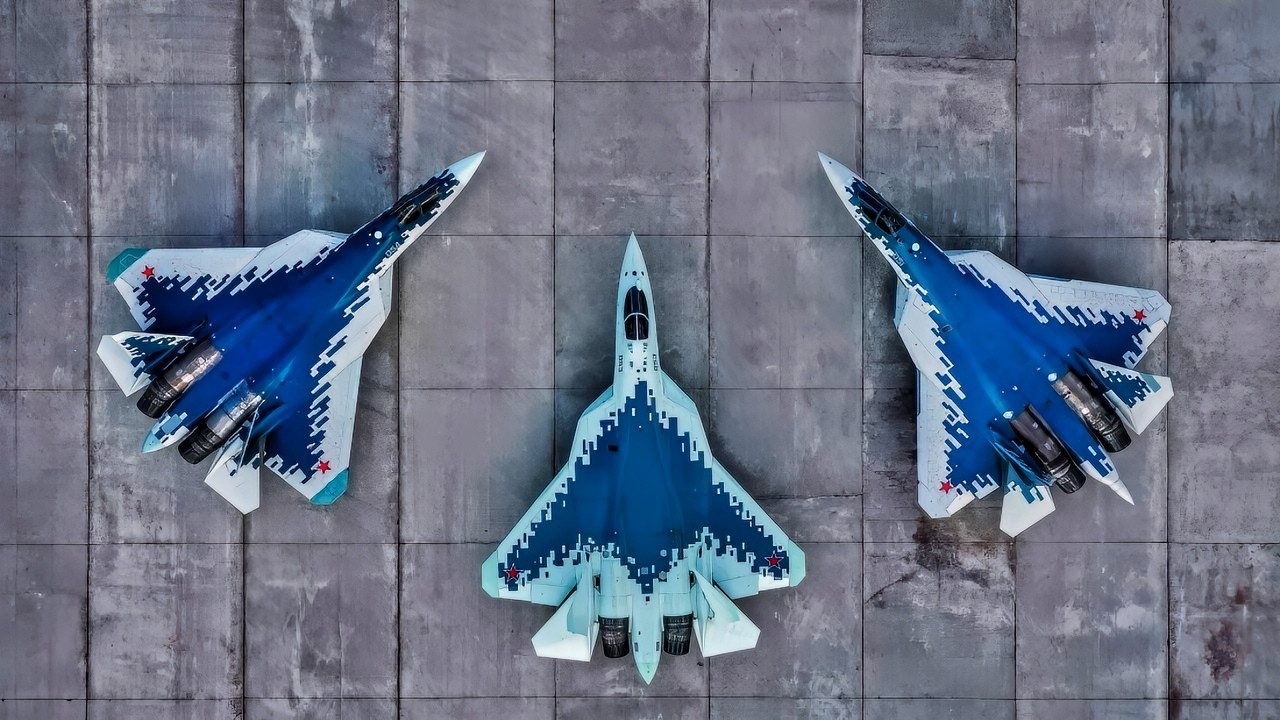
Su-57 Felon Screengrab from Russia. Image Credit: X Screengrab.

Su-57 Felon Stealth Fighter Taking Off. Image Credit: Creative Commons.
As the war with Ukraine has progressed, the Russians have been forced to learn some very harsh lessons about the nature of modern warfare. These new appointments, therefore, seek to address some of the lessons learned.
Strengthening the Back Line
Among the new changes is the appointment of General Colonel Valery Solodchuk as Deputy Defense Minister for rear services.
This appointment seeks to consolidate all rear services under a single unified command in order to strengthen logistics and better protect the back line.
No one else, except for commanders, commanders of districts, and commanders of groups of forces like you, knows better what the troops, our soldiers, and commanders need today,” Putin said regarding the appointment.
Vladimir Putin and other pro-Russian commentators have often described Solodchuk as one of the most talented commanders in the Russian Armed Forces.
For those who have observed the war in Ukraine since the beginning, Solodchuk’s name should sound familiar. Valery Solodchuk is a well-respected general in Russian circles.
Under his command, the Russian Army led the assault on Kyiv before being forced to pull back.
He earned the respect of many Russian milbloggers when he led the counteroffensive in the Kursk region, which pushed Ukrainian forces out of Russian territory.
Ukrainian Intelligence sources have in the past accused Solodchuk of war crimes. In 2024, he was linked to a glide bomb strike on a Ukrainian marketplace that killed 19 people and wounded another 46.
A New Commander for Russia’s Unmanned Systems Forces
Another notable change is the appointment of General Denis Lyamin as the new Commander of the Russian Unmanned Systems Forces. The war in Ukraine has been the epicenter for many innovations regarding drones and unmanned systems.
While much emphasis in the West has been placed on Ukraine’s innovations in the field, the Russians have made many similar advances.
According to Ukrainian sources, the Russians modified the Gerbara decoy/reconnaisance drone to act as a relay and a mothership to guide Molniya kamikaze drones to strike their targets.
While Russia does not have the benefit of Starlink, the Russian Army has made many advances in drone technology which have limited Ukraine’s ability to reclaim its territory.
Regarding the appointment of General Lyamin as the new Commander of Russia’s drone forces, there are some things to note.
Lyamin is highly regarded by Russian circles. He is often described as an intellectual and is considered by some to be one of the best staff officers in the world (this seems a bit hyperbolic, but we’ll ignore that). Regarding his appointment, the pro-Russian telegram channel Rybar had this to say: “Although he rarely became the subject of media coverage, the feedback about him from various sources is generally positive.
His diverse experience allows for cautious optimism regarding his appointment as commander of the Joint Forces Command.” It should be noted that Rybar, like many Russian bloggers, has been highly critical of the Russian high command over the past four years.
Lyamin was appointed commander of the 58th Combined Arms Army and reportedly planned the operation that led to the fall of Avdiivka in 2024.
Is Russia Learning the Right Lessons From the War?
So, what are the main takeaways from this newest exchange of hats? The first is that Russia is placing greater emphasis on its backline protection and logistics. In 2026, it has been reported that Ukraine has increased its strikes on logistics and other targets in the Russian rear, which has caused problems in Moscow’s already slow advance in Ukraine.
Also notable is that Russia is filling backline positions with relatively young, battle-hardened front-line commanders. One could argue that Putin is sidelining underperforming commanders by placing them on the back line.
However, it is more likely that the Russian MoD is choosing these commanders because it believes no officer is more aware of the backline’s importance than a frontline officer.
Are these changes evidence that Russia is learning the right lessons from the war?
It is too early to tell. It does, however, indicate that the Russians are aware of some of their battlefield issues and are seeking to address them.
Strengthening the backline would certainly help Russia’s war effort (assuming, of course, that these new changes can accomplish that), but logistics and backline support are but one of many issues preventing the Russians from advancing.
The war in Ukraine has exposed a number of deficiencies in the Russian Army, arguably the greatest of which is the incompetent and corrupt high command, which is largely ignorant of the needs and realities of the front.
The war has also served as a wake-up call for the Army and provided much-needed experience. Will the Russian Army emerge as a better fighting force once the war is finished? Only time will tell.
About the Author: Isaac Seitz
Isaac Seitz, a Defense Columnist, graduated from Patrick Henry College’s Strategic Intelligence and National Security program. He has also studied Russian at Middlebury Language Schools and has worked as an intelligence Analyst in the private sector.


