

“Vladimir Putin has a big problem: He needs more bodies to throw into the Russian war machine in Ukraine,” reads an essay today from the Francis Fukuyama-founded American Purpose magazine.
The problem for the former KGB Lt. Col., who is now Russia’s president, is that it is not clear where those soldiers are coming from—and how fraught with danger another mobilization might be.

Russian T-90 Tank. Image Credit: Creative Commons.
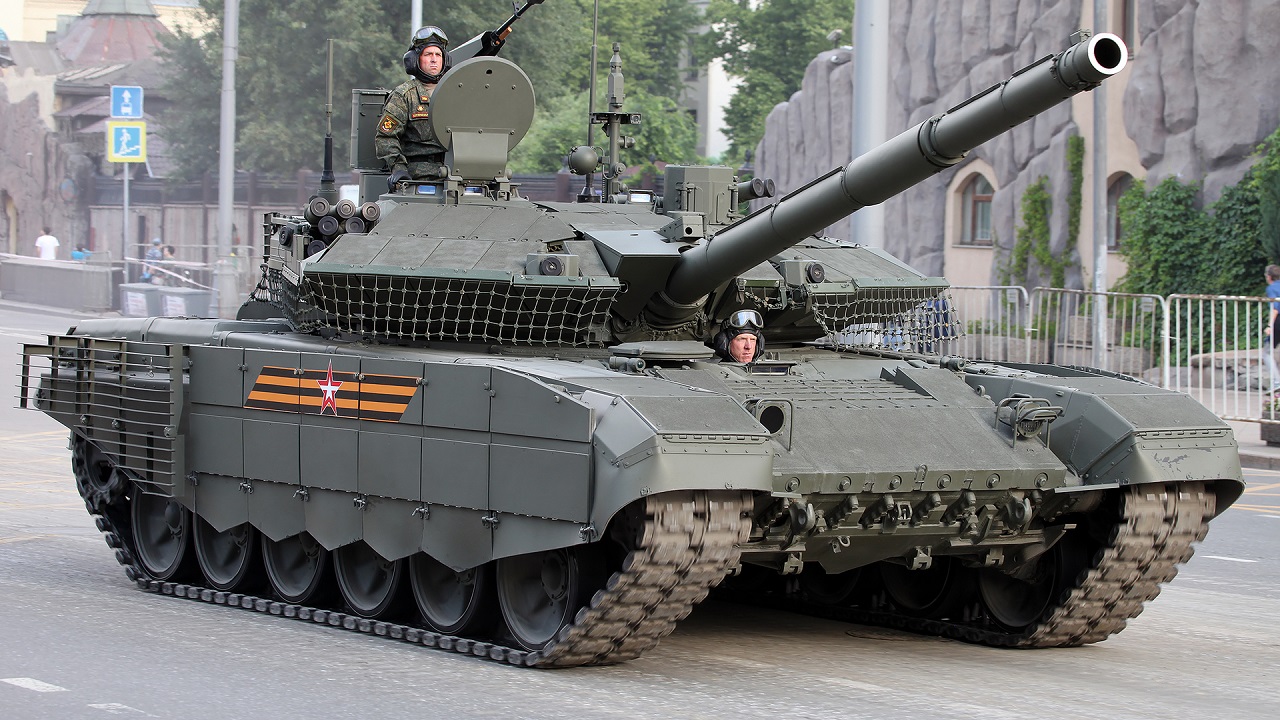
T-90M. Image Credit: Creative Commons.
Estimates vary, but most indications are that Putin’s military is losing 30,000-35,000 fighters per month along the 2,000 km-long frontlines.
A July 2026 report from the Center for Strategic and International Studies (CSIS) has estimated that the Russian military has taken over 1.4 million casualties since the February 20122 invasion.
Of this total, around 450,000-500,000 have been estimated by British Intelligence to have been killed in Action. Those that remain alive are assessed to have suffered injuries so debilitating that they are not physically or otherwise fit for return to duty.
The trouble for Putin is that these staggering losses have largely been to no good.
Russia’s armed forces have gained only around 5,000 square km since Autumn 2023 and are now reported to have lost an additional 400 square km in April and May 2026.
Despite these severe casualties, the frontline has been at a stalemate for most of the last three years.
Reforming Recruitment and Training
These casualty levels have had a perceptible effect on the enthusiasm in Russia that once existed among those being recruited to sign contracts as volunteers.
The number of those volunteering for military service has been on a downward slide for some time now.
The modern-day Russian military also does not operate under the Soviet model that relied heavily on conscript forces that required all military-age males to complete a term of military service.
In 2008, Moscow’s armed forces began a series of comprehensive and systemic military reforms to change that system.
These reforms were supposed to transform the military from the Soviet period’s conscription system into a professional service staffed by well-trained recruits paid something approaching a living wage for their service.
By the time of Russia’s invasion of Ukraine, Putin’s military was better trained and equipped than it had ever been in the modern era.
But the elite units sent in at the war’s outset were largely depleted by Ukraine’s military, which, as we all know now, put up a much stiffer resistance than was anticipated.
By the autumn of 2022, Moscow was reduced to recruiting convicts out of Russia’s notoriously brutal prison system. These were criminals who were offered freedom and a vacating of their sentences if they could survive on the front line for a year.
Putin also instituted what was, in reality, a partial mobilization order by activating 300,000 reservists to replace combat losses, which was a backdoor into a conscription-into-combat plan.
These reserve units increased the size of the Russian forces in Ukraine to over 700,000 personnel.
Lack of Popular Support
But this call-up of reserve units was decidedly unpopular, despite a specific component of the Zapad-21 military exercise being intended to rehearse the creation of a “special front” to move against Ukraine. This formation was also composed of the same reserve units now being called up to service in the present conflict.
Forced and brutal conscriptions earlier in the year ended up in media reports and sent the signal of panic in the state’s response to the need for more personnel.
Then the fact that the Special Military Operation was officially not a war or an emergency situation with a finite timeline, but instead appeared to be an open-ended conflict with no clear end-game objective, also caused an adverse reaction.
As the essay’s author recalls, “Thousands of men fled Russia in the autumn of 2022 to avoid being swept up in what became a frantic and haphazard effort to produce bodies regardless of whether they were actually in the reserve forces to begin with.” Even Putin, who is almost always loath to do so, ended up admitting that mistakes were made in the call-ups.
Now, today, there is no end to Telegram channels reporting that a “full mobilization” with the goal of bringing in 700,000- 1,000,000 new recruits will occur after Russian parliamentary elections in September.
If the war is still running in the direction that it is now – high casualty rates, no progress on the front lines, Ukraine continuing to use drones against Russian armor and infantry, economic bad news getting worse – attempting to brute force another round of conscription could be rife with the danger of producing a popular revolt.
About the Author: Reuben F. Johnson
Reuben F. Johnson has thirty-six years of experience analyzing and reporting on foreign weapons systems, defense technologies, and international arms export policy. Johnson is the Director of Research at the Casimir Pulaski Foundation. He is also a survivor of the Russian invasion of Ukraine in February 2022. He worked for years in the American defense industry as a foreign technology analyst and later as a consultant for the U.S. Department of Defense, the Departments of the Navy and Air Force, and the governments of the United Kingdom and Australia. In 2022-2023, he won two awards in a row for his defense reporting. He holds a bachelor’s degree from DePauw University and a master’s degree from Miami University in Ohio, specializing in Soviet and Russian studies. He lives in Warsaw.


