


Due to the latest intensification of Russian missile and drone strikes on Ukraine, at least 12 people have been killed and 20 injured. Those killed were in Kyiv and other locations across the region and included two children, according to Ukraine’s Defense Ministry and other officials.
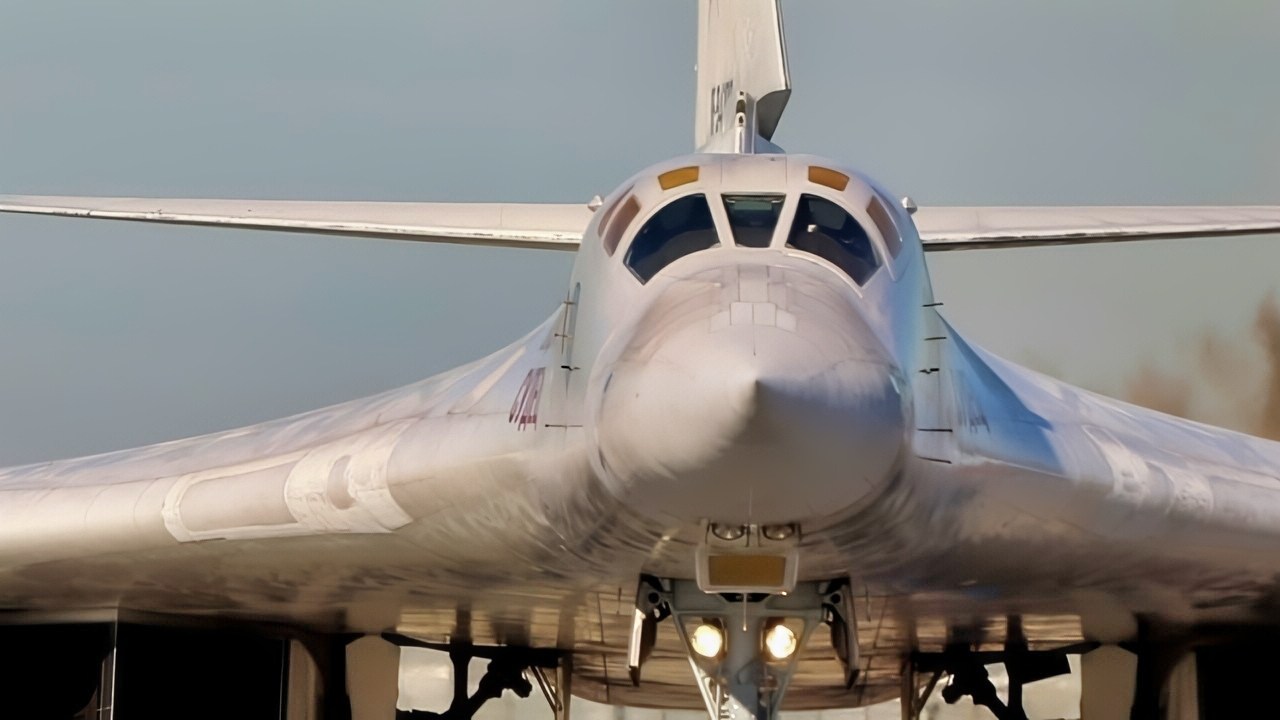
Tu-160 Up Close. Image Credit: Creative Commons.

Tu-160 bomber Creative Commons Image
They were killed when a rail depot was hit in Kyiv. Russia claims that it launched this “massive strike using high-precision weapons” and that these weapons were targeted against Ukraine’s military and energy facilities.
This attack occurred one day after Russian President Vladimir Putin was told by Indian Prime Minister Narendra Modi, one of Moscow’s closest and only remaining allies, to end the war in Ukraine. The Indian PM has made several similar pleas to Putin since Russia launched its full-scale invasion of Ukraine in February 2022
“Every day spent in war pushes humanity back, and every step taken towards peace fills humanity with new hope and enthusiasm,” Modi said at a summit of the Shanghai Cooperation Organization (SCO) in the Kyrgyz capital of Bishkek.
Millions of Barrels Per Day
India has benefited greatly from the war by allowing it to make massive purchases of heavily discounted oil from Moscow.
The discounted price is part of the sanctions regime against Russia that imposes a price cap set by the US and the EU. Indian buys have been as many as 2.6 million barrels per day.
More recently, India has become an important source of petrol for Russia. Months of Ukrainian drone strikes on refineries have also disrupted Russia’s own domestic fuel production. This has caused Moscow to markedly increase its fuel imports to stave off a growing fuel shortage crisis in Russia.
Russia’s attacks on Ukraine’s rail networks appear to be targeted at disrupting the ability of Ukrainian companies to ship goods and other commerce – as well as to choke off the ability of individuals to travel between cities and cross the borders of Ukraine’s neighbors. Since the full-scale invasion of Ukraine, there has been no air service inside or outside of the country, and many of the national airports have been demolished in Russian air attacks, leaving most of the population dependent exclusively on rail travel.
In these attacks on Ukrainian railroads,s Russia is trying to hurt Ukraine’s ability to supply its own population with petrol as a retaliatory measure. In the period January to June 2026, transport by rail in Ukraine of crude oil and petroleum products increased by 1.4 million tonnes, making rail capacity a strategic target.
On 2 September, the English-language L’viv Herald wrote that “to understand the Russian strategy, one must first understand what the railway means to Ukraine. Ukraine inherited from the Soviet Union an enormous railway network constructed principally for moving industrial goods and military formations across a continental landmass. In peacetime this sometimes appeared cumbersome and antiquated. In wartime it became an extraordinary strategic asset.”
A Deadly New Phase
The Russian attacks on these rail facilities represent a new phase in the Ukraine conflict. Railway workers are by definition non-combatants, but Moscow does not appear to recognize them as such.
Ukrzaliznytsia states its workers died when a Russian ballistic missile smashed into one of its locomotive depots. Russian attacks also hit other railway facilities during an almost-saturation bombardment of Kyiv and the Kyiv region.
The state rail authority’s chair, Oleksandr Pertsovsky, described the situation as “an unbearably difficult night for the entire railway family. Railway staff have been working at the scene since early this morning. The attack has caused significant damage. Rescue workers are still putting out a number of fires.”
Since Russia’s full-scale invasion, 58 Ukrainian railway staff have been killed and at least 318 injured. The nation’s railway network is Europe’s third largest, with 15,000 miles of track.
It has also been the transport lifeline for the country in wartime, transporting four million people, and has brought world leaders to Kyiv, including the new UK PM Andy Burnham, who arrived in Kyiv last week for Independence Day commemorations on an overnight service from Poland.
MORE – Putin Could Start a War with NATO
MORE – Trump Won’t Stop Thinking About Kharg Island
About the Author: Reuben F. Johnson
Reuben F. Johnson has thirty-six years of experience analyzing and reporting on foreign weapons systems, defense technologies, and international arms export policy. Johnson is the Director of Research at the Casimir Pulaski Foundation. He is also a survivor of the Russian invasion of Ukraine in February 2022. He worked for years in the American defense industry as a foreign technology analyst and later as a consultant for the U.S. Department of Defense, the Departments of the Navy and Air Force, and the governments of the United Kingdom and Australia. In 2022-2023, he won two awards in a row for his defense reporting. He holds a bachelor’s degree from DePauw University and a master’s degree from Miami University in Ohio, specializing in Soviet and Russian studies. He lives in Warsaw.


