

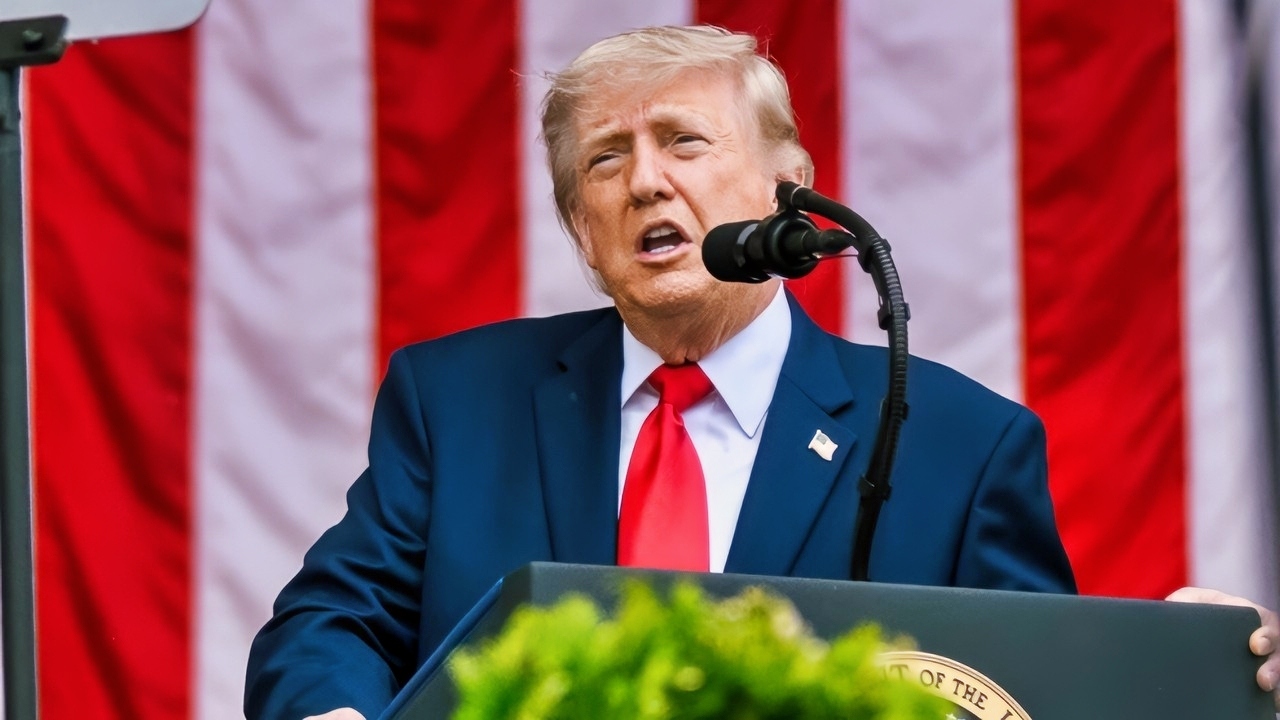
The U.S. Treasury Secretary claims Iran’s economy could buckle “within weeks or months,” as Washington ramps up sanctions.
Bessent said the U.S. wants the regime to “come to its senses,” speaking to reporters at Monday’s G20 finance ministers’ meeting in North Carolina. Separately, he told CNBC that they needed to create conditions in which Tehran will “want to come to the table.”
Bessent Speaks With Russian Counterpart
Bessent also spoke privately with Russian finance minister Anton Siluanov, reportedly telling him: “Nothing is possible until the war is over.”
Indian Prime Minister Narendra Modi urged Russian President Vladimir Putin to end the conflict during a meeting Monday.
“Every day spent in war pushes humanity back,” Modi said, while “every step taken towards peace” offered new hope.
Iranian Currency Value Falls
Iran’s rial fell to a new record of roughly 2.20 million per U.S. dollar this week, according to the Guardian, prolonging a collapse that has eroded Iranians’ purchasing power.
The Iranian Central Bank’s figures now show year-over-year inflation having rocketed to 84.4% last month.
Oil revenue is also in crisis.
Reuters said on Wednesday that Iranian oil exports had plummeted from some 2 million barrels per day to just 240,000. Kpler estimates cited by the pro-democracy outlet Iran International show that shipments to China fell to about 520,000 barrels per day in August.
They sat at around 1.7 million before war broke out in February.
Iranian customs figures now reveal just $15 billion in non-oil exports through August 16. This is a dip of almost 30% compared to a year earlier. Imports also sat at about $17 billion, down around one-quarter.
U.S. Expands Sanctions
On August 24th, the U.S. Treasury launched its “Operation Economic Outcast”, a new series of sanctions designed to cut off “every economic lifeline” aiding the Iranian regime.
The Treasury has also moved against the UAE-based operations of Egypt’s Banque Misr, accusing the bank of processing some $1.8 billion for companies that may be linked to Tehran’s shadow-banking networks.
The Guardian said vegetable oil prices in August were 383% higher than a year earlier; eggs were up 294%, chicken 177%, and red meat 148%.
Iranian households are being forced to reduce meat consumption and purchases, and delay medical treatment.
Medicine Shortages and Protests Unravel
Iran International said there were shortages of up to 800 medicines on Thursday.
Hadi Ahmadi of the Iranian Pharmacists Association said that alternative import routes could “increase drug costs by up to three times,” and that foreign currency shortages were also impacting Iranian manufacturers.
Other civil unrest could unravel as the economic situation deteriorates. On Monday, security forces beat and fired shots at job protesters in Gachsaran and Ahvaz.
Tehran has slammed Bessent’s forecast. Central Bank Governor Abdolnaser Hemmati claimed that Iran has enough foreign currency for critical imports and is prepared to inject as much as $2 billion into the currency market.
Regime Rejects Collapse Forecasts
Hemmati claimed that “collapse has never happened and will never happen.”
Raz Zimmt, director of the Iran and Shi’ite Axis Program at Israel’s Institute for National Security Studies, told The Jerusalem Post this week that there is not yet proof the regime is close to losing power.
“There is a difficult economic situation,” Zimmt explained, “but it is not unbearable at this point.”
He said economic pressure could help pressure Tehran toward a decision, but cautioned that there is still a gap between a worsening political and economic process and a full political breakdown that would ultimately threaten the survival of the regime.
Iran is Used to Isolation
“It is bad, but it’s not the kind of pressure that’s going to lead to economic collapse,” Ali Vaez, who heads the Iran project at the International Crisis Group, told The Times.
Iran’s size, long land borders, and decades of experience circumventing sanctions make it extraordinarily difficult to completely seal off its economy.
Raz Zimmt, director of the Iran and Shi’ite Axis Program at Israel’s Institute for National Security Studies, offered a similar warning. “We still don’t see anything that can be defined as a loss of control or a collapse,” Zimmt told The Jerusalem Post.
But he argued that “economic pressure is bringing them very close to the point of decision.”
About the Author: Georgia Gilholy
Georgia Gilholy is a journalist based in the United Kingdom who has been published in Newsweek, The Times of Israel, and the Spectator. Gilholy writes about international politics, culture, and education.


