


Last week, it appeared that the Trump Administration was pivoting away from carrying out, or even threatening, military action in Iran, in favor of a new approach of emphasizing sanctions through the “Economic D-Day” strategy of going after countries that do business with Iran.
However, by Monday, the sides were once again launching strikes at each other.
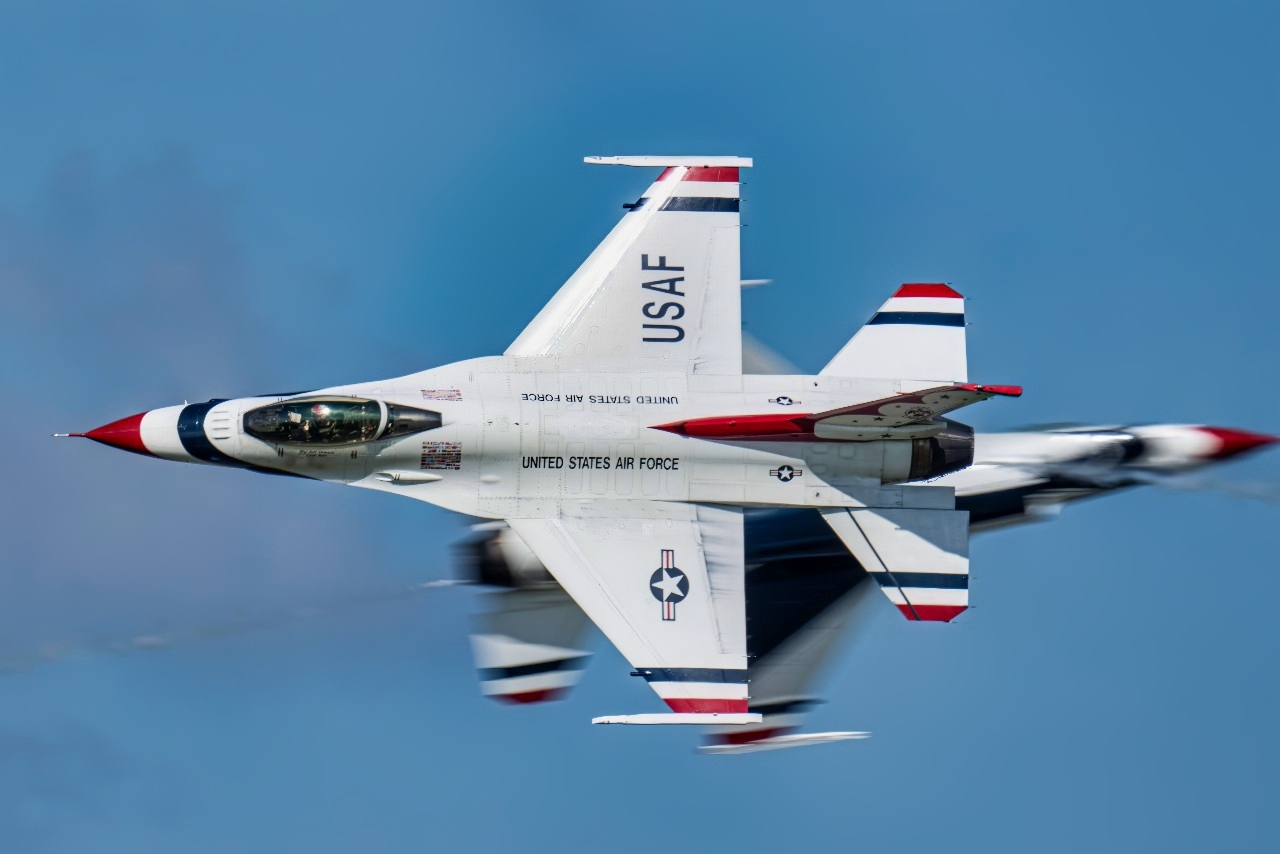
The United States Air Force Air Demonstration Squadron “Thunderbirds” perform at the Defenders of Liberty Airshow at Barksdale Air Force Base, Louisiana, March 29-30, 2025. The Thunderbirds perform at air shows across the country to showcase the capabilities of the United States Air Force, its Airmen, and the F-16 Fighting Falcon. During World War II, Barksdale served as a major bomber training base, and it has since become the home of the 2nd Bomb Wing, the oldest bomb wing in the Air Force. (U.S. Air Force photo by Tech. Sgt. Keith James)
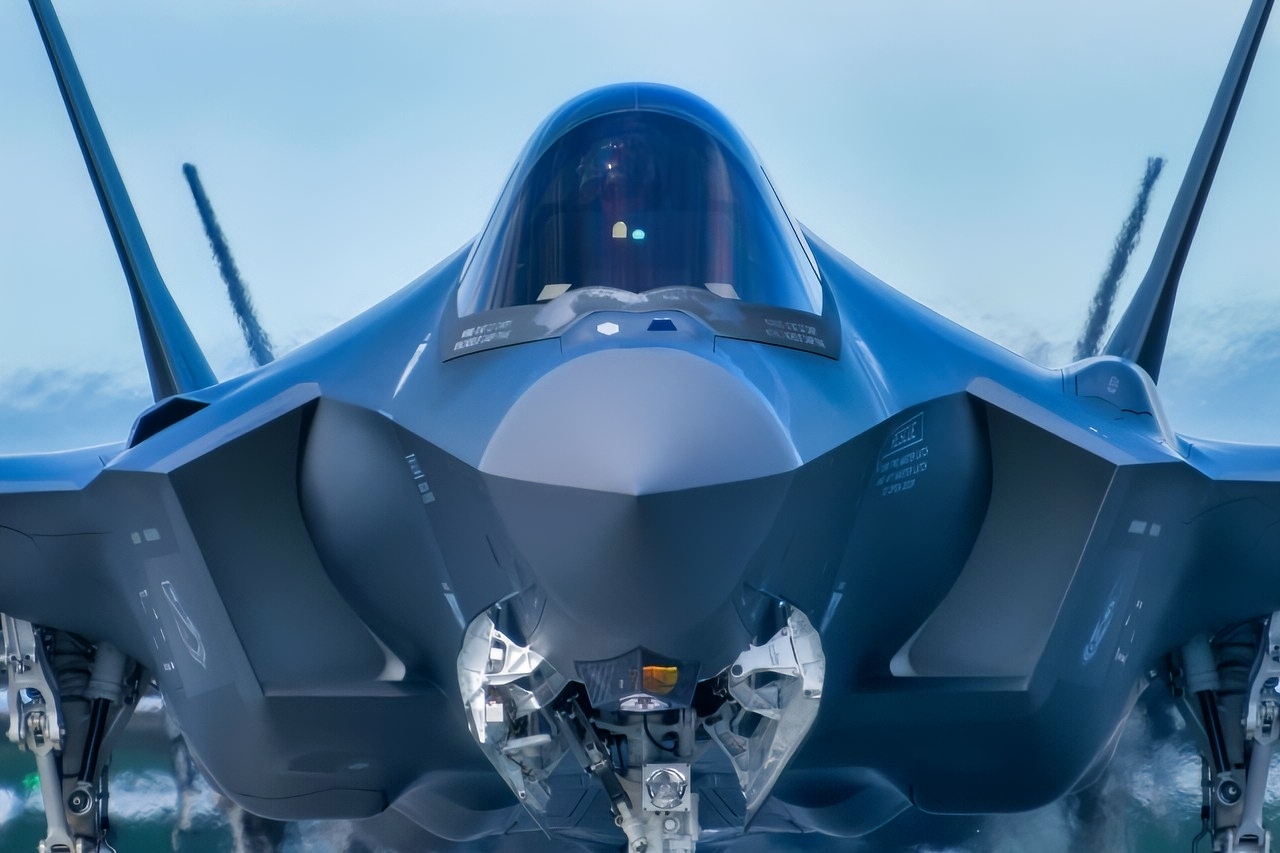
U.S. Air Force aircraft participate in a capabilities demonstration in honor of the U.S. Air Force’s 75th Anniversary at Eielson Air Force Base, Alaska, Aug. 12, 2022. Aircraft, including F-35A Lightning II, F-16 Fighting Falcon and F-22 Raptor aircraft, participated in the 75-fighter jet formation. (U.S. Air Force photo by Tech. Sgt. Timothy Moore)
Will the war be carried out this way in the coming months? An Associated Press analysis on Friday looked at that question.
The president, the AP said, “appears to have settled on a dual-prong approach” that includes both “economic pressure” and “the potential of a devastating escalation in force.”
Meanwhile, at a press briefing on Thursday, Vice President JD Vance said the conflict with Iran is not quite a “war.”
“I wouldn’t call it a war,” the vice president said at the White House. “Right now, there is no active shooting.”
The U.S. and Iran had traded strikes in the days before, with Iran firing missiles at bases in the territory of regional U.S. allies, and the U.S. reportedly striking a wedding near the State of Hormuz. On Thursday, Iran fired at Kuwait.
Vance also discussed how the war might end.
“But when you ask, ‘When will this end?’ You’re asking me a question like, ‘When will the Iranians stop shooting at ships?’” The vice president said. “I think the reality is, I don’t know the answer to that question. You would have to ask the Iranians.”
Would Sanctions Alone Work?
As noted by the AP, Iran has seemed “unbowed” by the pressure so far. The “Operation Economic Outcast” sanctions push was introduced by Treasury Secretary Scott Bessent last week without much in the way of specifics about which countries it would target, and it doesn’t appear that the leaders of Russia or China — who attended a regional conference this week with Iran’s president — have been persuaded to get out of business with Iran.
“Tehran has dug in its heels — to Trump’s frustration — as energy prices rise, the global economy roils and poll numbers on the administration’s handling of the war dip ahead of November’s midterm congressional elections,” the AP said of the current situation.
The new sanctions, the AP said, were “off to a slow start,” with only one branch of an Egyptian bank in the United Arab Emirates targeted thus far, and no enforcement directed at Russia or China.
Trump Speaks
Earlier this week, Trump was asked about whether he’s worried that the continuing war, and the resulting high gas prices, will hurt his party’s chances in the midterm elections.
“It doesn’t matter. And I’m not affected by the election,” he said in the Oval Office this week. “I’m not running. But my party is running, and I’m going to help my party. But I think my party respects the fact that we’re not allowing Iran to have a nuclear weapon.”
However, the AP said Iran’s leaders are also affected by domestic concerns. The story quoted one regional diplomat as saying that while Trump is concerned with the midterm elections, Iran’s leadership is concerned with their own internal crises.
The diplomat was also “skeptical of the Trump administration’s new sanctions plan, saying the threats require more explanation than what the U.S. has provided so far.”
“The Only Solution”
The Trump administration’s current approach may not be working perfectly, but one analyst, Hamidreza Azizi, senior Iran analyst for the International Crisis Group, called it likely the only option.
“This kind of a hybrid approach — the combination of military force, blockade and economic pressure — is the only option that seems to be available to the United States at this moment,” Azizi told the AP.
Amr Hamzawy, from the Middle East program at the Carnegie Endowment for International Peace, also pointed to the political considerations facing both sides in the war.
“The Trump administration is afraid of being portrayed in the U.S. as an administration that failed to end a military campaign successfully, and that’s going to impact the midterm elections,” Hamzawy told the AP. “And the Iranians, especially the Revolutionary Guard, are quite afraid of appearing as if they are submitting to U.S. sanctions with no actions on their side, which might hurt them domestically.”
About the Author: Stephen Silver
Stephen Silver is an award-winning journalist, essayist, and film critic, and contributor to the Philadelphia Inquirer, the Jewish Telegraphic Agency, Broad Street Review, and Splice Today. The co-founder of the Philadelphia Film Critics Circle, Stephen lives in suburban Philadelphia with his wife and two sons. For over a decade, Stephen has authored thousands of articles that focus on politics, national security, technology, and the economy. Follow him on X (formerly Twitter) at @StephenSilver, and subscribe to his Substack newsletter.


