

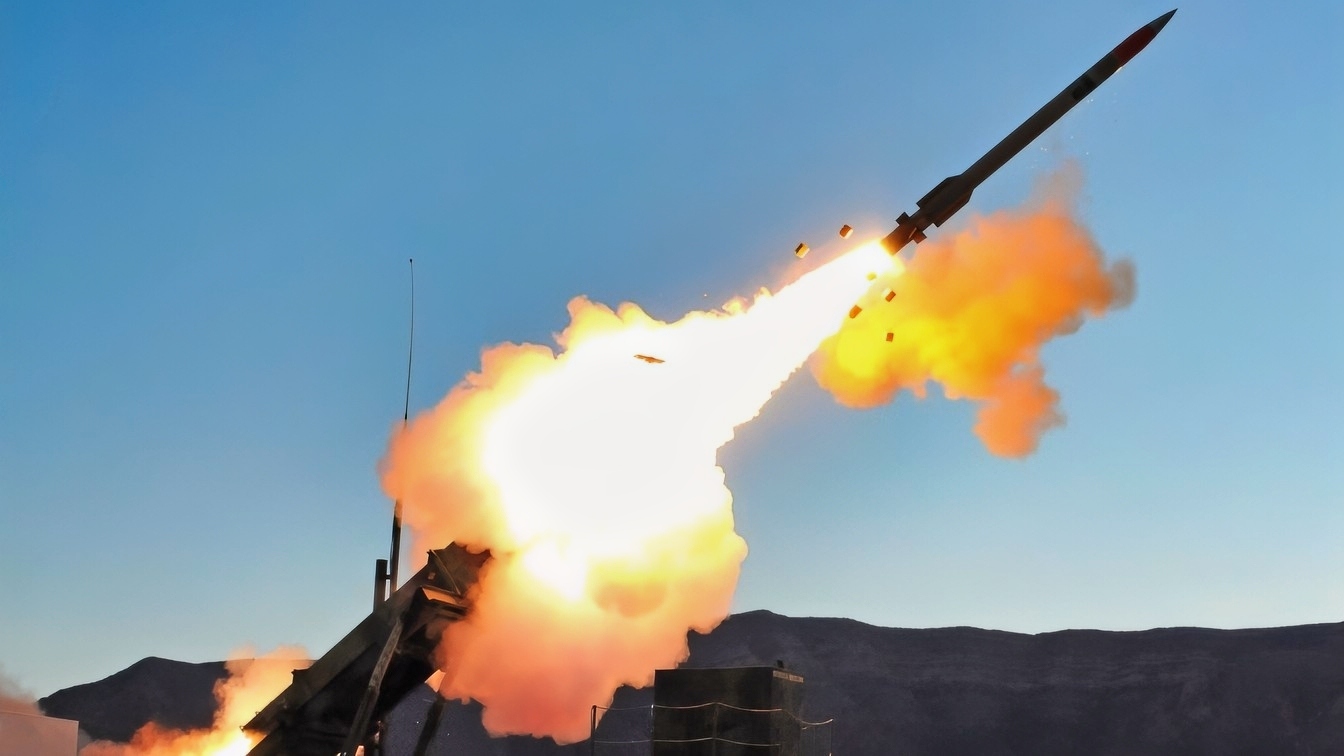
In what CNN described as a “major regional escalation,” the Houthi rebels in Yemen this week launched an attack on oil and other infrastructure in southwestern Saudi Arabia, near the Houthis’ stronghold in Western Yemen.
The move by the Iranian-backed militia, the analysis said, “risks widening the region’s conflicts and adding further pressure to crude prices.” Indeed, Brent Crude rose to $98 a barrel on Tuesday before dipping below that level, marking the highest level reported since July.
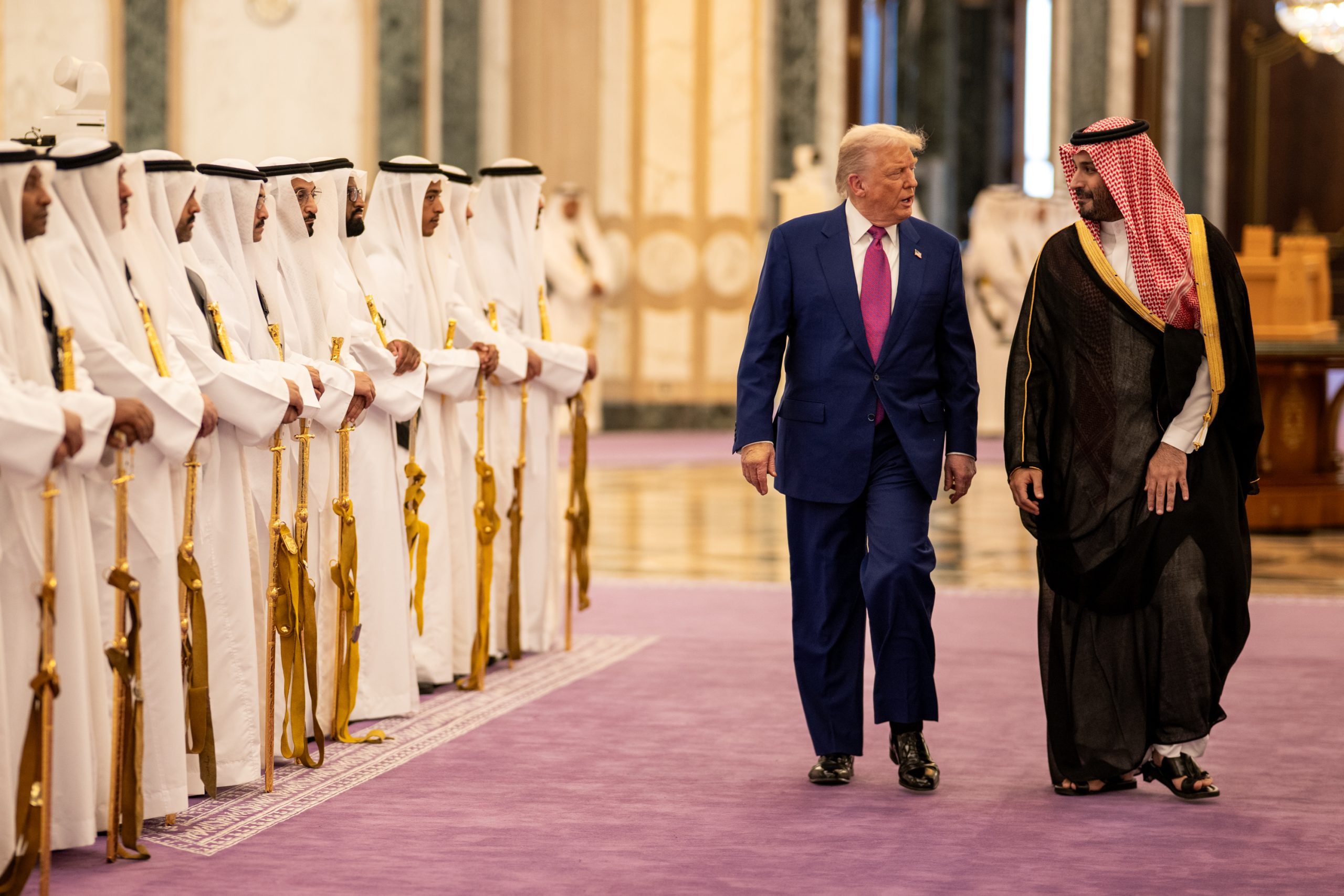
President Donald Trump participates in a welcome ceremony with Saudi Crown Prince Mohammed Bin Salman Al Saud at the Royal Court Palace in Riyadh, Saudi Arabia, Tuesday, May 13, 2025. (Official White House Photo by Daniel Torok)
Saudi Arabia said that “dozens of civilians” were injured in the attacks, which took place across different regions of the country. And then, per the New York Times, they vowed revenge.
The Associated Press put the number of injured civilians at 70, and listed Abha, Jazan, Najran and Khamis Mushait as among the Saudi cities that were targeted in the attacks. Oil facilities and utilities in the area were “temporarily suspended,” the Saudi Energy Ministry said.
The View From Riyadh
The Houthis and the Saudis have been at war since 2014, when the Houthis seized Yemen’s capital, although a truce was reached in 2022.
The ongoing war in Iran has threatened to reignite the hostilities, and that appears to have happened now.
This summer, the Houthis began targeting Bab el-Mandeb, a shipping route in the Red Sea that the Saudis use to export oil, a route that had become even more crucial to global oil markets with the Strait of Hormuz closed and blockaded.
The attacks on Tuesday were connected to that same route.
Major General Turki Al-Maliki, speaking for the Saudi-led military coalition in Yemen, said that the coalition would take “all necessary measures and actions to respond to the sources of the threat.”
Per CNN, the Saudi-led Joint Forces Command of the Coalition will “resolutely confront (the Houthis) hostile approach.” CNN reported that the Saudis plan to retaliate and have informed their allies.
Ahmed Nagi, a senior analyst at the International Crisis Group, told the Times that Yemen was “sliding back toward large-scale war.”
CNN also reported that last month, Saudi diplomats told U.S. lawmakers that there had been “a breakdown in political channels with the Houthis,” who the Saudi side believed were planning to escalate the conflict. Those diplomats, the report said, had “sought Washington’s backing to push back.”
The Times reported that the Saudis have been trying to avoid getting pulled back into a direct war with the Houthis. But according to the Chatham House research fellow Farea Al-Muslimi, “it is becoming impossible for them not to do so.”
“I think today’s development speeds up the Saudi engagement in this war,” Al-Muslimi said.
What the Houthis Say
The Houthis’ spokesman, Yahya Saree, said Tuesday on social media that the strikes were retaliation for the Saudis launching 121 airstrikes in Yemen in the previous three days, the Times said. One of them, Saree claimed, struck a prison.
“The ongoing Saudi aggression against Yemen will not go unanswered or unpunished,” Saree added, per the AP.
The Houthis claim that the strike on the Central Corrective Facility in Hazm killed seven people, including a child.
The prison’s warden also told the militia-aligned Houthi al-Masirah news channel that 35 prisoners, as well as a woman visiting her husband, were under the rubble there.
“Everything Gets Worse”
In July, after the Houthis made the Bab el-Mandeb move, the Center for Strategic and International Studies published an analysis that stated that “The Houthis Enter the Iran War and Everything Gets Worse.”
The analysis, by Michael Ratney, referred to Houthis as “one of Iran’s most resilient and resourceful proxies,” and called it inevitable that they would eventually join the war.
“This escalation is exactly why Saudi Arabia had always hoped to avoid getting drawn into the Iran war.
Saudi leadership knew that Iran and its proxies had the capacity and willingness to strike the most sensitive targets in the kingdom, including energy infrastructure, desalination plants, and even civilian population centers,” Ratney wrote in July.
“For a country betting its future on a transformed economy that attracts tourists and investors—and which still depends on oil revenue to fund that transformation—such attacks could be disastrous,” he said of the Saudis.
About the Author: Stephen Silver
Stephen Silver is an award-winning journalist, essayist, and film critic, and contributor to the Philadelphia Inquirer, the Jewish Telegraphic Agency, Broad Street Review, and Splice Today. The co-founder of the Philadelphia Film Critics Circle, Stephen lives in suburban Philadelphia with his wife and two sons. For over a decade, Stephen has written thousands of articles on politics, national security, technology, and the economy. Follow him on X (formerly Twitter) at @StephenSilver and subscribe to his Substack newsletter.


