


The United States Navy’s shipbuilding crisis continues to compound. Unable to reliably build new warship classes domestically, the Navy had been unwilling (and legally barred by Congress) to procure new warships from foreign partners.
The Navy attempted to partner with an Italian shipbuilder with strong ties to the US defense industrial base, Fincantieri, for the Constellation-class, but the effort ended in total failure. The need for new warships, however, has not gone away.

Constellation-Class Frigate U.S. Navy. Image Credit: Industry Handout.
And the United States Navy’s ability to produce these warships domestically has not improved.
So, the Navy is considering purchasing foreign-designed warships from Japan, South Korea, and even Turkey.
That’s because the failure of the Constellation-class frigate leaves the Navy in a serious bind. The Navy requires a new frigate class.
Yet it cannot reliably build one on its own.
The FF(X) Program
The FF(X) program emerged after the Navy canceled the aforementioned Constellation-class program.
That project was originally supposed to deliver 20 guided-missile frigates to the Navy.
It was based on Europe’s FREMM design by Fincantieri.
However, during its troubled development, the Constellation-class faced significant delays as the Navy introduced extensive modifications to meet American requirements.
One Government Accountability Office (GAO) report determined that the Navy had committed to $3.4 billion for six ships before completing the basic and functional designs of the Constellation-class.
More than three years after construction had started, the functional design was only 87 percent complete.
While that might sound like enough to start construction, the reality was that the ship proceeded without a fully completed and approved design, giving the Navy plenty of wiggle room to make ridiculous changes to the warship’s fundamental design.
In November 2025, the Navy was forced to reduce the planned program to only two vessels. Finally, the Trump administration canceled the program entirely.
But the Navy’s replacement FF(X) project takes a different tack.
The Navy has selected Huntington Ingalls Industries’ (HII) existing Legend-class National Security Cutter as the basis for the United States Coast Guard’s new patrol frigate.
The Navy went with a proven design rather than starting from scratch.
The FF(X) will undertake lower-end missions that currently consume operational availability for the all-important Arleigh Burke-class guided-missile destroyers.
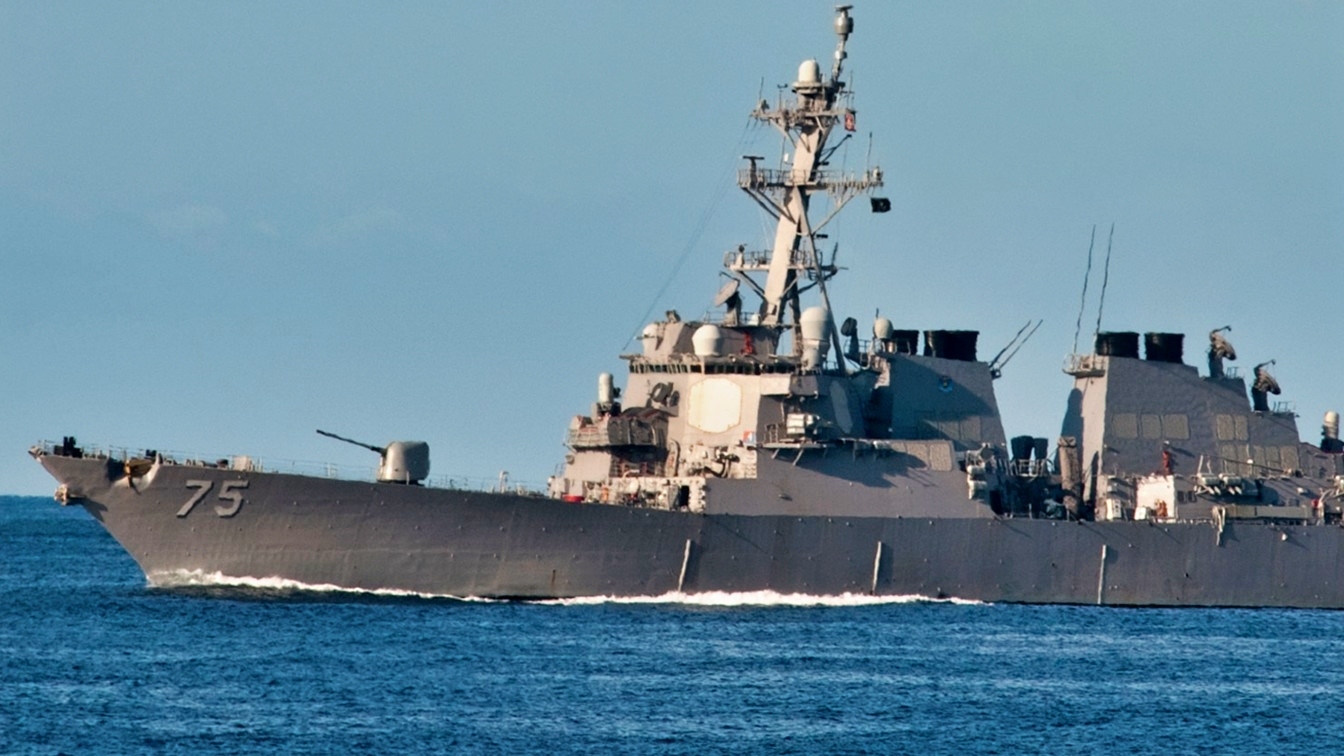
Arleigh Burke Class guided-missile destroyer USS Donald Cook is underway for a scheduled deployment in the U.S. Navy’s 5th and 6th fleet areas of responsibility. Donald Cook departed Naval Station Norfolk Monday, September 19th. (U.S. Navy photo by Petty Officer 3rd Class Scott Pittman)
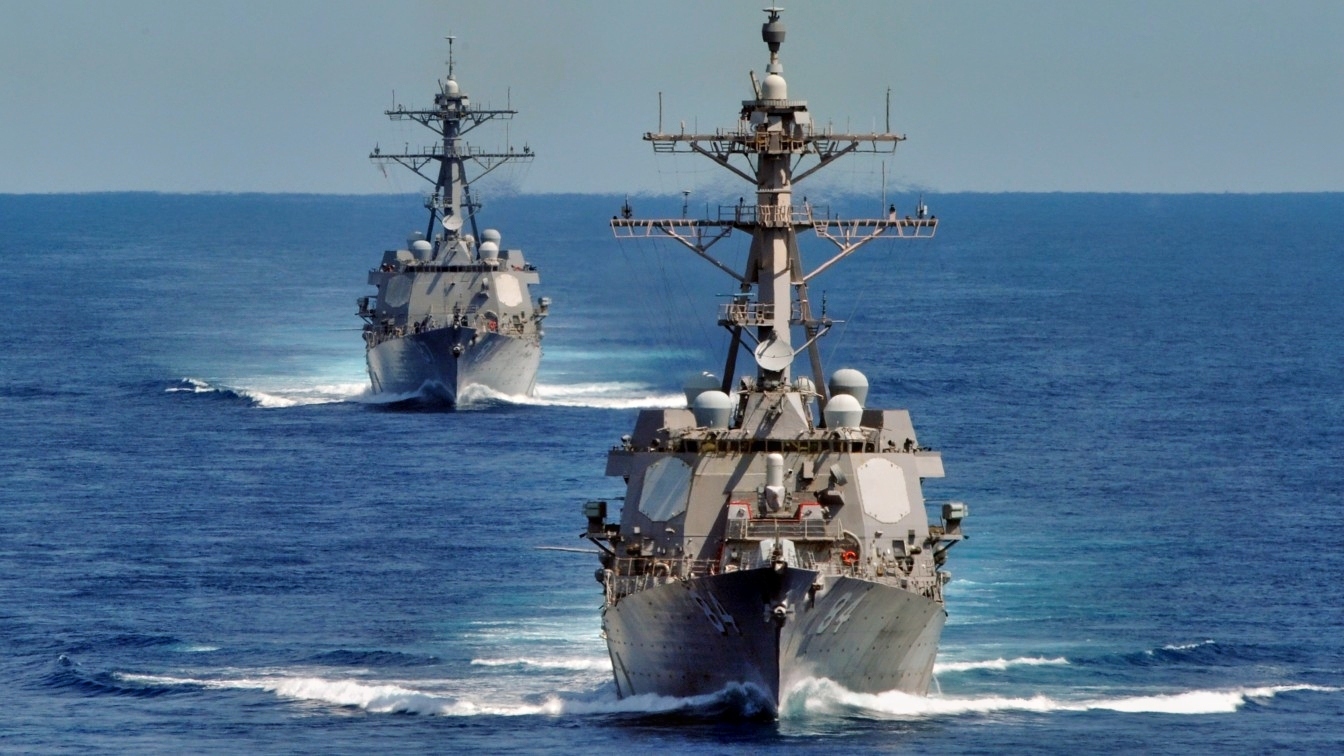
The Arleigh Burke-class guided-missile destroyers USS Bulkeley, right, and USS Mason participate in a strait transit exercise. Bulkeley and Mason are part of the Enterprise Carrier Strike Group and are conducting work-ups and flight operations in preparation for an upcoming deployment. (U.S. Navy photo by Seaman Jared M. King)
The Navy wants to use an established hull and limit modifications to reduce the risks of engineering an entirely new platform.
The Navy also hopes that by choosing a proven design, like the Legend-class National Security Cutter, it can expedite delivery.
As HII develops this project for the Navy, the Trump administration is investigating whether allied shipbuilders could provide additional frigates in the near term.
That’s because the cancellation of the Constellation-class, even if the Legend-class National Security Cutter can be upgraded quickly, left a significant hole in the Navy’s capabilities.
The force needs a new frigate now.
Can US Allies Help?
USNI News reports that foreign designs under consideration include Japan’s Mogami-class frigate built by Mitsubishi Heavy Industries, South Korea’s Chungnam-class frigate, and Turkey’s Istanbul-class frigate.
In fact, this is not the first time the military under the Trump administration has looked at foreign ship designs.
Indeed, the Coast Guard’s Arctic Security Cutter Program allows initial vessels to be built overseas and then later transitions construction to US shipyards.
This is known as the “Finland Model.”
The White House is considering building two initial vessels abroad before transferring the production line to the United States.
Although it’s the best possible solution to an emergency that has persisted far too long in America’s defense industrial base, Congress opposes this move.
Draft provisions for the FY2027 National Defense Authorization Act (NDAA) restrict, or even eliminate, the Trump administration’s ability to procure foreign-built warships for US naval service.
Fincantieri Isn’t Giving Up
Fincantieri still hasn’t given up its dream of building the Navy’s next frigate.
They’ve proposed that the Navy buy the firm’s export variant of the FREMM frigate, which is used by multiple navies in Europe.
That idea would avoid the extensive, painful redesign process that the Navy subjected the FREMM to during the Constellation-class fiasco.
The Navy should consider it. It should have been what the Navy did to begin with, rather than fundamentally redesigning the FREMM as they did with the Constellation-class.
The Navy requires 73 small surface combatants to effectively perform its current mission set.
The Navy is running out of time to meet these obligations, as its current force ages out and no reliable replacement is in the offing.
Meanwhile, the domestic FF(X) has completed its critical design review and entered pre-production activities.
November 12 is the next major deadline in this ongoing process. At that time, the Navy’s foreign-design assessment is due at the White House.
And that review will help policymakers determine how the Navy should proceed with its next generation of small surface combatants.
About the Author: Brandon J. Weichert
Brandon J. Weichert is the Senior National Security Editor at 19FortyFive.com. He also manages The Weichert Brief on Substack. Weichert also hosts “National Security Talk” on Rumble. He is the author of four bestselling national security books, most recently A Disaster of Our Own Making: How the West Lost Ukraine (Encounter Books). Follow him via Twitter/X @WeTheBrandon.


