

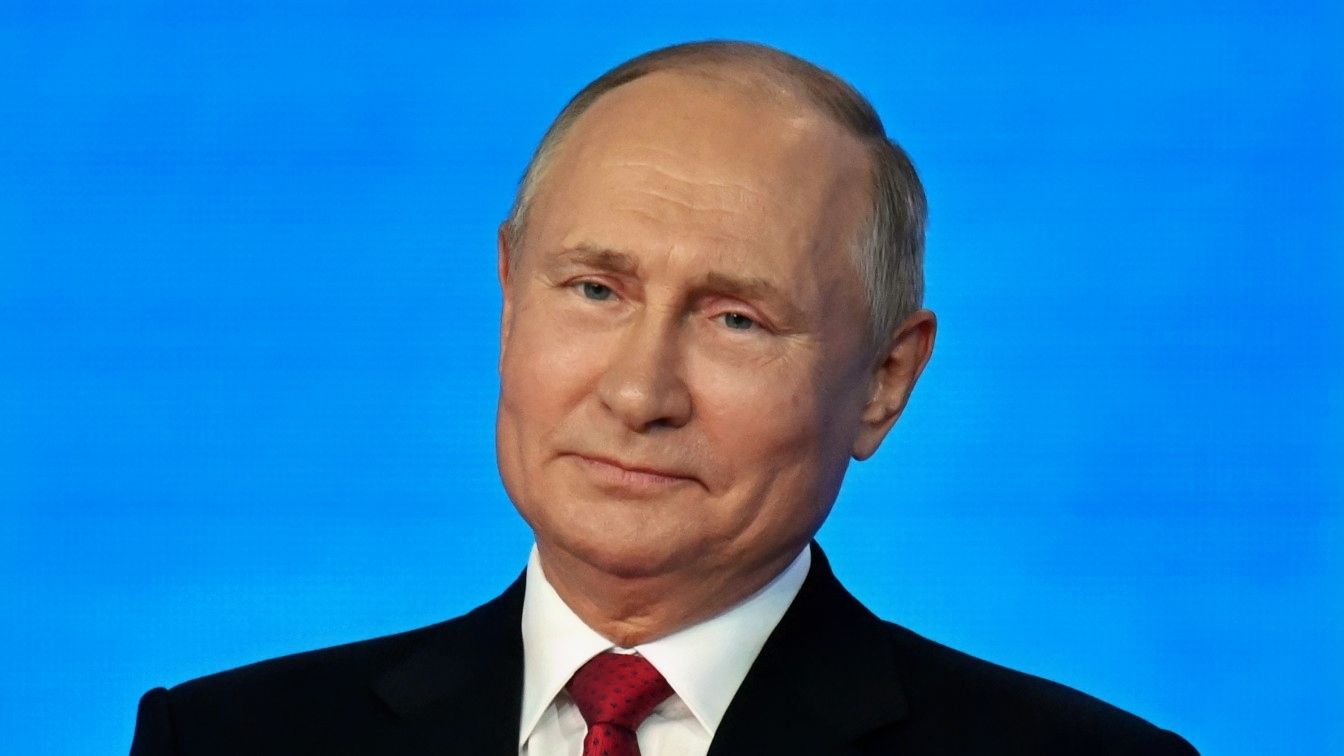
A further barrage of ballistic missiles and jet-powered drones was aimed at Kyiv on Tuesday.
Ukraine’s air force said Russia had launched ballistic missiles and dozens of the newer jet-powered drones at the city of 3 million.
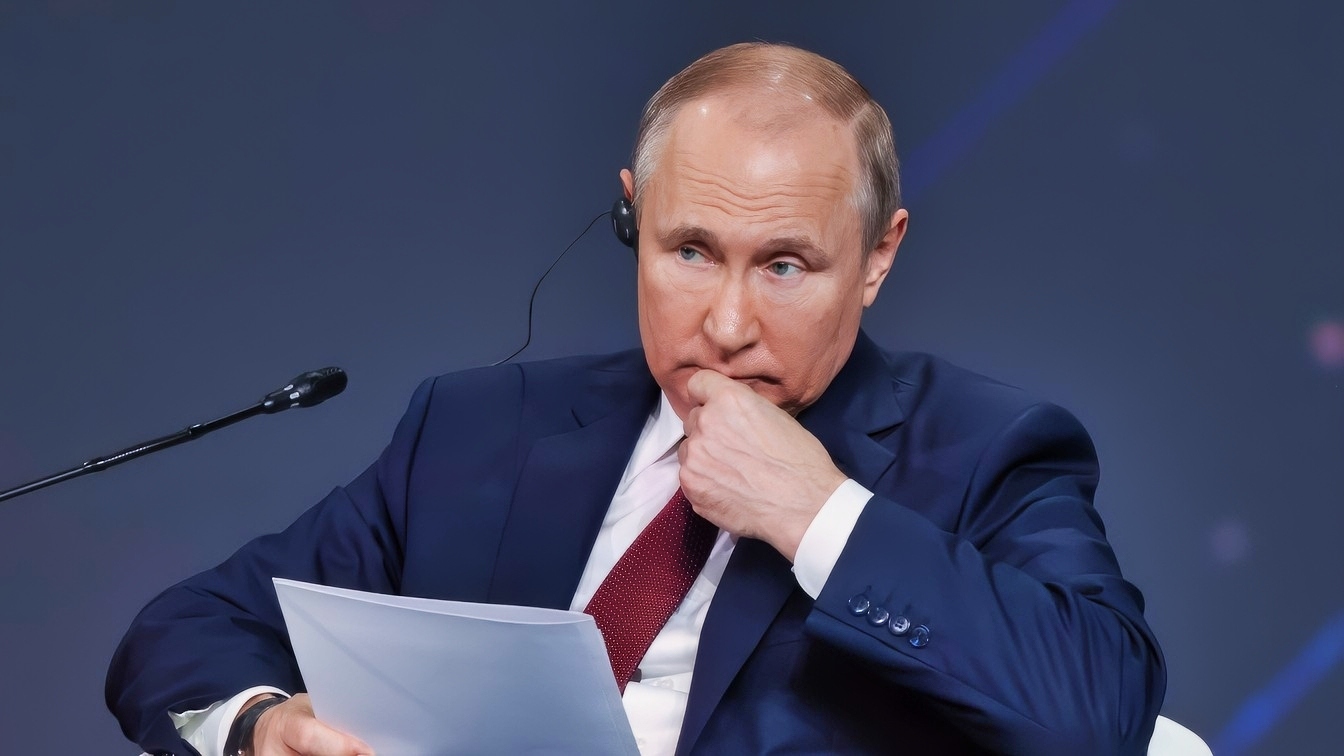
Putin in June 2021 Russian State Media Photo
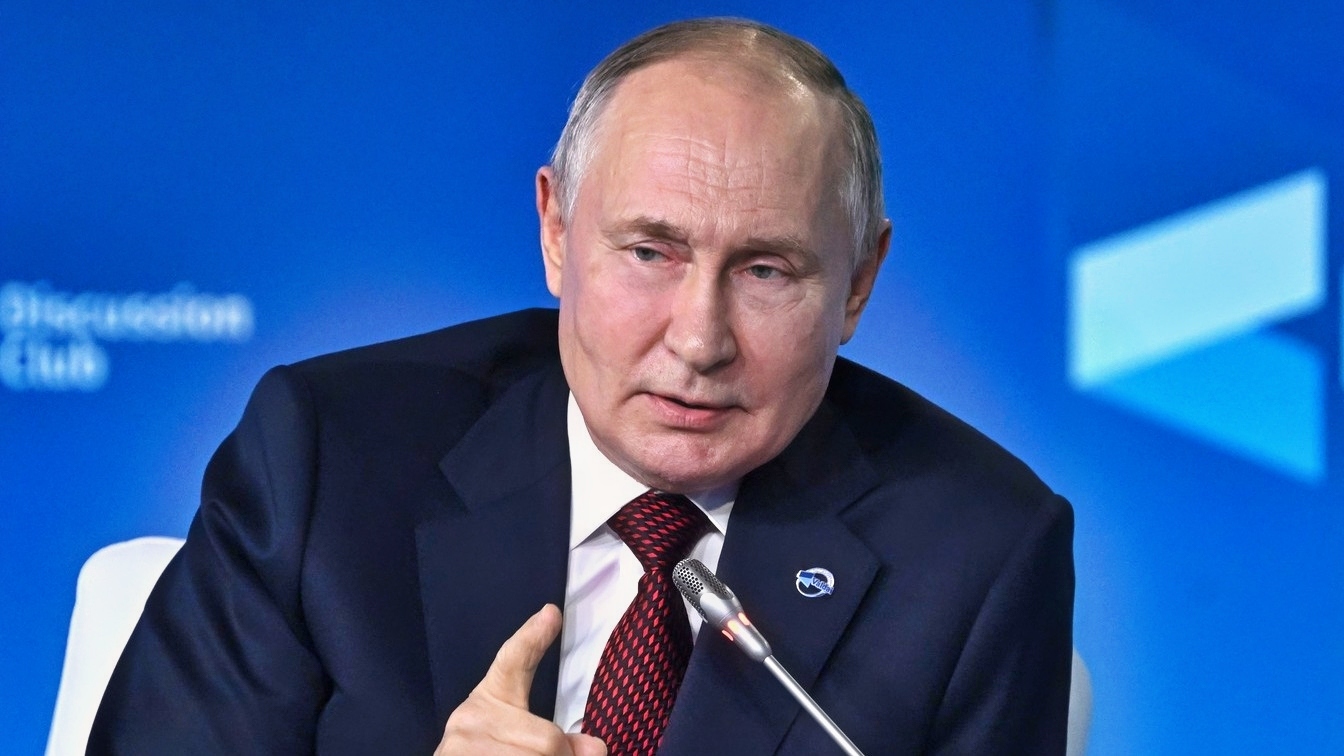
Putin Back in 2023. Image Credit: Russian Federation
The weapons are faster and fly higher than the propeller-powered Shahed-type drones that have been a staple of Russia’s long-range attacks.
In Monday’s brutal attack, one of these jet-powered drones slammed into the National Academy of Sciences in central Kyiv during the working day.
Several floors were set on fire.
Reuters said two people were killed in the strike.
The Ukrainian capital’s mayor, Vitali Klitschko, reported that 24 people across the metropolis were injured in the attack.
Academy President Anatoliy Zagorodny told The Guardian: “We are not connected with the military. This is an attack on science.
It is terrorism.” Among those injured was Volodymyr Horbulin, the academy’s vice president and a former secretary of Ukraine’s National Security and Defense Council.
His assistant, Nataliia Bukalo, was killed.
Russia’s New Jet Drones Are Proving Harder To Stop
The academy was not the only target in Kyiv. Another drone hit the Dobrobut medical center, injuring eight people.
“Most importantly, all employees and visitors are, thankfully, alive,” Dobrobut said.
Ukraine’s Foreign Minister Andrii Sybiha said Moscow was “deliberately expanding the boundaries of what it believes the world will tolerate,” while appealing for additional air defenses.
President Volodymyr Zelenskyy said Monday night that Russia had launched “more than 120 drones already, 90 of them jet-powered.” He put the interception rate for the jet-powered drones at just 57%, compared with an overall 70% interception rate across that day.
“New interceptors are being actively tested,” Zelenskyy said. Some Ukrainian combat units are already using them, he added, but the technology still needs refinement before it can be deployed effectively at scale.
“We are pushing the developers to move faster,” he said.
Ukraine had already acknowledged the problem before Monday’s attack.
On September 15, Zelenskyy said a Ukrainian system under development had successfully intercepted one of the jet-powered drones, although “some technical aspects still need to be refined.”
Attacks Stretch Beyond Kyiv
The violence extended well beyond the capital.
In Dnipro, a drone struck a business center during the working day, killing three people and injuring 19, according to officials.
Regional Governor Oleksandr Hanzha stressed the strike’s location: “Hundreds of people are here in the middle of the working day.”
Another person was killed at a logistics office in Synelnykove, while an infrastructure strike in Zaporizhzhia wounded 32 people.
Zelenskyy said Monday evening that nine people had been reported killed and more than 80 injured nationwide at that point. The death toll was later revised to ten.
Data Centers and More
The latest strikes have also hit data centers, telecommunications infrastructure, gas stations and other commercial sites.
Moscow has said some data-processing and storage facilities support Ukraine’s military and said Tuesday that its forces had struck data centers, drone and cruise-missile storage sites, an electrical substation and a drone-production facility.
Those Russian claims have not been independently verified.
Kremlin spokesman Dmitry Peskov, referring to Ukrainian long-range attacks inside Russia, said Monday that “Ukraine will have to pay a price.”
Ukraine, meanwhile, has continued striking Russian oil facilities and defense plants with long-range drones.
Zelenskyy said Ukrainian forces hit oil facilities in Russia’s Krasnodar region and two defense plants on Monday.
The attack on the academy also drew a response from the leaders of the U.S. National Academies, who said: “We condemn this direct attack on the country’s scientific infrastructure.”
Faster Drones
For Kyiv, however, the immediate problem is technical.
Russia has introduced a faster class of drones that are proving a major challenge for the inexpensive interceptors Ukraine developed to defeat earlier Shaheds.
After a barrage last week, Zelenskyy called on the United States to respond promptly by supplying ballistic-missile interceptors.
After meeting with NATO Secretary General Mark Rutte on September 24, the Ukrainian leader said his country has developed effective defenses against cruise missiles and drones. “The only effective option is Patriot interceptors, which we need practically every day,” he stressed.
“We cannot turn a blind eye to such brutal strikes,” Zelenskyy said Monday.
About the Author: Georgia Gilholy
Georgia Gilholy is a journalist based in the United Kingdom who has been published in Newsweek, The Times of Israel, and The Spectator. Gilholy writes about international politics, culture, and education. You can follow her on X: @llggeorgia.


