

After months of large-scale Ukrainian strikes against high-value Russian oil and energy infrastructure, Moscow is stepping up its attacks against Ukraine’s capital city as winter approaches — and it looks like the Kremlin isn’t backing down any time soon.
Rather than concentrating primarily on Ukraine’s power grid and military infrastructure, Russian forces are getting increasingly aggressive, targeting transport and communications infrastructure, fuel sites, and other facilities that keep Kyiv running.
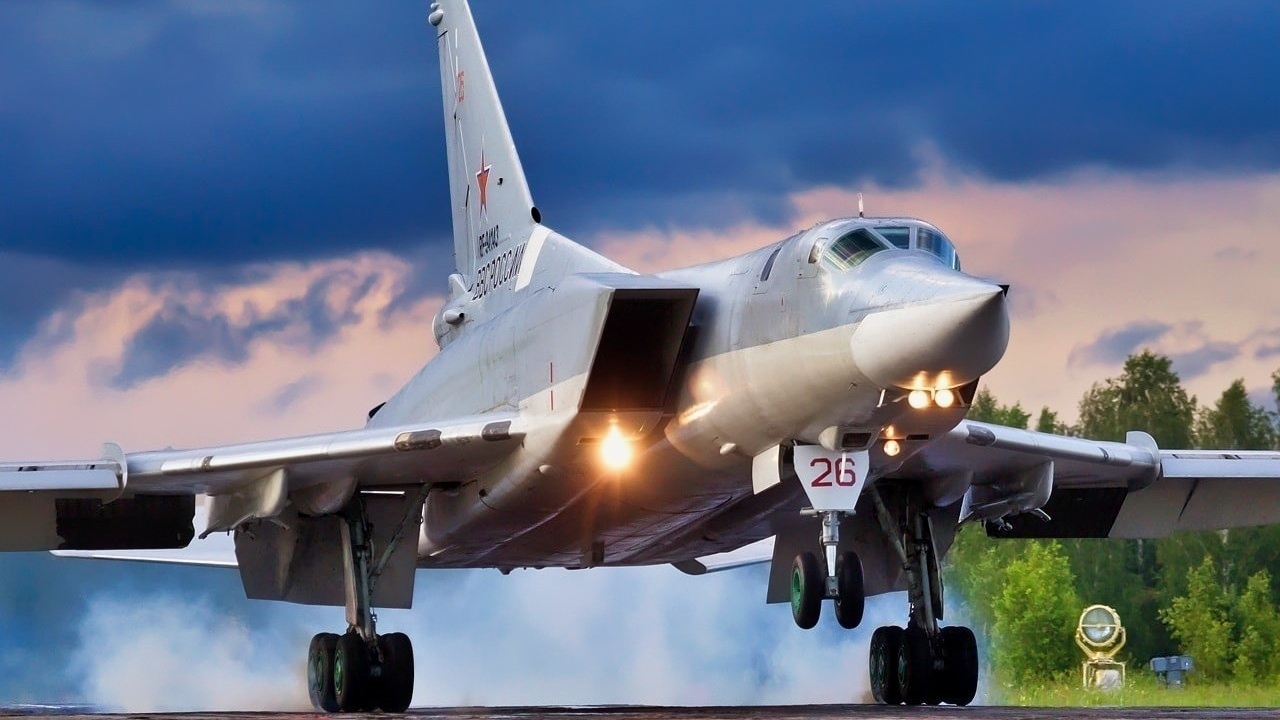
Tu-22M3 from Russian Air Force. Image Credit: Creative Commons.

Tu-22M3 Bomber from Russia. Image Credit: Creative Commons.
That aggressive campaign against Kyiv became particularly visible over the last three days, with Russian drones repeatedly targeting bridges over the Dnipro River that connect the eastern and western sections of the city.
On Saturday, October 3, a Russian drone hit the Northern Bridge, damaging the road surface and power lines that power the trolleybus.
The strike on the Kyiv bridge temporarily stopped traffic from traveling from the left bank to the right. Two people were also injured in the strike, according to Mayor Vitali Klitschko.
It followed repeated attacks on the Southern Bridge that began on October 1 and eventually forced local authorities to close it.
Huge traffic jams soon formed throughout the city.
The attacks are not isolated; they are part of something much bigger.
And Ukraine knows it.
Ukrainian President Volodymyr Zelenskyy now says that intelligence obtained by Kyiv shows that Russia is preparing for a substantial winter campaign that is designed to isolate Ukraine’s capital city, and indeed its other large cities, and make everyday life increasingly difficult for the people living there – just as Ukraine has done to much of Russia already.
Russia, of course, rejects accusations that it is deliberately targeting civilian infrastructure, and in the cases of bridges being damaged, claims that they are being used to move Ukrainian military personnel and equipment.
Russia Targets Kyiv’s Bridges
The Dnipro River splits Kyiv in two, so disrupting its bridges can cause major problems.
More than a third of the capital’s roughly three million residents live on the river’s eastern bank, while much of the city’s employment and commercial activity occurs on the opposite side.
On October 2, reports confirmed that the Southern Bridge was temporarily closed and that other crossings were also restricted.
The Southern Bridge attack began on Thursday, October 1, with the first strike damaging a pier, the road surface, and a concrete barrier that protected the Metro line.
After an inspection, the crossing reopened out of necessity, but Russia attacked it again.
Then, on Saturday, Russia attacked the Northern Bridge. Moscow acknowledged it, too.
What Russia Claims
The Russian Defense Ministry acknowledged the attack on Saturday, October 3, saying its forces had used drones overnight to strike the Northern road bridge across the Dnipro.
A statement reported by Interfax before 9 am Moscow time said the Ukrainian military was using the bridge.
“Tonight, as a result of strikes by unmanned aerial vehicles, the Northern Road Bridge across the Dnieper River, which provides the transfer of troops and logistics for the supply of military cargo in the interests of the Armed Forces of Ukraine, was hit in the city of Kyiv,” the statement reads.
Even without destroying the bridges outright, Russia’s repeated strikes are already causing substantial disruption by forcing regular closures and restricting capacity.
Eventually, disruption like that will affect the city’s economy and impact civilian lives.
There is also no guarantee that the bridges will remain standing, either: after multiple attacks on Kyiv’s Dnipro crossings in only three days, Russia may determine that continuing to target them over the coming weeks and months is a worthwhile endeavor, and that destroying them will cause more pain than constantly, but occasionally, disrupting traffic.
Russia Warns Foreigners to Leave Kyiv
If that wasn’t enough of a sign that Russia is focused on causing pain in Kyiv, consider the news that Russia is now warning foreigners to leave the city.
On October 3, the Russian Foreign Ministry urged foreign nationals and diplomatic personnel to leave Kyiv, warning that Moscow intends to continue targeted retaliatory strikes against sites in the Ukrainian capital and other cities.
The ministry said the attacks were retaliation for Ukrainian strikes against Russian territory and warned that foreign nationals who ignored its advice could face mortal danger.
The warning was issued on the same day that Russia struck the Northern Bridge, and after three consecutive days of attacks against crossings over the river.
Ukraine Will Respond
Ukraine is already promising to respond.
On October 3, Zelenskyy said that Kyiv is preparing to intensify strikes against Russian oil refineries in response to the new Russian air campaign – a campaign that is now frequently extending into the mornings and afternoons.
It all raises the prospect of a particularly destructive winter war between the sites, where long-range strikes potentially become as deadly as the front line.
About the Author: Jack Buckby
Jack Buckby is a British researcher and analyst specializing in defense and national security, based in New York. His work focuses on military capability, procurement, and strategic competition, and he produces and edits analysis for policy and defense audiences. He brings extensive editorial experience, with a career output spanning over 1,000 articles at National Security Journal, and has previously authored books and papers on extremism and deradicalization.


