

Russia plans to raise defense spending to levels not seen since the Soviet Union’s collapse, according to its 2027 draft budget.
Revealed on Thursday, 1st October, Russia is set to allocate 17.1 trillion Rubles ($205.2 billion) to fund its ongoing full-scale invasion of Ukraine.
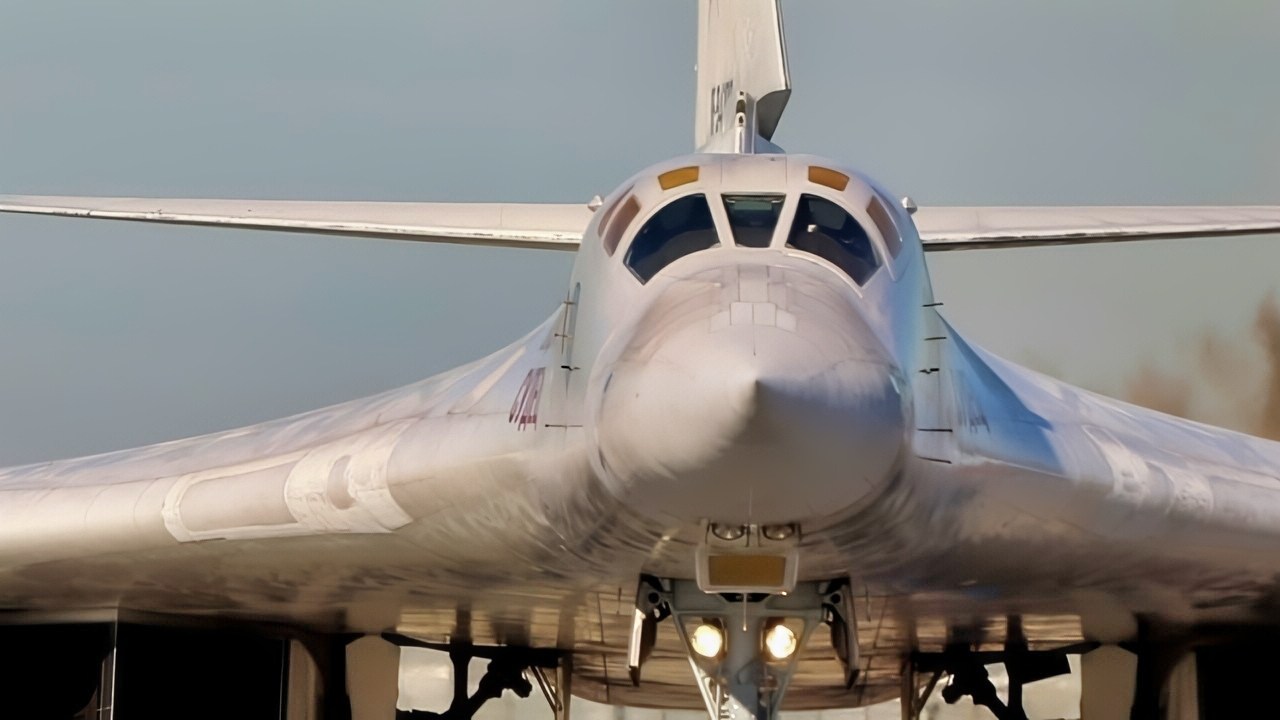
Tu-160 Up Close. Image Credit: Creative Commons.

Tu-160 bomber Creative Commons Image
This new allocation is a 26% increase over what was previously earmarked for 2027.
Increased Spending Due to Ukraine War
Under the 2027 draft budget, Russia will allocate 375% more to defense than in 2021, the year before it began its invasion of Ukraine.
Defense spending rose steadily to 3.6 trillion Rubles in 2021, then to 5 trillion Rubles by 2023, before doubling the following year.
It is now set to rise to 17.1 trillion Rubles, then drop by about 400,000 Rubles a year in 2028 and 2029.
As a result, defense makes up one-third of Russia’s overall budget for 2027 – the highest proportion allocated since the end of the Soviet Union.
It signals the Kremlin’s anticipated prolonged war, with households, businesses, and public services expected to foot more of the bill.
While Russia has a “considerable” financial cushion under its wartime economy, economist Boris Grozovsky said: “The message is clear: everyone will pay for the war, as much as they can.
Wherever a little more money appears, the government will come for it, while handing out as little as possible itself.”
The defense allocation does not capture the war’s full cost, as Russia has publicly released only planned military expenditure, not actual outlays, since its invasion began four and a half years ago.
Classified items also make the overall defense budget hard to analyze.
Finances Under Strain
The conflict’s cost has strained state finances, with the federal budget deficit reaching 5.65 trillion Rubles in 2025, equivalent to 2.6% of GDP.
This increased to 7.3 trillion Rubles the following year (3.2% of GDP), before it is projected to fall to 5.4 trillion Rubles (2.2% of GDP) in 2027.
Russia’s largest lender, Sberbank, had a more pessimistic outlook in a forecast published before the draft budget was unveiled, projecting the deficit to be at 2.7% of GDP next year.
It also questioned whether the government could meet its earlier target by restraining spending and raising revenue through non-oil and gas sources.
While the deficit is high by Russian standards, it remains lower than European countries such as France (5.4% of GDP) and the United Kingdom (4.3% of GDP).
Taxes Raised Due to Ukraine War
The Kremlin will borrow 6.1 trillion Rubles next year to help finance the deficit, up from 1.1 trillion in 2026.
However, debt servicing is projected to reach 4.6 trillion Rubles in 2027, or 9.4% of total federal spending, as the Central Bank keeps interest rates high amid inflation fueled by continued government spending.
Civilians will be expected to help out, with tax increases proposed for a third successive year.
These are expected to raise an additional 1.5 trillion Rubles, and include a 22% value-added tax on purchases from foreign online retailers.
Tax rates on deposit interest, dividends, and property sales are set to rise, with a one-time windfall tax proposed for mining and metals companies.
As a result of the passive-income tax changes, the government expects to raise an additional 700 billion Rubles, with levies on online purchases bringing in another 500 billion Rubles.
Healthcare Funding Cut
Allocations for public sectors such as healthcare, education, and social programs have been reduced by around 5.5% to 6% compared with the amounts previously budgeted for 2027.
National projects in priority areas such as healthcare and infrastructure will also face cuts in the coming years.
The Long and Active Life project, which supports healthy living programs, will see its funding cut by one-fifth to 145.9 billion Rubles, while the federal cancer program will be cut sharply from 44.9 billion Rubles to 3.9 billion Rubles.
Combined with the tax hikes and cuts to civilian spending, the 2027 draft budget will likely frustrate everyday Russians as Moscow’s “special military operation” approaches its half-decade anniversary.
The country has repeatedly come under attack from Ukrainian drones, targeting oil refineries and logistics hubs.
Combined with ever-increasing Russian losses on the battlefield, the draft budget is yet another example of how the war is being brought home to the Russian Motherland.
About the Author: Shay Bottomley
Shay Bottomley is a British journalist. He has written for the Western Standard, Business Insider, Maidenhead Advertiser, Slough Express, Windsor Express, Berkshire Live and Southend Echo.