


With Ukrainian forces making modest though perceptible headway on the battlefield in Ukraine, the Kremlin’s long-stated goal of seizing all of Ukraine’s eastern Donbas region appears farther away now than it has in the nearly five years since Russia launched its full-scale invasion of Ukraine.
The Ukrainian effort, called Operation Vivaldi, has clawed back about 125 square kilometers from Russian forces, or just under 50 square miles.

TOS-1. Image Credit: Creative Commons.
Though certainly not an enormous amount of territory — Ukraine is almost exactly the same size as California and Missouri combined — it is nonetheless a heartening win for Kyiv.
While Ukrainian forces have exacted a terrifying toll on Russian forces in Ukraine, killing and wounding about 1.5 million Russian troops, their success in liberating Ukrainian territory has been less dramatic.
But Slovyansk and Kramatorsk, two Ukrainian cities in the east, appear safe for now, with Russian plans for the two towns, dubbed fortress cities by Ukraine, likely set back by six months or more.
Operation Vivaldi gives substance to Kyiv’s assertion to its western backers — and in particular American President Donald Trump — that its focus can, given sufficient resources and time, reassert itself on the battlefield, and strongly affirms Ukrainian agency at a particularly precarious time.
Moscow and Kyiv’s forces have held each other to a virtual standstill on the battlefield in recent months, with neither side able to force a decisive, sweeping breakthrough that would substantially alter conditions on the ground.
A Difficult Aerial Environment
Against the backdrop of slow, if steady Ukrainian advancement on the battlefield is the air defense situation above Ukrainian cities, a situation that is far more concerning.
Thwarted from a decisive win on the ground, Russia has pummeled Ukrainian cities ahead of the bitterly cold winter months.
Targeting civilian infrastructure, particularly heating plants, electricity generation sites, and other vital facilities, was certainly characteristic of previous winters, but this winter is set to be different.

A soldier from the Idaho Army National Guard, Charlie Company, 2-116th Combined Arms Battalion, 116th Cavalry Brigade Combat Team makes Idaho National Guard history with the first firing of a Javelin anti-tank missile. In a historic moment of training for the Idaho Army National Guard, soldiers from Charlie Company, 2-116th Combined Arms Battalion, 116th Cavalry Brigade Combat Team, fired the FGM – Javelin portable anti-tank missile on Sunday while conducting a series of field training exercises scheduled for the week on the Orchard Combat Training Center ranges.
While Ukraine has successfully parried most of Russia’s thrusting bombardments of major cities and civilian areas previously, a new crop of Russian munitions has upended that dynamic.
In particular, Russia can produce hundreds of missiles of various types per month, straining the supply of Western-provided air defense interceptors and especially the American-made Patriot interceptors that can reliably engage and shoot down Russian missiles.
But Russia’s Geran family of explosive-laden, one-way attack drones has grown in sophistication too, swapping out its slower propeller-driven designs in favor of jet-powered models that can outpace Ukraine’s domestic drone interceptors.
Combined, Russia appears to have leveraged something of an upper hand in the cat-and-mouse game of air defenses versus strike munitions — promising a difficult winter ahead for Ukraine’s civilian population.
Citing a Russian document intercepted by Ukrainian intelligence, Ukrainian Energy Minister Denys Shmyhal explained that this winter’s bombardment of non-military targets in Ukraine could expand in scope, as part of the Kremlin’s plan to retaliate for Ukraine’s surprisingly successful bombardment of Russian oil and gas infrastructure.
That play by Ukraine over the summer and into the fall saw Russian oil and gas refineries across the country erupt in smoke and flame.
Ukrainian President Volodymyr Zelensky called it part of Ukraine’s long-range sanctions regime against Russia; the bombardment of Russian energy sites targeted the single greatest source of revenue for Russian state coffers: refining and exporting energy products to international markets and foreign customers.
Though Russian authorities made sweeping changes to energy rules, including forbidding the export of diesel abroad for a year and relaxing environmental rules aimed at protecting consumers, the effects of the Ukrainian strikes were felt virtually everywhere in Russia, and long lines outside of gas stations as well as fuel rationing were instituted in many Russian regions.
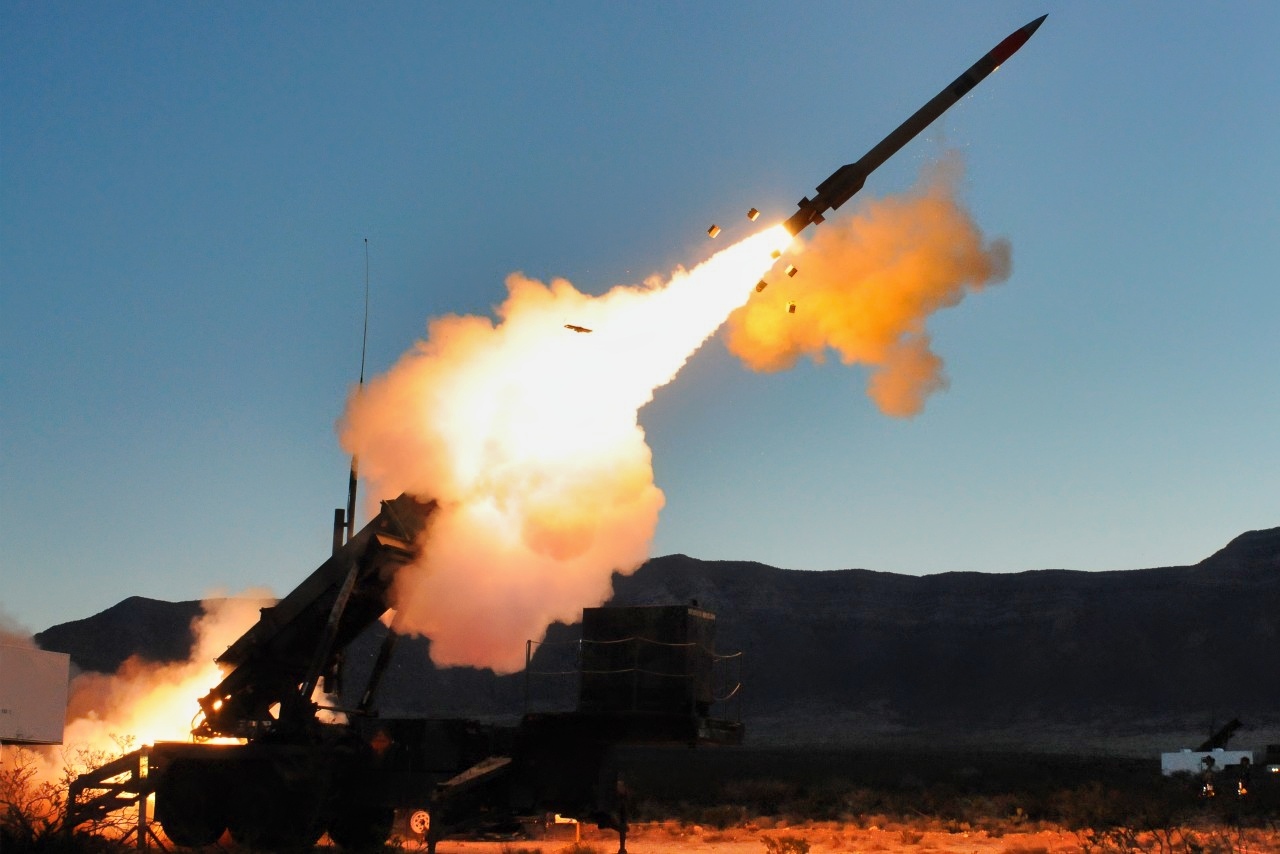
The PAC-3 MSE is a highly sought-after air defense munition due to its advanced capabilities and versatility. As a next-generation interceptor, it offers improved range, speed, and maneuverability, making it an effective counter to a wide range of threats, including tactical ballistic missiles, cruise missiles, and aircraft. (Official U.S. Army photo)
“Last week, we received information from our intelligence services which they had obtained from the Russian side – the strategy the Russian terrorists will use this winter,” Mr. Shmyahl explained, citing the aforementioned Russian document
“There are two large documents, written in a very cold and precise manner. They contain tables specifying the amount of weaponry needed to destroy each facility.
The types of weapons range from ballistic missiles to jet-powered and conventional drones. Everything has been calculated, with the required strike packages – as they call them – set out for each facility. We understand how they are going to act.”
“Our partners, like us,” the minister added, “were struck by its cynicism, by this cold, terrorist calculation of how to destroy our energy sector.”
Ukraine is strengthening its energy sector, particularly by moving away from Soviet-era, highly centralized facilities that generate heat and electricity in favor of smaller, distributed plants.
But in the meantime, Russian bombardment continues—and winter is approaching quickly.
About the Author: Caleb Larson
Caleb Larson is an American multiformat journalist based in Berlin, Germany. His work covers the intersection of conflict and society, focusing on American foreign policy and European security. He has reported from Germany, Russia, and the United States. Most recently, he covered the war in Ukraine, reporting extensively on the war’s shifting battle lines from Donbas and writing on the war’s civilian and humanitarian toll. Previously, he worked as a Defense Reporter for POLITICO Europe. You can follow his latest work on X.


