

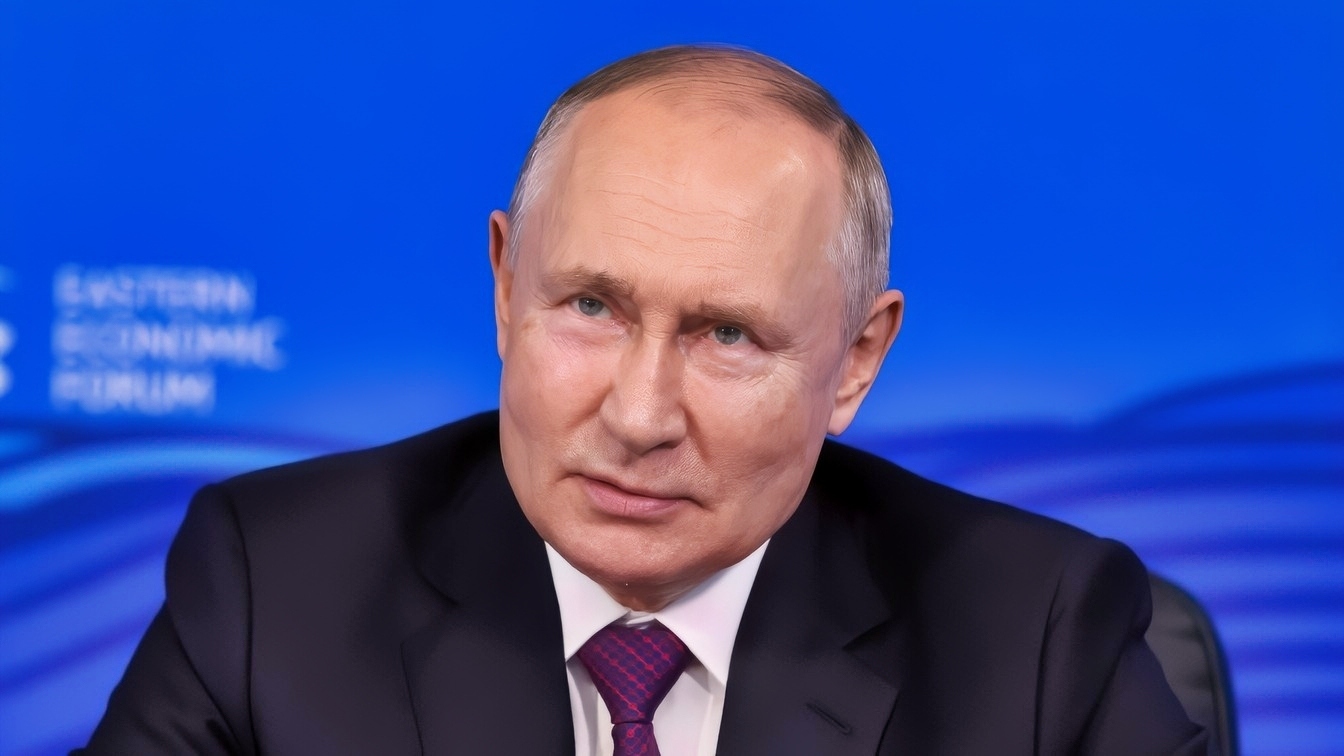
Recently, Western European nations have been sounding the alarm about a growing number of Russian “hybrid warfare” operations to sow dissent in the West and erode support for Ukraine.
With a mounting global fuel crisis, riots in France, and the potential for political upheaval in Germany, all fingers are currently pointed at Vladimir Putin as the orchestrator of Europe’s current woes.
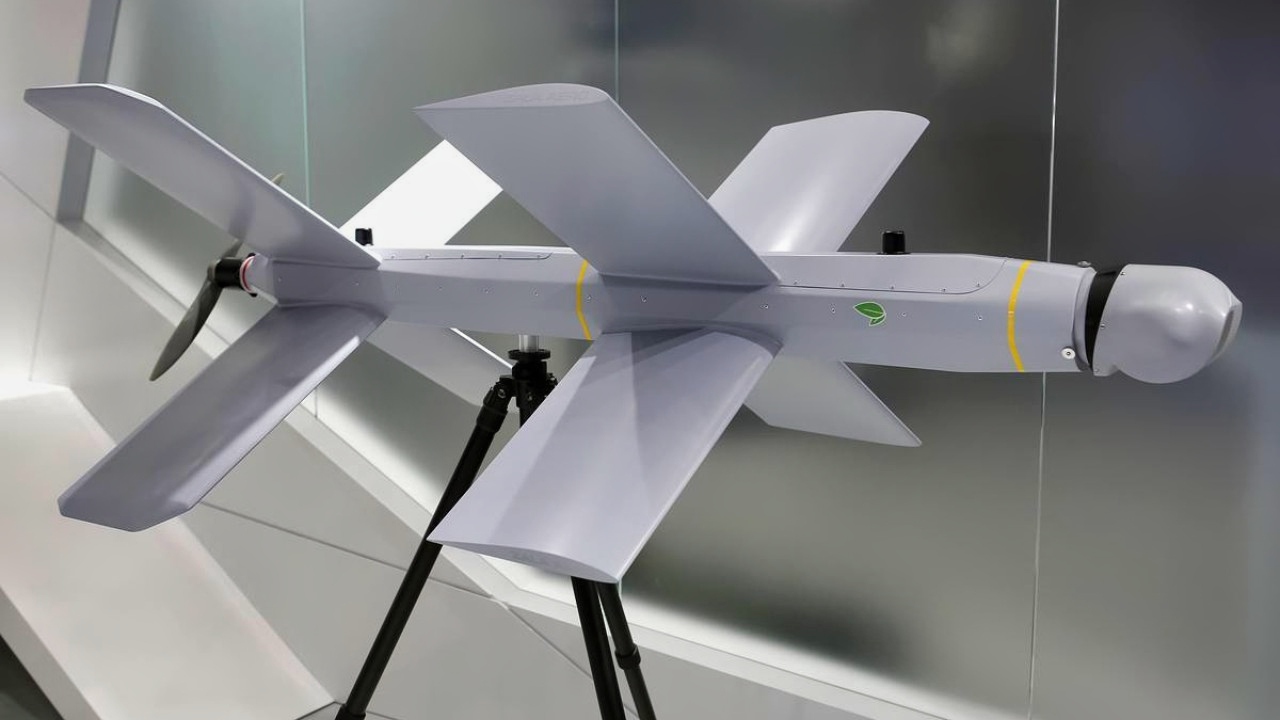
Lancet Drone. Image Credit: Russian State Media.

Lancet Drone from Russia. Image Credit: Creative Commons.
But how extensive are Russia’s operations against Europe?
Is Moscow really waging a secret hybrid war against NATO, or is Europe using Russia as a scapegoat to distract from its own decadence and declining standards of living?
The short answer is that Russia is taking full advantage of Europe’s current internal problems.
What is Hybrid Warfare?
The term “hybrid warfare” is often thrown around by Western leaders and Western news sites.
Germany accused Russia of waging hybrid warfare after a drone equipped with explosives was discovered at the Leipzig-Halle airport, near a Ukrainian military cargo plane.
European leaders have suspected that Moscow might be waging hybrid warfare on numerous occasions, but what exactly is “hybrid warfare?” Colloquially, hybrid warfare refers to covert or indirect actions used to exert Moscow’s influence.
These actions can be kinetic, as with the explosives at Leipzig-Halle airport, or non-kinetic influence operations.
The Rand Corporation describes Russian hybrid warfare as “Moscow’s use of a broad range of subversive instruments, many of which are nonmilitary, to further Russian national interests.”
Many subtle disagreements remain over what exactly constitutes hybrid warfare, but all focus on Russia’s use of national instruments of power and influence to pursue its interests beyond its borders.
According to many think tanks, one key pillar of Russian hybrid warfare is plausible deniability.
In every instance of claimed Russian hybrid warfare, there is a level of ambiguity that cannot be traced directly back to Moscow.
This allows Putin to deny and dismiss any claims of hybrid warfare against NATO, as there is never any evidence that explicitly links Russia to any operations in Europe.
Consequently, Russian hybrid warfare is difficult for NATO to combat, as it risks a confrontation with Russia based on mere rumors.
Capitalizing on Growing Dissatisfaction in Europe
NATO has invoked hybrid warfare multiple times since the 2022 invasion.
Whenever support for Ukraine begins to wane in the West, the term is inevitably brought up because Putin is using covert operations to weaken Europe’s support for Kyiv.
Over the past week, Europe has increasingly accused Moscow of ramping up its hybrid warfare operations, as political turmoil across the continent threatens to curtail support for Ukraine.
On Monday, the head of Germany’s foreign intelligence agency warned that Putin was stepping up his aggressive “shadow war” against the country. “Russia is putting us to the test and closely watching how we handle this situation,” Federal Intelligence Service chief Martin Jaeger told lawmakers. “From the perspective of the Kremlin leadership, any sign of wavering invites them to increase the pressure on Germany further… We have to stand up to that.”
Reports of increased Russian hybrid warfare emerge as various European states stand on the verge of political change.
In Germany, the right-wing Alternative for Germany (AfD) party has been gaining ground in the polls, as its leader, Alice Weidel, criticized the current government’s funding of Ukraine amid the country’s worsening financial situation.
Likewise, in France, the right-wing National Rally party, headed by Marine Le Pen, is currently leading in the polls ahead of France’s upcoming presidential elections.
Le Pen recently told the French newspaper Le Figaro that, because of the country’s deteriorating financial state, France may have to significantly reduce its aid to Ukraine.
Both AfD and Le Pen’s National Rally Party have been derided by news outlets for spreading “Kremlin propaganda.”
Russian Hybrid Warfare: Present, But Not Everywhere
There is, of course, a danger to the constant invocation of Russian hybrid warfare in Western media.
Hybrid warfare is not only plausibly deniable but also nonfalsifiable.
In other words, many Western thinkers think that if any action can plausibly be attributed to Russian hybrid warfare, then it must be the work of Russian hybrid warfare.
This is a dangerous line of thought, as it risks seeing Russians, when they simply are not there, akin to the boy who cried wolf.
In his book, Russian Hybrid Warfare: Resurgence and Politicization, Dr. Ofer Fridman, a senior lecturer at King’s College in London, analyzes the origins and the politicization of the term “hybrid warfare,” especially after the 2016 annexation of Crimea.
According to Fridman, Hybrid Warfare has drifted from its original purely military meaning to an all-encompassing paradigm that views everything through the lens of Russian interference.
Putin obviously has a lot to gain from growing discontent in Europe.
However, there is a danger in mistaking every negative development as a result of Russian hybrid warfare.
Without a doubt, Russia is using propaganda to sow discord and erode support for Ukraine, but as the adage goes, all lies are based on a kernel of truth.
Supporting Ukraine has come at a great cost to Europe.
Some estimates suggest the West has donated nearly $200 billion to Kyiv since 2022.
With the current energy crisis hitting Europe especially hard, support for Ukraine will inevitably become harder to justify as energy bills rise and quality of life worsens.
Is Russia inflating these issues for propaganda?
Most definitely.
Is Russia the sole cause of Europe’s issues?
Probably not.
About the Author: Isaac Seitz
Isaac Seitz, a Defense Columnist, graduated from Patrick Henry College’s Strategic Intelligence and National Security program. He has also studied Russian at Middlebury Language Schools and has worked as an intelligence Analyst in the private sector.


