

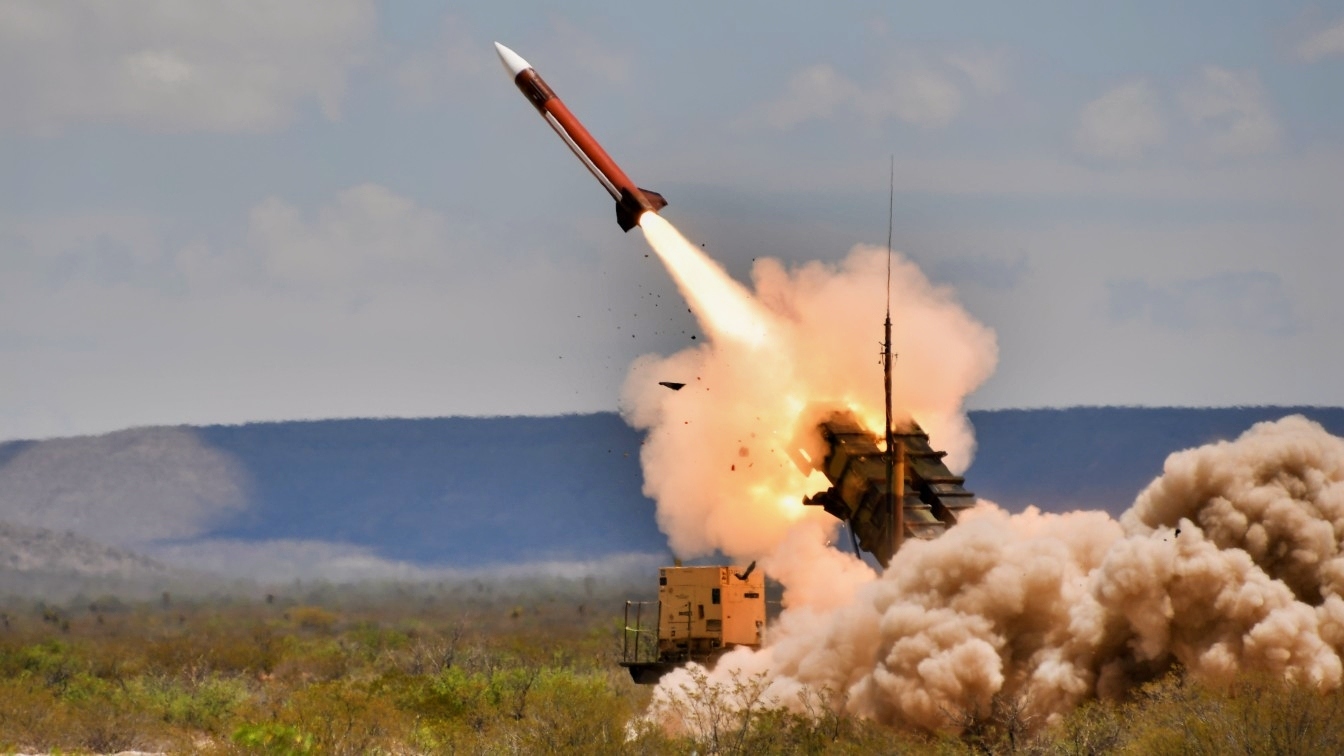
Nearly five years into the war in Ukraine, the conflict there is entering a dangerous new phase, one that is an expansion of the air war over Ukraine and includes not only targets along the battlefield’s long, sprawling front line that snakes its way through Ukraine’s eastern Donbas region, but also the lifeblood of the nation: Ukraine’s cities, its civilian infrastructure, its people.
Ahead of Ukraine’s bitterly cold winter months, the Kremlin is targeting civilian infrastructure around the country, putting electricity and heat plants, shopping malls, water and wastewater facilities, port infrastructure, and trains in its crosshairs. It is no coincidence that the Russian campaign is gaining velocity before winter — it is precisely an attempt by Russian strongman Vladimir Putin to squeeze Ukraine and exact a terrible toll on the civilian population.
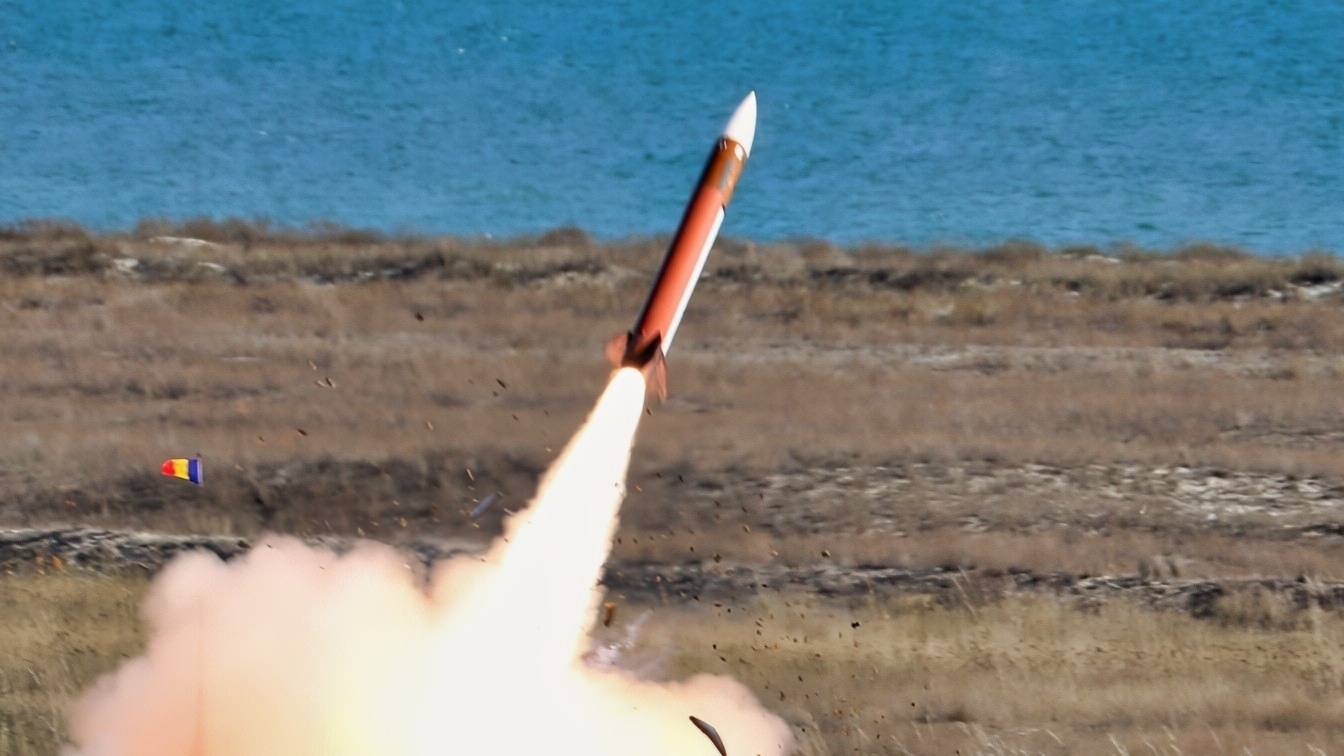
The Romanian Army’s 74th Patriot Regiment conducted the country’s first PATRIOT missile system live-fire exercise at the Capu Midia test firing range in Romania Nov. 14-15, 2023. Romania received the first of seven PATRIOT systems in 2020 through a foreign military sales case executed by the U.S. Army Security Assistance Command. (Courtesy photo)
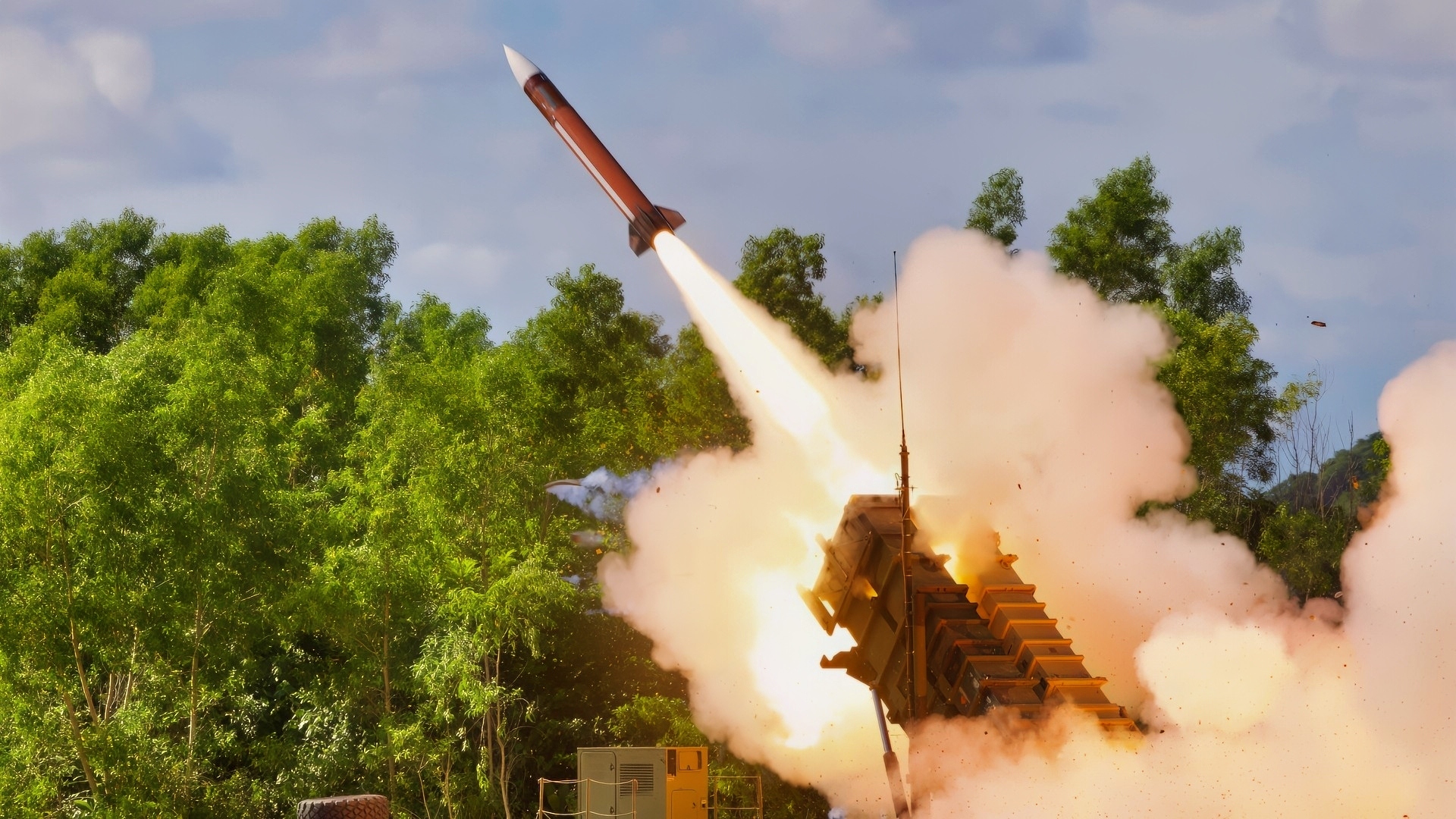
KOROR, Palau — A Patriot Advanced Capability 2 Interceptor missile is fired from an M903 Patriot Launching Station assigned to Battery D, 1st Battalion, 1st Air Defense Artillery Regiment during the patriot live fire portion of Exercise Tenacious Archer 25 on Aug. 21, 2025. Exercise Tenacious Archer 25 is a training event designed to build interoperability, capacity, and relationships that deter aggression and promote peace through strength. The exercise sharpens the brigade’s ability to operate across multiple domains, reinforcing U.S. Army Pacific’s commitment to regional security and stability.(U.S. Army photo by Capt. Frank Spatt)
Stymied on the battlefield and still smarting from Ukraine’s surprisingly successful aerial bombardment of Russian oil and gas infrastructure earlier this summer, the Kremlin is aiming to get even by any means necessary.
A new crop of munitions has allowed Moscow’s forces to target Ukraine: Iranian-designed Shahed drones, dubbed the Geran by Russia, have been leveraged since the war’s early days.
But today’s Geran drones differ significantly from their predecessors. Instead of the piston-driven engines that powered earlier models, today’s Gerans run on small turbojet engines imported from Chinese manufacturers.
Significantly faster than earlier models, these Gerans are more likely to evade Ukrainian air defenses and reduce the reaction window available to Ukrainian defenses.
Networked Capabilities
And while the Geran drone’s tripling of speed certainly gives Ukrainian air defenses a much more formidable target to try to eliminate, it is not only its speed that has created new challenges for defenders of Ukrainian skies. Geran’s networked connectivity—the ability of swarms of Geran drones to communicate with each other and their ground controllers—is a significant battlefield development.
As the Center for Strategic and International Studies explains, the current crop of most advanced Geran drones uses mesh radio network modems. Supplied by Chinese firms, the modems turn “every drone that carried it into a signal repeater for other units nearby, forming an airborne network that facilitated not only the transmitting of information about air defenses and potential targets but also remote operator control in real time.”
“Data could now be transmitted between an operator on the ground and a unit in the air via a “chain” of network nodes,” CSIS explains. “If a link in the chain became compromised, the signal could dynamically reroute through another neighboring node, making the communication channel remarkably resilient (as long as there were enough nodes nearby).”
Russian Combat Mass and the Strains of Concurrent Wars of a Global Scale
Formidable though Russia’s latest crop of explosive-laden drones certainly are, it is not only their individual components that make them so formidable. Russia’s wartime economy, bent toward the production of combat-relevant components, can produce hundreds, if not thousands, of drones and missiles each month.
But Russia’s production volumes dovetail with Ukraine’s current air-defense squeeze. Though the country produces its own domestic interceptors that, in the past, have taken down Geran drones reliably, those are outpaced and ineffective against Russian cruise and ballistic missiles. American-made Patriot air defense interceptors fill that gap.
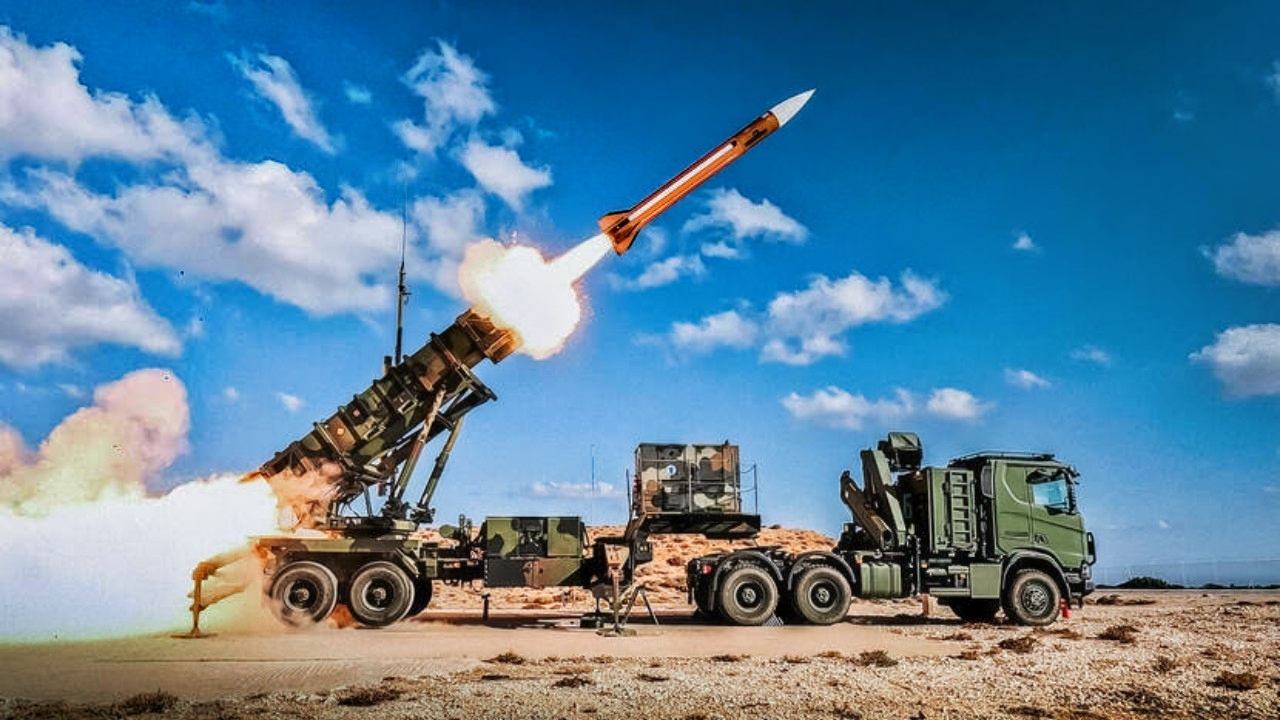
Patriot Missile Launch. Image Credit: Creative Commons.
Highly sophisticated and widely considered some of the most effective, combat-proven air defense munitions on the planet, Patriot interceptor missiles are highly sought after by Ukraine — and, unfortunately for Kyiv, by many NATO member countries in Europe and increasingly by American allies in the Middle East eager to parry Iranian missile and drone thrusts.
The Patriot’s Achilles heel is its production. Production of the interceptors takes anywhere from 24 to 30 months, depending on the variant, measured from order placement to final delivery.
The missile’s many subsystems are validated throughout production, ensuring high reliability but significantly slowing production.
The Euro, the Dollar, the Ruble, and the Hryvnia
Russia’s strikes on Ukrainian port infrastructure and transportation links, including cargo transports by rail and road, aim at hobbling the Ukrainian economy. Compounded by European Union carbon tariffs that affect Ukraine’s metallurgy industry in particular, Ukraine is set, by one estimate, to lose $4.7 billion between this year and 2030.
And while the Russian economy certainly has rough waters ahead, it has largely avoided the implosion many predictions forecast for one of the world’s most-sanctioned economies.
Ukraine is entering what may be the war’s most difficult winter.
To survive, it will need broad coordination among its allies to ensure it has enough air-defense interceptors and enough money to keep the country afloat.
About the Author: Caleb Larson
Caleb Larson is an American multimedia journalist based in Berlin, Germany. His work covers the intersection of conflict and society, focusing on American foreign policy and European security. He has reported from Germany, Russia, and the United States. Most recently, he covered the war in Ukraine, reporting extensively on the shifting battle lines in Donbas and the war’s civilian and humanitarian toll. Previously, he worked as a Defense Reporter for POLITICO Europe. You can follow his latest work on X.


