
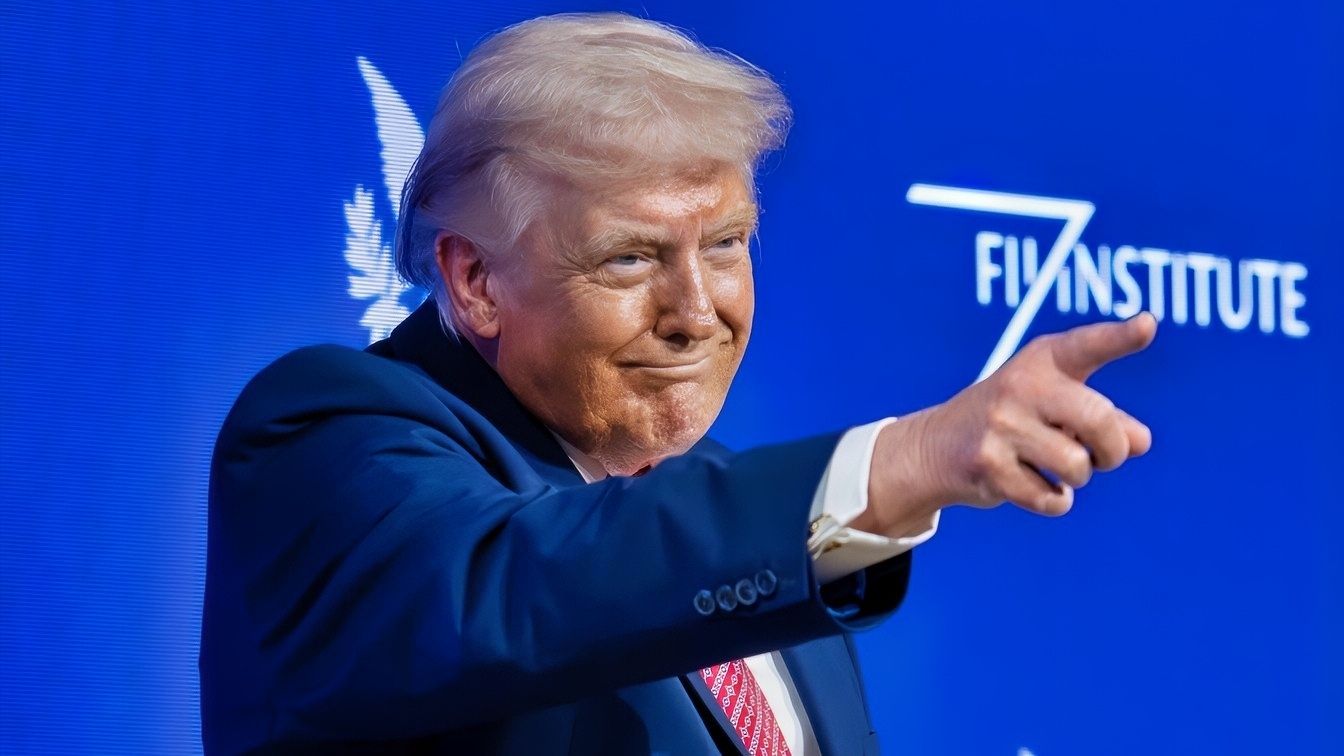
Donald Trump Considers Lifting Federal Gas Tax – U.S. President Donald Trump has told reporters he is considering suspending the federal gas tax. That suggests the Iran war and broader Middle East tensions won’t end anytime soon.
The President is under pressure to ease high energy costs ahead of next month’s midterm elections, as more voters cite the cost of living as a key issue, and one where Trump is performing poorly.

Donald Trump In New York City White House Photo
He has already temporarily waived a ban on dyed diesel on public highways to reduce prices for transporters and consumers.
Possible Waiving of Tax
The federal gas tax applies nationwide to gasoline and diesel purchases and currently sits at 18.4 cents and 24.4 cents per gallon, respectively.
On Tuesday, Trump was asked whether the tax would be suspended. “Well, we’re thinking about that,” he replied.
The President offered little further detail on how seriously the suspension is being considered.
Higher Hurdles
Trump faces a significant obstacle: Congress, currently in recess ahead of next month’s midterm elections, would need to approve any federal suspension before it becomes law. With efforts fully on the campaign trail nationwide, a suspension is unlikely to take effect before 3rd November.
There are also further considerations. Bloomberg, citing April research from the Bipartisan Policy Center, said a pause in the gas tax would likely save drivers between 10 and 16 cents per gallon, rather than the full 18.4 cents.
This is because the savings could be absorbed elsewhere in the supply chain rather than at the pump. For a typical 15-gallon fill-up, that’s a saving of $1.50 to $2.40; hence, the suspension is unlikely to meaningfully affect soaring living costs.
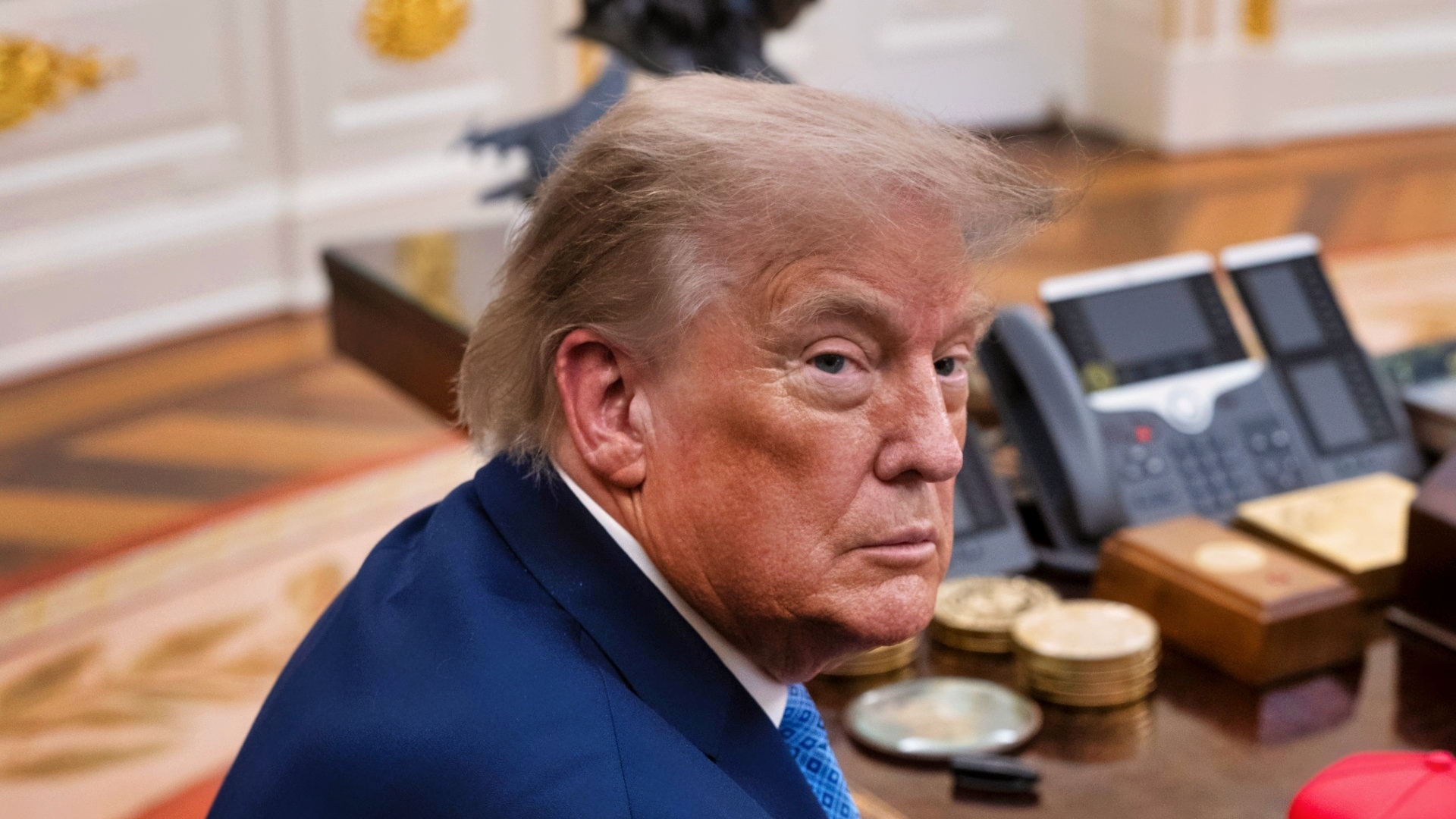
President Donald J. Trump speaks to the press during a presentation of the Religious Liberty Commission Report in the Oval Office, Friday, June 26, 2026. (Official White House Photo by Joyce N. Boghosian)
Although the federal gas tax hasn’t been raised since the early 1990s, it helps finance the Highway Trust Fund, which funds highways, bridges, and mass transit systems. Suspending the levy would therefore remove billions of dollars in federal revenue if it remained in place for any significant period.
Trump’s Diesel Waiver
Earlier this week, the President issued a temporary waiver of the ban on using dyed diesel on public roads across the United States. Dyed diesel, typically used in agriculture and construction, is sold without a motor-fuels tax, so it is usually barred from public roads.
“Today, I am announcing another unprecedented step to bring down costs,” said Trump on Monday. “For many years, farm vehicles, construction equipment, and other off-road vehicles have used what is known as ‘red dye’ diesel… which is exactly the same as normal diesel, but is sold tax-free for off-road vehicles and big trucks. Tonight, I am going to sign a historic Executive Order to officially waive the off-road requirement and allow anyone to purchase tax-free red dye diesel for any reason.”
State governors across the country have used similar measures, with several suspending state gas and diesel taxes.
Election Woes
Trump’s latest consumer-saving initiative comes just weeks before the midterm elections.
Trump’s approval has fallen sharply in recent months, particularly on the cost of living; in an AP-NORC poll released Thursday, 1st October, only 17% of respondents approved of his administration’s efforts.
The President himself is not on the ballot, but Republican candidates for the Senate and House of Representatives are. However, current polling suggests Congress will be more blue than red come the new year, with the Democrats leading by 8.9 percentage points in the Silver Bulletin’s average generic congressional ballot as of Wednesday, 7th October, the party’s largest lead so far in the campaign.
The Democrats have also broken 50% support for the first time in this electoral cycle. Disgruntlement with the GOP is so strong that a CBS News/YouGov poll released on Monday, 4th October, found Republicans could enter the new year with just 198 Representatives compared to the Democrats’ 237.
While several factors are driving up prices for commodities such as diesel, most voters have pointed the finger at the ongoing conflict with Iran. Since the war began in February, the Iranian regime has used a chokehold to effectively close the Strait of Hormuz and limit oil exports from the Persian Gulf. Exports have only just returned to pre-war levels more than seven months after Operation Epic Fury began.
About the Author: Shay Bottomley
Shay Bottomley is a British journalist. He has written for the Western Standard, Business Insider, Maidenhead Advertiser, Slough Express, Windsor Express, Berkshire Live and Southend Echo.