

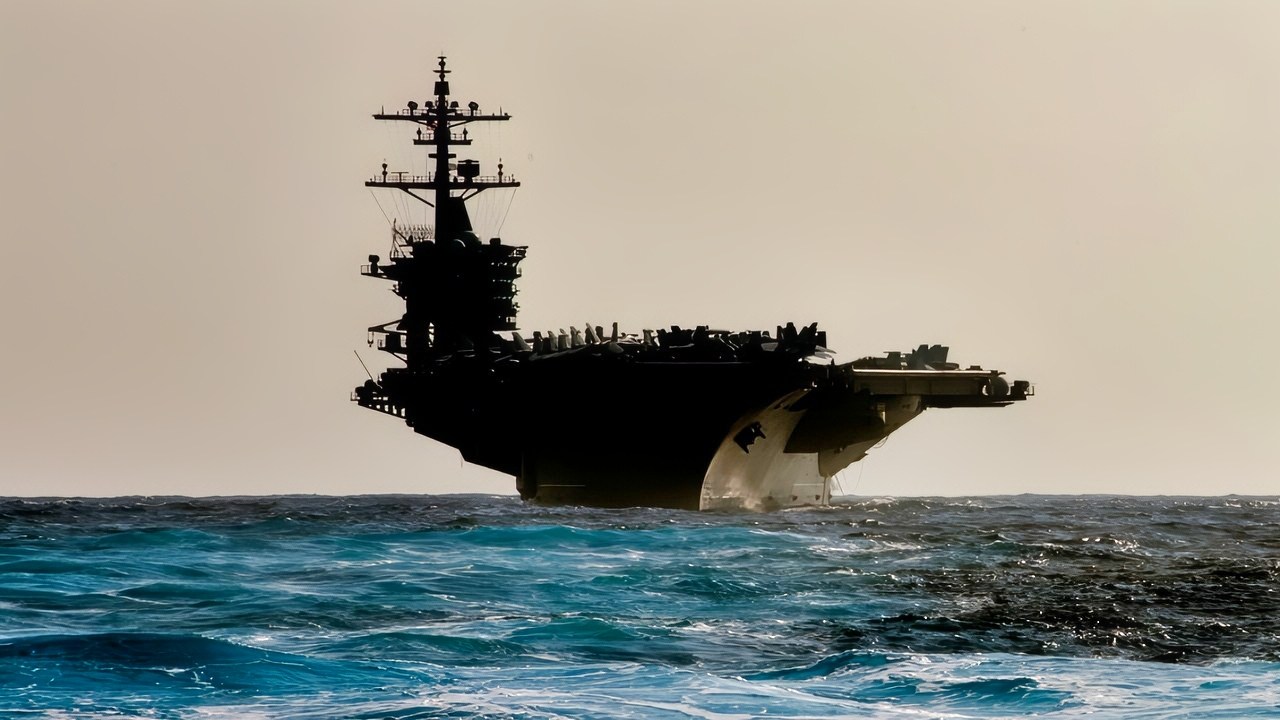
The Strait of Hormuz is not the whole map; it is only one part of the broader 2026 U.S.-Israel-Iran conflict, although it is a critical maritime chokepoint through which roughly 20 percent of the world’s oil and LNG transited before the conflict began.
U.S. airstrikes have spanned far beyond the strait, including strikes by the U.S. Central Command (CENTCOM) on military targets across Iranian territory such as Bushehr, Chah Bahar, Jask, Konarak, Abu Musa, and Bandar Abbas.
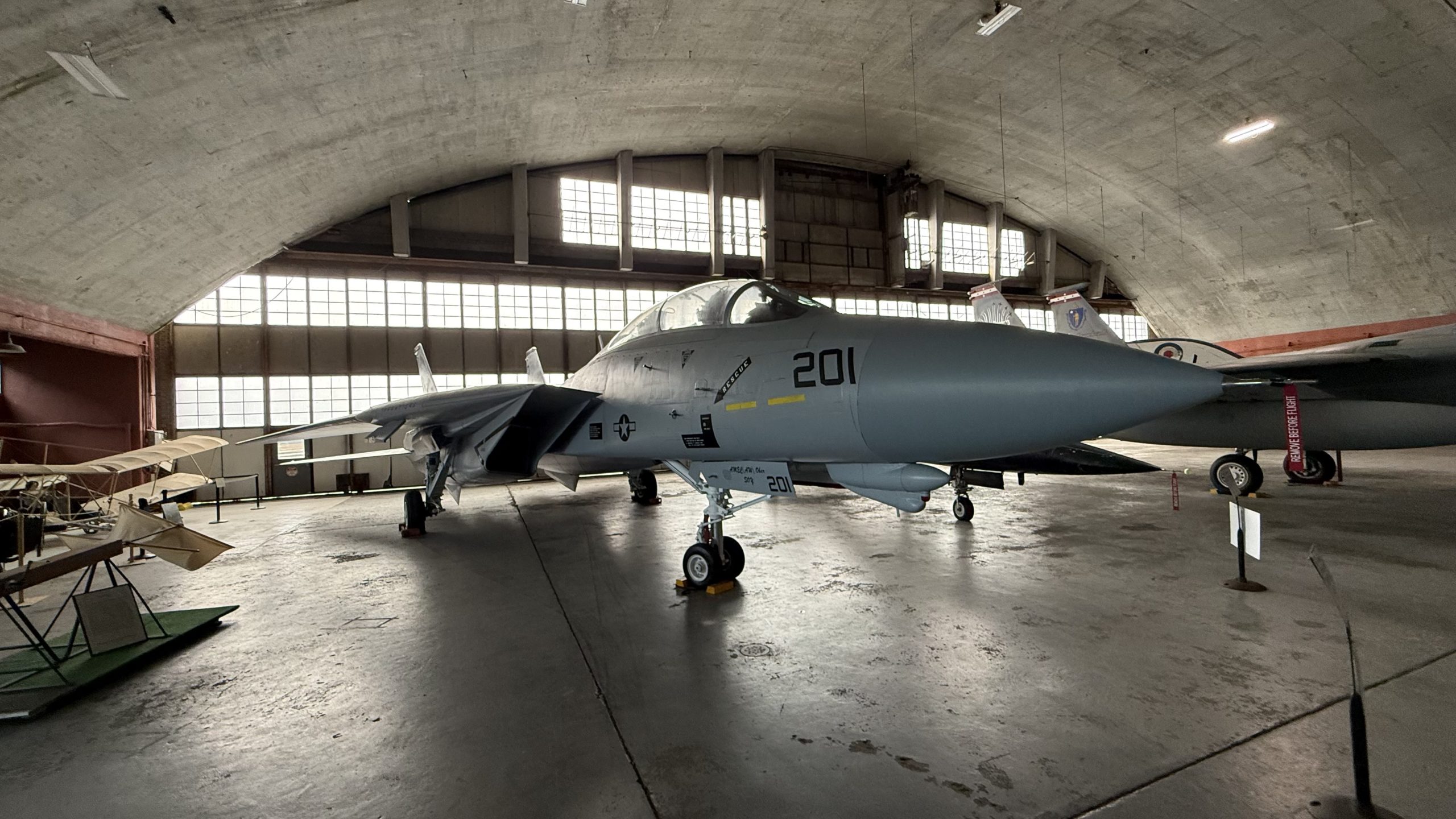
F-14 Tomcat like flown by Iran. 19FortyFive.com photo taken by staff.

Iran’s Drones That Russia Is Using. Image Credit: Creative Commons.
Iranian counter-attacks targeting U.S. and allied bases and assets in Bahrain, Jordan, and Kuwait, alongside major damage to regional energy and port infrastructure, as well as targeting ships traveling the Strait.
However, in a span of about 24 hours this week, two tankers were hit or set ablaze in waters that were supposed to be the safer side of this fight.
Euronews reported that the UK Maritime Trade Operations (UKMTO) agency said the Acers, an Antigua and Barbuda-flagged oil and chemical tanker, was hit by several projectiles on Wednesday about 51 nautical miles north of Madinat ash Shamal, off Qatar’s northern coast.
There were casualties, though no numbers have been released.
It was the first attack in that stretch of the Gulf in more than six months.
A day later, a fire broke out aboard a tanker, likely the Marshall Islands-flagged Dhalgout, roughly 40 kilometers off Fujairah in the Gulf of Oman.
NASA’s FIRMS fire-detection system confirmed the blaze.
Two US KC-46 tankers, a KC-135, a P-8A maritime patrol aircraft, and several helicopters were over the area at the time of the strike.
Neither ship was in the strait.
IRGC Begins Escalation Ahead Of November 3
IRGC-affiliated outlets have hinted that operations against vessels Iran considers in “violation” of its rules now extend beyond Hormuz.
IRGC-affiliated media outlets said Tehran has “extended the scope of its operations against commercial vessels that violate Iranian laws and regulations in the Strait of Hormuz to waters beyond the strait.”
“Our missiles determine the distance between you and us,” Acting Defense Minister Majid Ebn ol-Reza posted on X on Thursday.
“Yesterday the Gulf of Oman, today the Indian Ocean and tomorrow the Bay of Pigs.
If you make a mistake, you will see a new set of dividing lines,” ol-Reza added.
This is the opening gambit to influence the US midterm elections.
This Is About The Workaround
So why would Iran attack outside the strait now? Follow the oil.
Despite Iran’s best efforts to stop oil from flowing via the Strait, due to US airstrikes, its hold is beginning to loosen.
According to Al Jazeera, Gulf oil flows outside of Iran recovered to more than 81 percent of pre-war levels in September, citing Kpler data, and roughly 40 percent of petroleum exports now bypass the strait altogether.
Saudi Arabia is transporting oil through its East-West pipeline to Yanbu on the Red Sea, while shuttle tankers run ship-to-ship transfers near the strait with their transponders switched off.
The location where the Dhalgout was burning is important.
Fujairah is the UAE’s major export outlet on the Gulf of Oman, the endpoint of a pipeline Abu Dhabi built so it wouldn’t have to hold its oil hostage at Hormuz.
A tanker on fire 40 kilometers from the port sends a message to every shipping company and insurance underwriter that the bypass isn’t safe either.
Iran is desperately trying to disrupt the flow of oil, thereby boosting prices before November. Shipping intelligence firm Marisks counted at least seven tanker incidents in a single week.
The UKMTO has logged at least one attack a day in the Strait of Hormuz or the Gulf of Aden since October 2, where the Iranian proxy Houthis are targeting Saudi-linked shipping.
All of which has helped raise oil prices.
The Threats Are Getting Bigger Too
Tehran’s rhetoric is stretching to match the geography.
Yahya Rahim Safavi, a senior military adviser to the missing Ayatollah Mojtaba Khamenei, warned this week that Iran could take the war into the Indian Ocean if the U.S. or Israel strikes again, which is a not-so-veiled threat against Diego Garcia.
Iranian bluster has always been a cornerstone of their media.
However, that’s beside the point.
The IRGC has spent seven months proving it can hit commercial shipping, and it hasn’t needed a navy to do it.
A Huge Mistake: Trump Just Handed Tehran A Window
The timing took an ugly turn.
On the same day the Dhalgout was attacked, President Trump posted on Truth Social that the U.S. would not attack Iran before the midterm elections on November 3.
That was a huge mistake.
One of the first things you learn in a conflict is that you never tell the other side when you won’t hit them.
Uncertainty is a weapon.
Tehran now feels it has a 26-day window of opportunity, with its own soil off-limits until after the midterms, and tankers off Qatar and Fujairah as the low-hanging fruit.
The Navy can still escort, intercept, and shoot down incoming drones.
However, presence alone isn’t deterrence.
When the Dhalgout was hit, U.S. aircraft were already overhead. None of that stopped it.
The Honest Trade-Off
So is Iran expanding the conflict?
Yes.
However, it’s a calibrated expansion.
Tehran is hitting merchant ships, not American warships.
It isn’t claiming the attacks outright. It’s keeping the casualty counts low enough to avoid handing Washington an excuse to break its own pledge.
The goal is simple.
Make the workaround as expensive and as dangerous as the strait itself, and squeeze the global economy until someone in Washington blinks, and then claim aggrieved status with the US as the aggressor.
Every tanker that is attacked in the Gulf adds to that bill, and to the price at the pump three weeks before Americans vote.
The Strait of Hormuz was never the whole map. Tehran is now testing the waters to see if it can influence the US population to vote for it.
About the Author: Steve Balestrieri
Steve Balestrieri is a National Security Columnist. He served as a US Army Special Forces NCO and Warrant Officer. In addition to writing on defense, he covers the NFL for PatsFans.com and is a member of the Pro Football Writers of America (PFWA). His work was regularly featured in many military publications.


