

Six commercial vessels were attacked on October 11; that was the highest number of vessels hit in a single day since the Iran War began (now more than seven months ago).
The most recent strikes hit three refined petroleum product tankers, two crude oil tankers, and an Indian container ship.
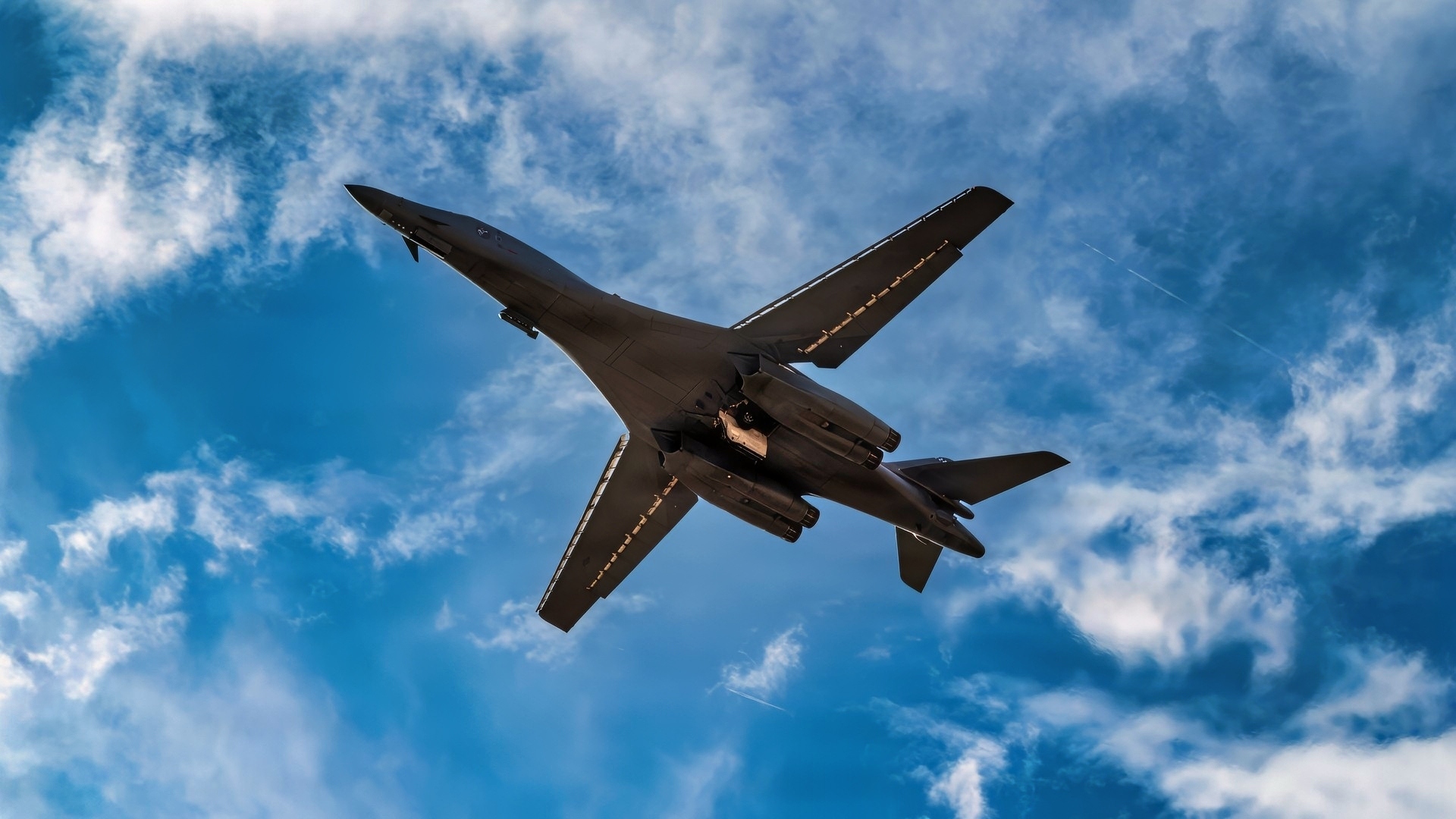
A U.S. Air Force B-1B Lancer assigned to the 28th Bomb Wing takes off in support of a U.S. Air Force Weapons School Integration at Nellis Air Force Base, Nevada, Nov. 18, 2025. The Weapons School trains students to be tactical experts in their combat specialty while also mastering battlespace dominance and integration of joint assets. (U.S. Air Force photo by Airman 1st Class Heather Amador)

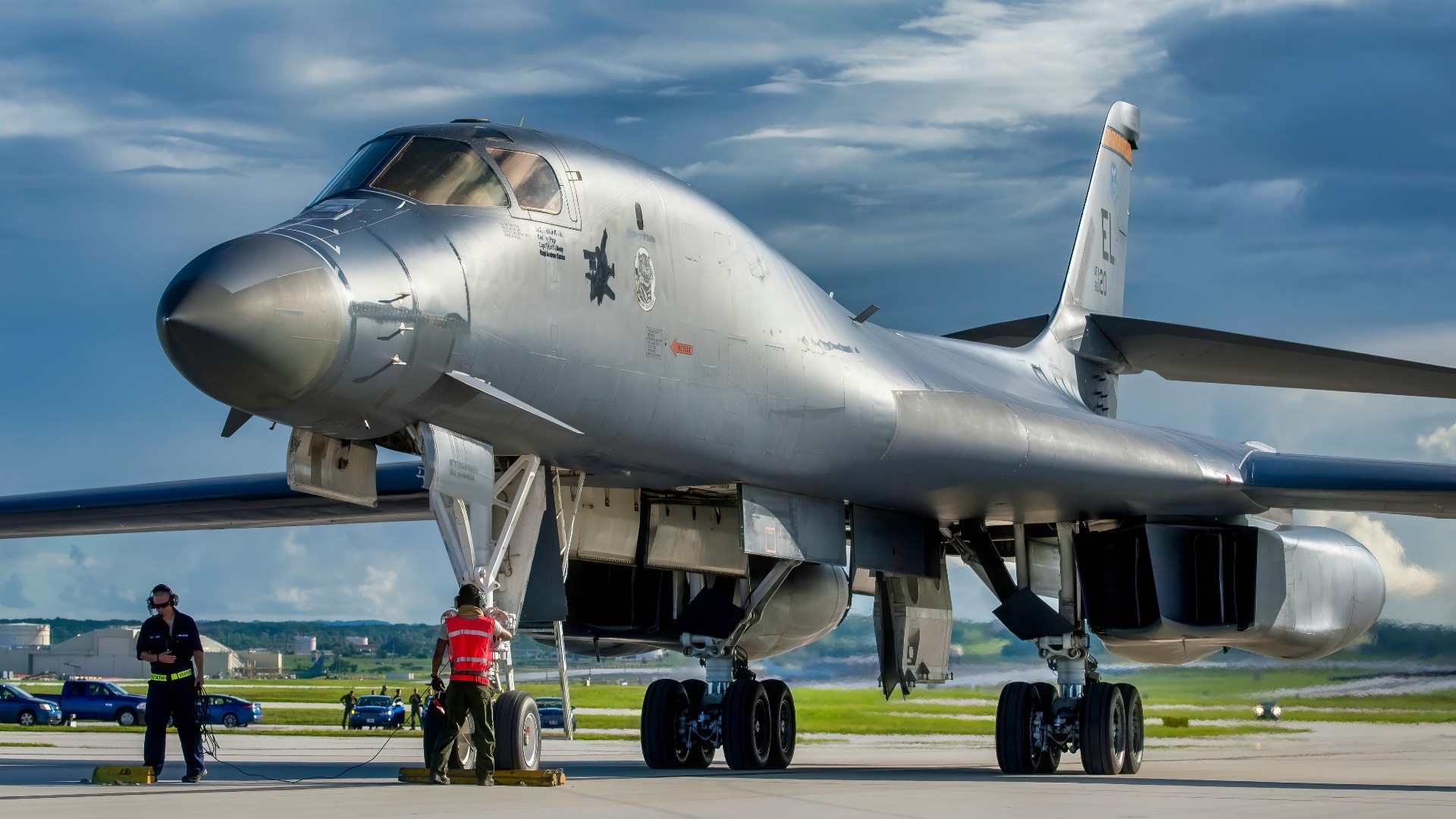
Four B-1B Lancers assigned to the 9th Expeditionary Bomb Squadron, deployed from Dyess Air Force Base, Texas, arrive Feb. 6, 2017, at Andersen AFB, Guam. The 9th EBS is taking over U.S. Pacific Command’s continuous bomber presence operations from the 34th EBS, assigned to Ellsworth AFB, S.D. The B-1B’s speed and superior handling characteristics allow it to seamlessly integrate in mixed force packages. While deployed at Guam the B-1Bs will continue conducting flight operations where international law permit. (U.S. Air Force photo/Tech. Sgt. Richard P. Ebensberger)
This continues a long, disturbing trend of the Iran War disrupting global shipping through the Strait of Hormuz (SoH).
A Heavy Butcher’s Bill
Several Indian sailors were injured in the attacks. In fact, two Indian crewmembers are missing from one of the stricken petroleum product tankers. Interestingly, the crude carriers were owned by New Treasure Shipping, a Chinese shipping firm, and South Korea’s Sinokor. Anyone who dares claim this isn’t already a world war is absurd.
Indeed, India’s Foreign Ministry expressed concern about the collapsing state of maritime security and demanded a quick end to this seemingly interminable conflict.
Iran’s Islamic Revolutionary Guard Corps (IRGC) has targeted commercial ships trying to use the narrow SoH. Specifically, the Iranians are targeting ships attempting to circumvent what they claim is their right to police and control the SoH.
The ships being targeted usually have their AIS Transponders turned off.
It’s part of Tehran’s broader strategy of waging economic warfare against the United States and signaling to the world’s shippers that it, not the United States Navy, controls the SoH.
Of course, the Navy has been conducting a blockade in the Gulf of Oman, just at the mouth of the SoH. Reports suggest the US military has been running a fairly effective escort mission for the last several months.
However, neither the blockade nor the US military escort missions are foolproof.
In fact, how sustainable these two operations really are, given the declining readiness rates of the US Navy’s surface warship fleet and the increased cost for shippers transiting through the SoH, remains unanswered.
Iran is attempting to answer that now.
Iran Enhances Its Threat
There are even some reports that indicate the Iranians are using these strikes on shipping through the SoH to not only complicate the US economic circumstances.
Tehran’s forces are using these attacks to enhance their anti-ship ballistic missile (ASBM) capabilities.
That’s a troubling prospect, considering how much distance the US Navy has put between its blockade fleet and the suspected ranges of Iranian ASBMs.
If (and when) hostilities really return between the US and Iran, the Americans might find an even more significant ASBM threat facing them because of how much practice the Iranian forces received in these intervening months since the last round of major hostilities erupted.
And then there’s the very real economic fallout from this conflict.
We are told the region’s oil exports have recovered significantly.
Before the war, 17 million to 20 million barrels of petroleum moved through the SoH daily.
After months of disrupted shipping, exports somewhat recovered in September.
While some analysts found it controversial, the energy intelligence firm Kpler said Gulf oil flows averaged about 15.5 million barrels per day last month, the highest since the conflict began.
The most recent Iranian attacks have stunted that progress.
On October 11, the day of the devastating wave of Iranian attacks, just 2.9 million barrels of oil passed through the SoH. That’s an 81 percent decline from September’s daily average.
And it was 43 percent below prewar levels, according to the Financial Times.
Meanwhile, shippers who had been willing to endure the higher risks of operating in the Gulf are now reconsidering how much risk they’re willing to take.
Higher freight rates compensated for at least some of the risks of still using the SoH.
Now, the increasing number–and severity–of Iranian attacks on shippers are making those skittish shippers second-guess their commitment to using the SoH.
Many ships usually routed through the SoH are now being sent to the Gulf of Mexico, where operators can load petroleum cargoes without risk of being bombed.
There are a finite number of tankers globally.
The shippers who own and operate these tankers choose where to send them.
These ships are very hard to replace.
So, tankers that might usually go to places like Fujairah in the United Arab Emirates (UAE) are turning away for fear of the threat of Iranian missiles and drones.
That has increased demand for available tankers. When demand is high, and supply is low, basic economics suggests prices will skyrocket. And they are.
No Peace In Our Time?
As the situation in the Middle East continues to deteriorate, global oil prices have remained above $100 per barrel. On October 13, Brent crude futures settled at $105.69 per barrel.
West Texas Intermediate crude finished around $94.14. That, too, will likely rise soon.
The Middle East conflict has already driven diesel and gasoline prices significantly higher in the US, just as the country nears a crucial Midterm election.
Despite the Trump administration’s best efforts to stabilize the situation, nothing they’re doing is really working.
It’s all just a giant band-aid on an insuperable wound (that they caused in the first place).
Reuters has reported that the Singapore-flagged container ship GFS Pride sank near the Strait of Hormuz after being struck on October 14.
Another ship is reportedly sinking from an earlier September 23 attack by Iran.
Do not be fooled. This war has no realistic end.
Those concerned about the price of oil (and, frankly, the price of everything) should prepare for things to get much more expensive.
About the Author: Brandon J. Weichert
Brandon J. Weichert is the Senior National Security Editor. He also manages The Weichert Brief on Substack. Weichert also hosts “National Security Talk” on Rumble. He has written four bestselling national security books, most recently A Disaster of Our Own Making: How the West Lost Ukraine (Encounter Books). His next book, Fortress Americas: A New Monroe Doctrine (Tucker Carlson Books), is due out November 24. Follow him via Twitter/X @WeTheBrandon.


