


Gulf oil shipments and exports have returned to pre-war levels in some cases, according to the latest data, but getting the so-called “black gold” to customers remains expensive and risky.
Tankers must make short voyages to the Strait of Hormuz before passing the cargo to other ships, while traders face soaring freight rates and insurance costs.
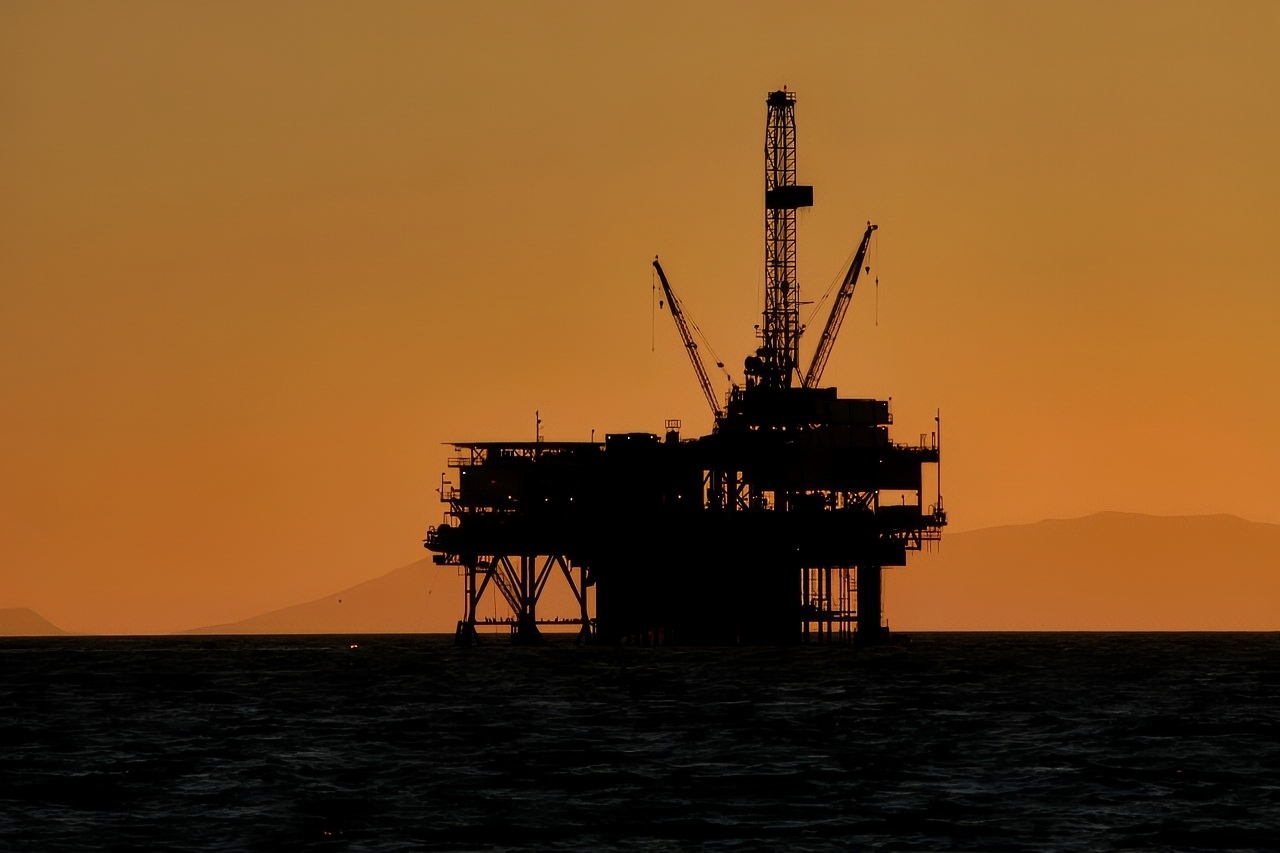
Oil Platform. Image Credit: Creative Commons.

Generic Oil Tanker Image. Image Credit: Creative Commons.
Kpler’s numbers show crude and condensate exports totaled 24.6 million barrels a day for the week ending October 18, up from a pre-war average of 23.3 million barrels a day for Gulf producers excluding Iran.
Vortexa had just 18 million barrels a day for the same period. The firms use different methodologies, and many tankers have turned off their tracking devices, complicating efforts to determine exactly how much oil is flowing out of the region.
But a record week does not mean a total recovery.
Kpler estimated October exports at 16.7 million barrels a day through the period covered by Bloomberg’s report on Wednesday, while Vortexa had 15.4 million barrels a day.
A separate Reuters analysis using Kpler data on Middle East crude exports recorded an October average of 17.3 million barrels a day, compared to 16.9 million barrels a day before the US and Israeli strikes on Iran on February 28.
The figures cover differing categories and cannot be compared directly, but they illustrate the scale of change in Gulf exports.
How Tankers Are Getting Around Hormuz
Some 40% of regional crude shipments bypassed the strait in September, up from 17% before the conflict began, according to Kpler data cited by Gulf News.
Saudi Arabia has also been taking advantage of its East-West pipeline and Red Sea port of Yanbu, while the UAE has been using its pipeline to Fujairah.
Other tankers are ferrying shipments across the strait to larger vessels already waiting outside.
“We have become more susceptible to the risk,” Hamad Hussain, senior commodities economist at Capital Economics, told the Wall Street Journal. “Iran would have to be more aggressive to achieve the same degree of control they previously had over oil flows from the region.”
American naval support has also helped the recovery.
According to US CENTCOM commander Adm. Brad Cooper, American forces have supported more than 2,000 commercial ship transits and the movement of over 1 billion barrels of crude oil through the region in September.
Cooper noted that it was obvious “momentum” was “building.”
The International Maritime Organization recorded, as of October 22, some 120 confirmed incidents and 24 sailor deaths in the region since war broke out in February.
On October 21, an unidentified projectile damaged a vessel near Buckha, Oman.
Why Oil Prices Are Soaring Despite Production Increases
According to Reuters, Brent crude reached $115 a barrel on Friday, October 23 — its highest level since May 4 — before trading at $114.57 per barrel at 1138 GMT.
Due to renewed Houthi assaults on Saudi Arabia, there are concerns about further supply disruptions.
“The market is pricing in a risk premium due to a possible escalation,” said UBS commodity strategist Giovanni Staunovo.
The high cost of transporting oil may explain why prices have not dropped soon after hitting a record.
According to Reuters energy market columnist Ron Bousso, a tanker carrying 2 million barrels of oil from the Middle East to China costs $1.4 million per day on average—12 times pre-war levels.
Furthermore, insurance costs for shipping firms have skyrocketed to about 10 percent of the cargo’s value, up from around 3 percent before the assault began.
Additionally, Saudi and Emirati producers have lowered prices and, in some cases, taken over transporting their goods to interested buyers.
According to the International Energy Agency (IEA), renewed attacks in the Gulf leave the recovery “fragile.” Meanwhile, oil-producing nations outside of the Gulf have increased production to meet demand.
The United States, Brazil, Kazakhstan, Venezuela, and Nigeria are the major beneficiaries of this increase.
In addition, Argentina is expected to benefit significantly as energy firms invest billions of dollars to expand production capacity.
In response, Chevron Corporation has proposed a $13.8 billion, 30-year investment plan of develop its El Trapial shale formation in Vaca Muerta to the authorities.
In the future, the organization wants to triple its drilling pace and production.
“I’m hoping we can shave a year or two off,” said Chevron’s Gerbert Schoonman to Reuters.
In addition, the United States is expected to benefit from this crisis, as it is now less reliant on Middle Eastern oil than ever.
According to the Energy Information Administration (EIA), only 8 percent of total crude oil imports in 2025 originated in Gulf states.
About the Author: Georgia Gilholy
Georgia Gilholy is a journalist based in the United Kingdom who has been published in Newsweek, The Times of Israel, and the Spectator. Gilholy writes about international politics, culture, and education.


