
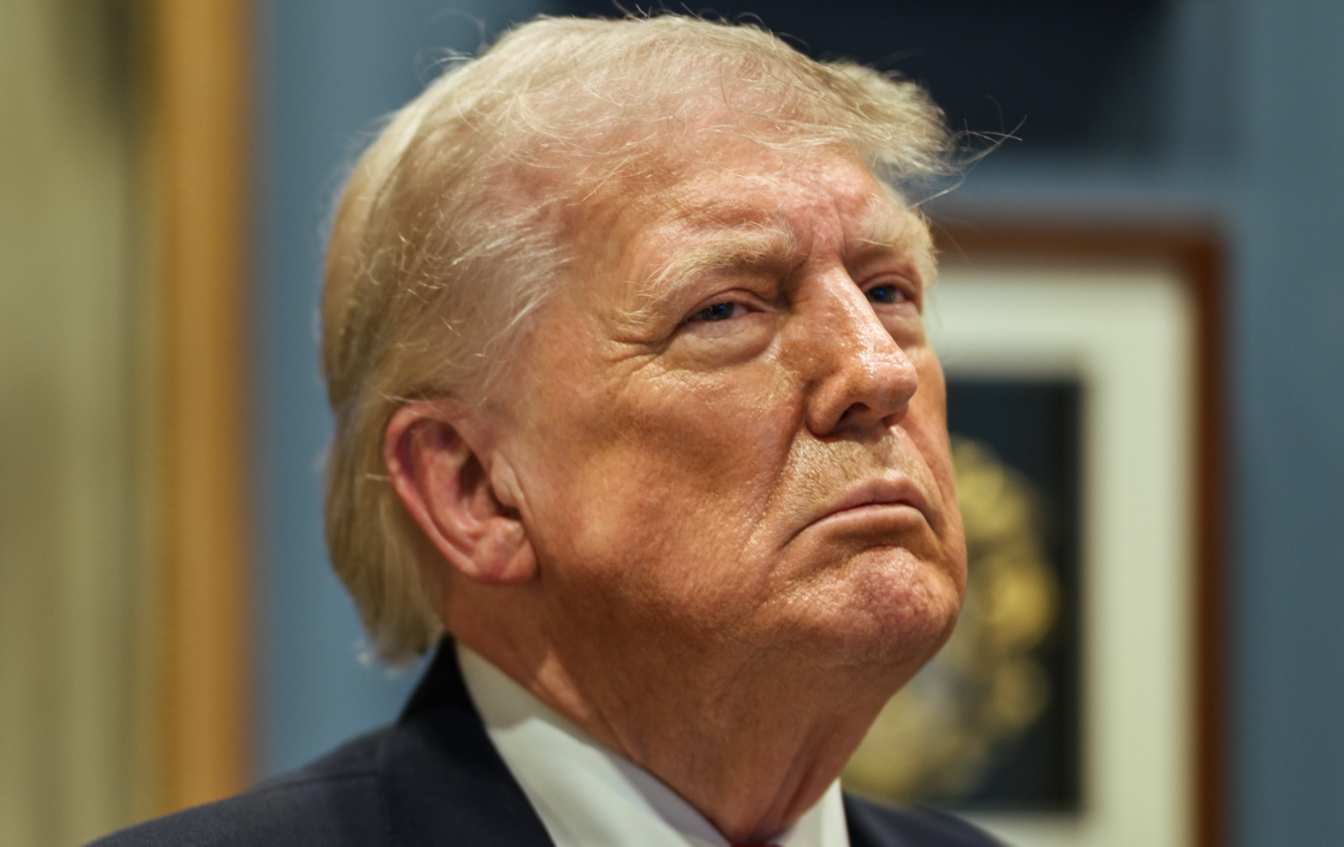
President Donald Trump’s war with Iran and controversial tariff policies are two of the biggest issues in this year’s midterm election campaign.
Both are costing American households thousands of dollars, leaving many voters wondering if there will be any payoff at all.
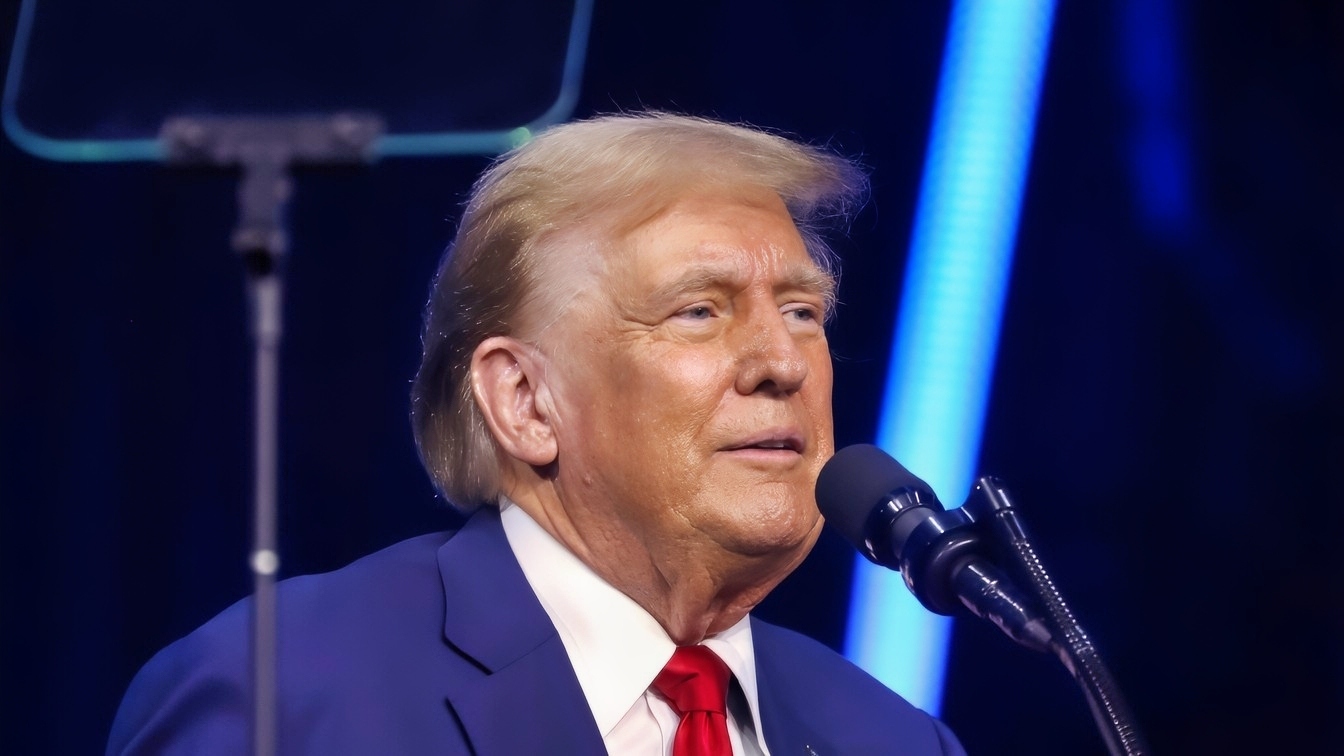
Donald Trump Speaking in 2024. Creative Commons Image.
Trump Happy Back in 2024 Creative Commons Photo
An October 29 Bloomberg report examined the financial burden of the administration’s trade and foreign policies, and the findings were bad news for Republicans.
According to the report, and other separate polling, Americans are becoming increasingly dissatisfied over the rising cost of living and Trump’s economic policies.
Polls also show that Democrats are on track to win control of the House of Representatives, and potentially the Senate.
While the financial consequences of the war with Iran are substantial, the economic case against tariffs is arguably more complicated.
The Trump administration argues that tariffs encourage American manufacturing and reduce reliance on foreign suppliers.
Trump also says the policies are already generating enormous levels of federal revenue.
But the question is: will those benefits outweigh the immediate costs?
And do Americans agree with the president’s assessment?
Tariffs Cost Households Around $1,100 Annually
In August, Yale University’s Budget Lab assessed that tariffs imposed by the Trump administration are expected to cost the average American household $1,100 per year.
The researchers argued that tariffs would likely increase consumer prices by around 0.7%, with the average statutory tariff rate standing at 11%.
Another assessment, this time from the Tax Policy Center, estimated the average household burden at around $920 in 2026.
Tariffs are paid directly by American importers; however, the resulting costs are typically distributed among businesses, consumers, and foreign suppliers—and they almost always result in higher prices for imported goods.
Some companies absorb some costs, but they typically increase prices to compensate.
The financial impact of tariffs also varies depending on how much a household spends on imported goods.
Tariffs Are Generating Billions for Washington
Consumers are paying a price, but President Trump argues it’s worth it. Evidence supports his claims.
The Congressional Budget Office notes that federal customs revenue increased from $77 billion in 2024 to $195 billion in 2025, giving Washington a much larger source of revenue.
The Penn Wharton Budget Model found in October that Trump’s new tariffs have generated approximately $314.8 billion in gross customs revenue between January 2025 and August 2026 alone.
However, around $166 billion collected under Trump’s tariff policy is now subject to being refunded after the Supreme Court ruled against the Trump administration.
Nonetheless, the long-term revenue potential — should the policies remain in place — remains significant.
Yale’s Budget Lab estimated that current tariff policies could generate as much as $1.9 trillion over the next decade, before accounting fully for their potential effects on economic growth.
That revenue could be used in many ways, including reducing federal borrowing, paying debt, or financing other priorities.
The problem for Trump?
It doesn’t eliminate the costs consumers face.
His hope, though, is that American manufacturing will boom and offset those price hikes.
Is American Manufacturing Recovering?
Trump’s strongest argument for tariffs may ultimately be the rebuilding of domestic industrial capacity over time.
On October 10, the White House published an assessment that argued tariffs and other Trump administration policies are encouraging investment in American manufacturing.
And there is evidence of improvement so far.
According to the Bureau of Labor Statistics, manufacturing jobs are increasing — up 72,000 between December 2025 and September 2026.
The Federal Reserve’s October Beige Book, a public report published eight times per year, also reported moderate manufacturing growth across several parts of the country.
The Trump administration argues that the tariff measures not only help American manufacturing but also protect critical industries, including steel and metals.
By protecting these industries, the U.S. is not only preserving its industrial capacity but also protecting its national security.
That argument is only becoming more important as the United States faces growing competition with China.
But the evidence does not show that tariffs alone caused the improvement, with a combination of investment incentives, domestic demand, and other economic policies all playing a part.
Tariffs can also increase production costs for American manufacturers if they depend on imported materials—which is often the case.
Is It Worth It?
For now, it’s hard to say whether Trump’s tariff policies are worth the cost.
Tariffs are generating substantial revenue, and we can see improvements in American manufacturing. Still, households are paying higher prices, and the war in Iran is imposing additional costs with no clear end in sight.
In the end, even if the tariff policies work out, there’s a high chance that the war in Iran makes it virtually impossible for the Republican Party to defend the policies after 2028, meaning that no matter which party the next president represents, the policies could be scrapped for political reasons in just a matter of years.
About the Author: Jack Buckby
Jack Buckby is a British researcher and analyst specializing in defense and national security, based in New York. His work focuses on military capability, procurement, and strategic competition, and he produces and edits analysis for policy and defense audiences. He brings extensive editorial experience, with a career output spanning over 1,000 articles at National Security Journal, and has previously authored books and papers on extremism and deradicalization.


