

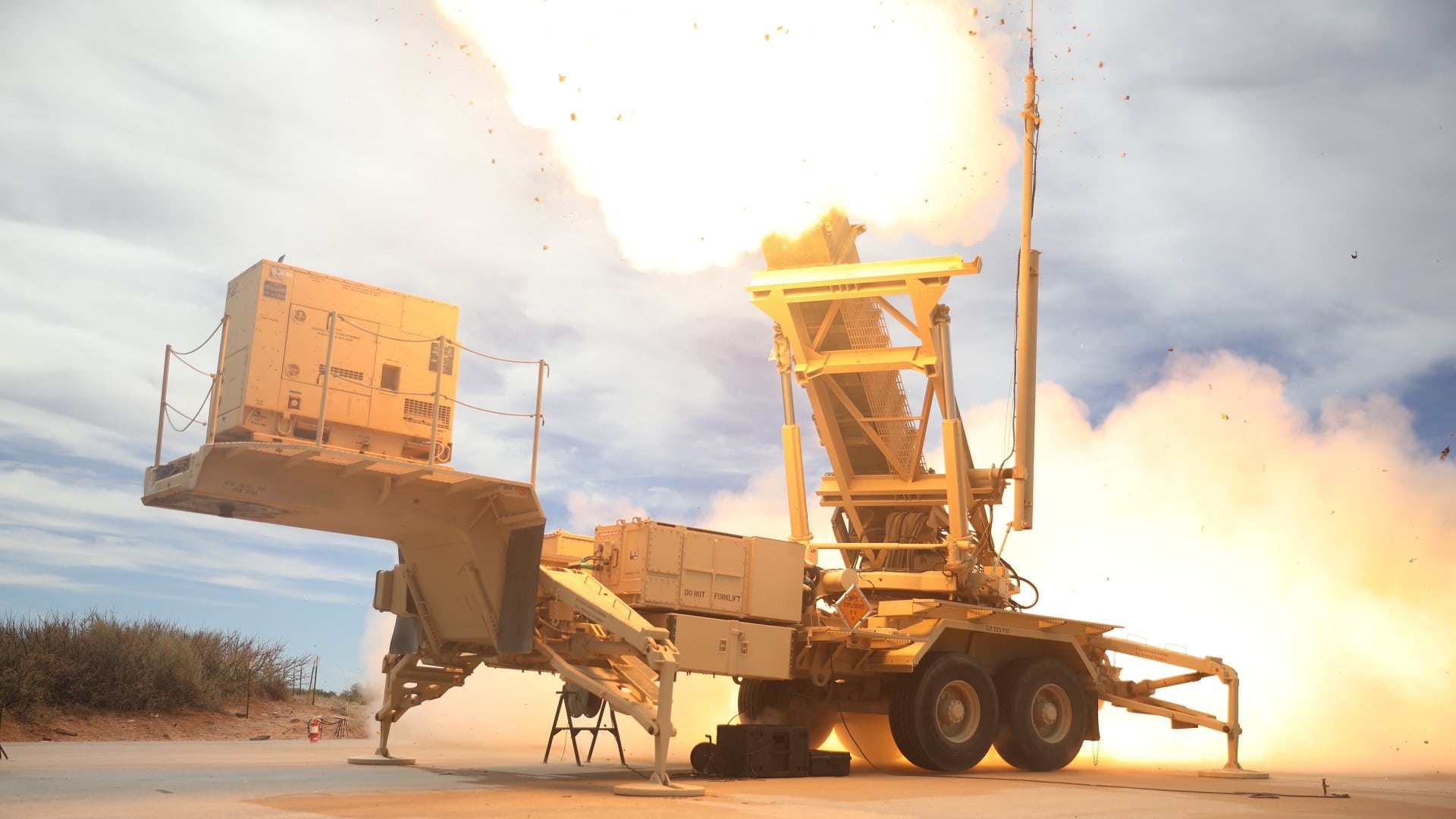
Iran is talking tough again. That’s nothing new. On Tuesday, as Americans headed to the polls, Iranian Parliament Speaker Mohammad Bagher Ghalibaf warned that any American “miscalculation” would be met with an unpredictable military response not bound by geography.
Fox News paired that warning with President Trump’s own statement, delivered on “Fox & Friends” the same morning.
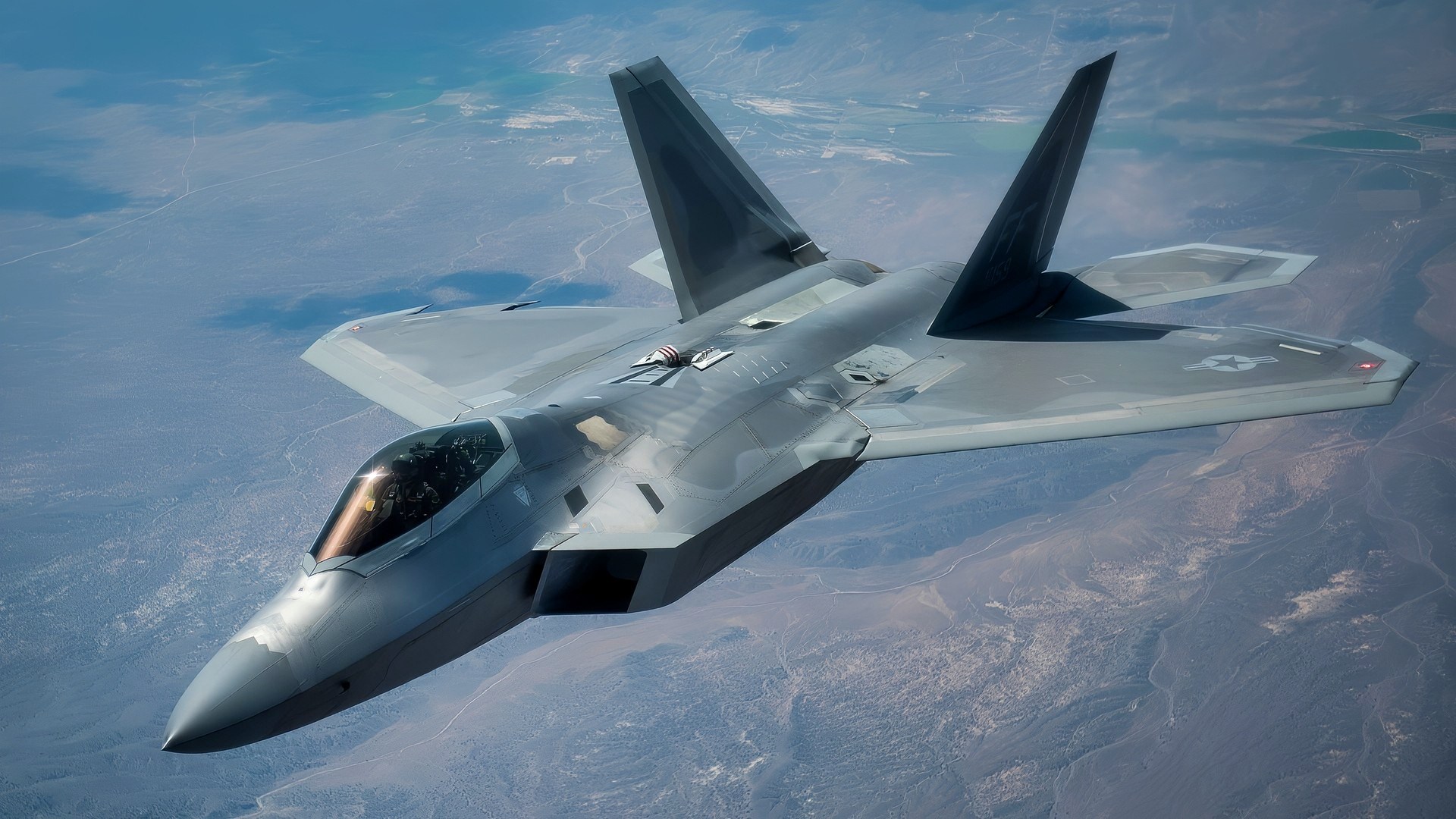
An F-22 Raptor from Langely Air Force Base, V.a. flies by after receiving fuel from a KC-135 Stratotanker from McConnell Air Force Base, Kans., July 27, 2016 during exercise Red Flag, hosted by Nellis Air Force Base, Nev. Red Flag 16-3 is aimed at teaching service members how to integrate air, space and cyberspace elements. (U.S. Air Force photo/Tech. Sgt. David Salanitri)

Capt. Kristin “Beo” Wolfe, F-35A Lightning II Demonstration Team pilot and commander, banks hard left making vapor trails over and behind the wings during a practice demonstration at Hill Air Force Base, Utah, Mar. 23, 2021. The demonstration team is part of Air Combat Command and is assigned to the 388th Fighter Wing at Hill AFB. Capt. Wolfe grew up a military child as the daughter of retired Col. Jon Wolfe and has flown the T-6 Texan II, T-38 Talon, F-22 Raptor and now the F-35A Lightning II. (U.S. Air Force photo by Alex R. Lloyd)
Iran’s forces, the president said, have been “decapitated.” Every ship is on the seabed.
All 288 of their airplanes are lying in pieces on the runways.
Both men are selling their own version of events as they unfold.
The Speaker’s Threat Is Aimed At Two Audiences
Ghalibaf isn’t just a parliament speaker.
He’s Tehran’s chief negotiator with Washington, and he made it clear that Iran had already answered the latest proposal and that the next move belongs to the United States.
His language mirrors Supreme Leader Mojtaba Khamenei, who on Saturday ordered the armed forces to meet any threat with an “immediate, impactful, and geographically unrestricted response.”
It didn’t stop there.
Iran’s armed forces chief, Maj. Gen. Ali Abdollahi, said the military is updating target lists that include American and Israeli assets, and the hardline paper Kayhan floated US facilities in Britain, Italy, Greece, Romania, Albania and Cyprus as fair game if the conflict resumes.
Most of those are NATO members.
That’s the tell. A regime confident in its hand doesn’t need to threaten Albania.
The real targets of this rhetoric are the negotiating table in Doha and the American voter.
One commentator on Iranian state television was blunt about it, urging that Trump be told a new attack would jeopardize the next two years of his presidency by tipping the US economy into recession.
That’s the strategy in one sentence.
Tehran knows it can’t win the fight.
It wants the fight to be expensive.
And they’re confident because they know the new Congress will pull the plug on further operations against it in January.
What “Decapitated” Looks Like On The Ground
The president’s message has been consistent since early March, when he told Politico that Iran was “running out of launchers” because its forces were being decimated.
Hard numbers back a good chunk of that. Joint Chiefs Chairman Gen. Dan Caine has said US forces struck more than 13,000 targets, including over 1,500 air defense targets and more than 450 ballistic missile storage sites, while sinking over 90 percent of Iran’s regular navy.
However, the same reporting noted those totals stop short of “decimated,” and neither Caine nor Secretary Hegseth explained what the remaining 20 percent of Iran’s air defenses looks like.
That gap matters.
Back in April, an American jet went down after Hegseth had told reporters Iran “has no air defenses.
However, it was shot down using a MANPAD missile.
Then came Monday night. US aircraft struck Qeshm Island in the Strait of Hormuz after Iran fired on an American aircraft.
Officials called it defensive and said it doesn’t signal a return to full combat operations.
Trump himself described the target as an anti-aircraft site the Iranians spent about two months building while we watched.
Two months. That’s how long it took a “decapitated” military to stand up new air defense positions as the on-again, off-again bombing campaign has allowed them to rebuild their defenses.
Unpredictable Is The Only Card Left
So what does Tehran actually mean by unpredictable?
When a conventional force gets beaten, it doesn’t quit.
It goes irregular.
Iran has been running that playbook for forty years through its proxies, and it isn’t going to abandon it now.
You can already see the outline.
On Monday, an Indian-crewed dhow was attacked in the Strait of Hormuz.
Saudi air defenses knocked down a drone near Mecca on Tuesday, though the Houthis denied launching it.
A senior Iranian security official told CNN that Tehran would go after infrastructure beyond oil facilities, including AI. Addn cyber, sleeper cells,s and shipping harassment, and the playbook is clear. None of that requires an air force.
Vice President JD Vance put it plainly on Monday, saying the Iranians are “always a little unpredictable” while noting the president retains both kinetic and non-kinetic options.
Meanwhile, Qatar is pushing hard to keep the talks alive, and Prime Minister Benjamin Netanyahu is reportedly pressing for a major air campaign now that the midterms are behind us.
The Trade-Off Between Bombast And The Actual Situation
Say what you will about the bombast coming from both capitals. That’s beside the point.
The United States can hit anything in Iran it chooses, whenever it chooses.
Trump says Pickaxe Mountain could be handled in an hour, and I don’t doubt the Air Force could.
However, Iran’s leadership isn’t playing to win a military operation.
It’s playing to raise the price of a renewed war past what Washington is willing to pay at the gas pump and the ballot box.
Iran is still demanding the blockade be lifted and its assets unfrozen before the Strait reopens, and the Iranian foreign minister warned that any new operation will draw a response harsher than the last.
The next round, if it comes, won’t look like the first. Fewer missile salvos. More ships, pipelines, servers and proxies.
Trump may well be right that Iran’s head has been cut off. Tehran is betting the body can still kick.
And now, time is on their side.
The consistent message from the winning Democrats in the midterm elections was that the conflict in Iran must end.
And any US efforts to continue this conflict will themselves be decapitated from within.
About the Author: Steve Balestrieri
Steve Balestrieri is a National Security Columnist. He served as a US Army Special Forces NCO and Warrant Officer. In addition to writing on defense, he covers the NFL for PatsFans.com and is a member of the Pro Football Writers of America (PFWA). His work was regularly featured in many military publications.


