

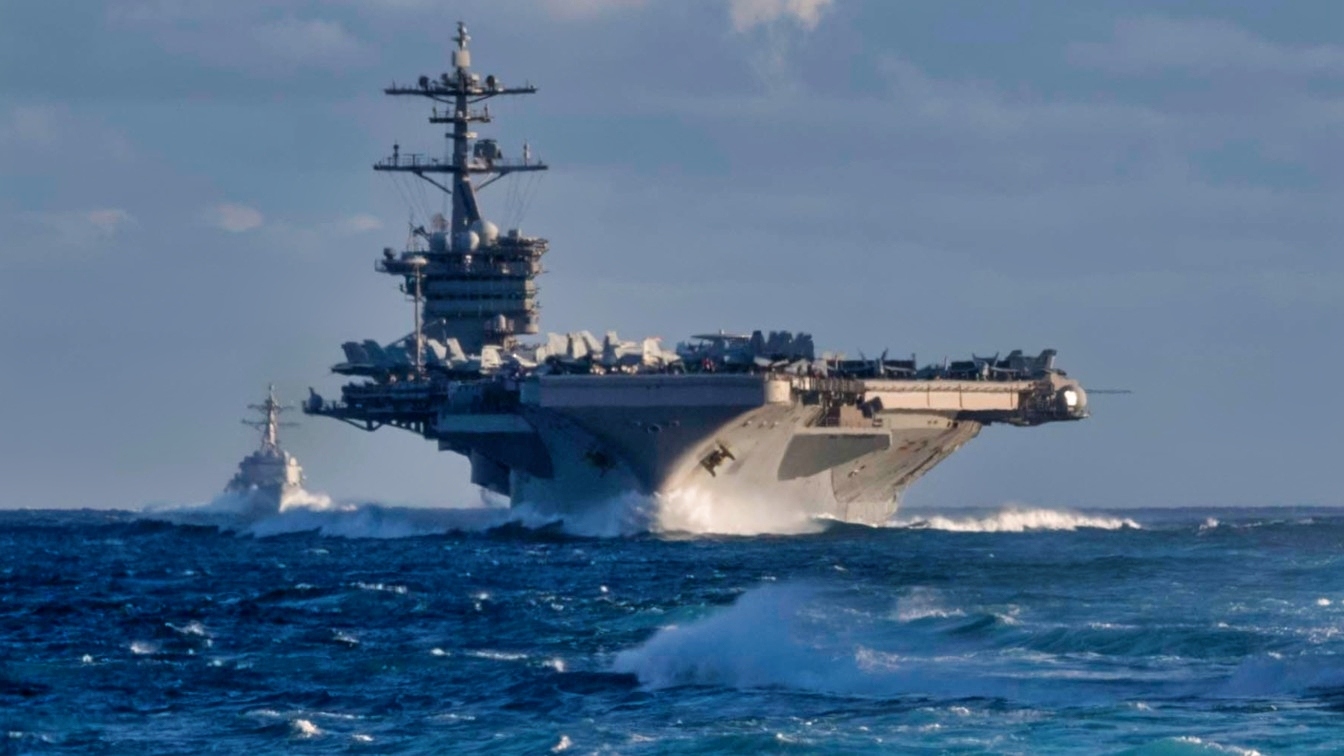
The engine room of an oil tanker caught fire after explosives detonated in the Strait of Hormuz on Thursday, after being damaged in an attack by a speedboat amid the U.S. and Israel’s ongoing war against Iran.
The tanker, which was transiting the Strait of Hormuz just north of Khasab, Oman, was ignited after being “approached on the port side by a small boat which attached two explosive devices to the hull above the waterline,” reported UK Maritime Trade Operations, which provides alerts and maritime warnings.
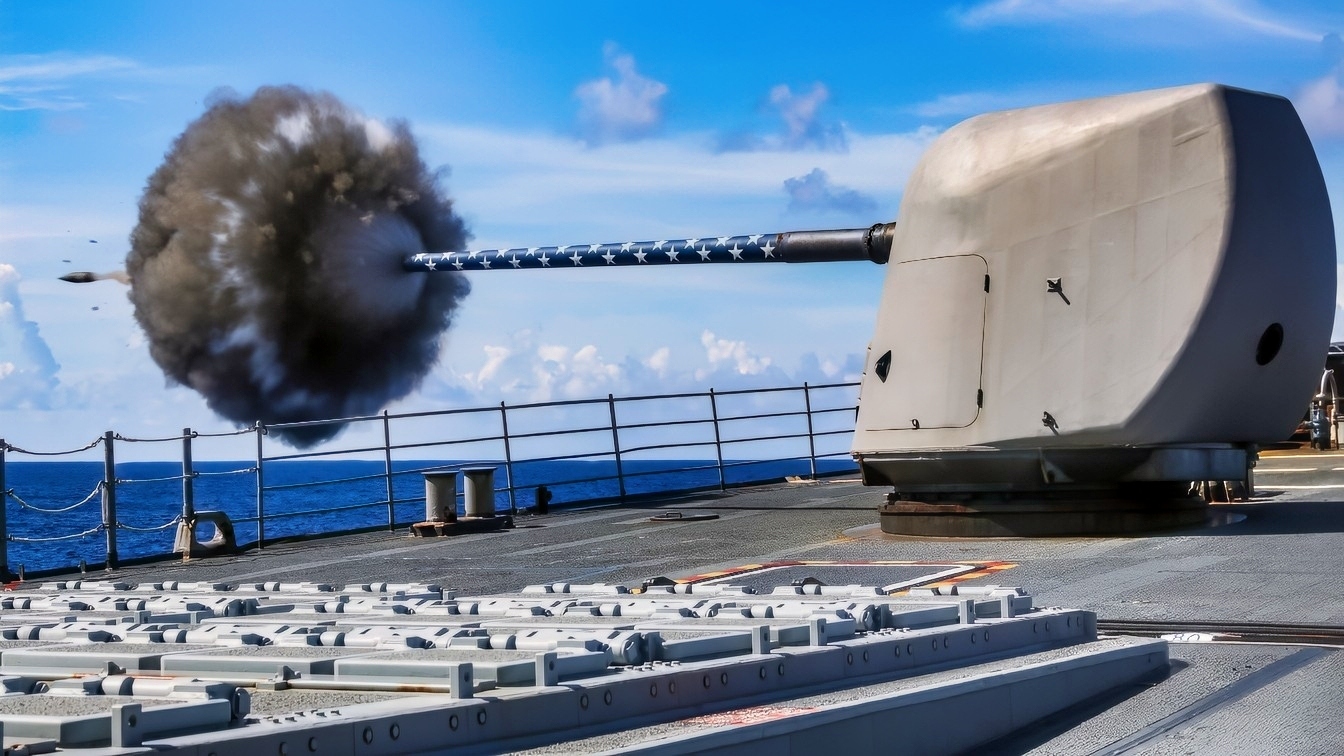
PACIFIC OCEAN (July 29, 2025) The Ticonderoga-class guided-missile cruiser USS Princeton (CG 59) fires its forward Mark 45 5-inch gun during a weapons maintenance shoot, July 29, 2025. The Carl Vinson Carrier Strike Group is underway conducting routine operations in the U.S. 3rd Fleet area of operations. (U.S. Navy photo by Mass Communication Specialist 1st Class Jacob I. Allison)
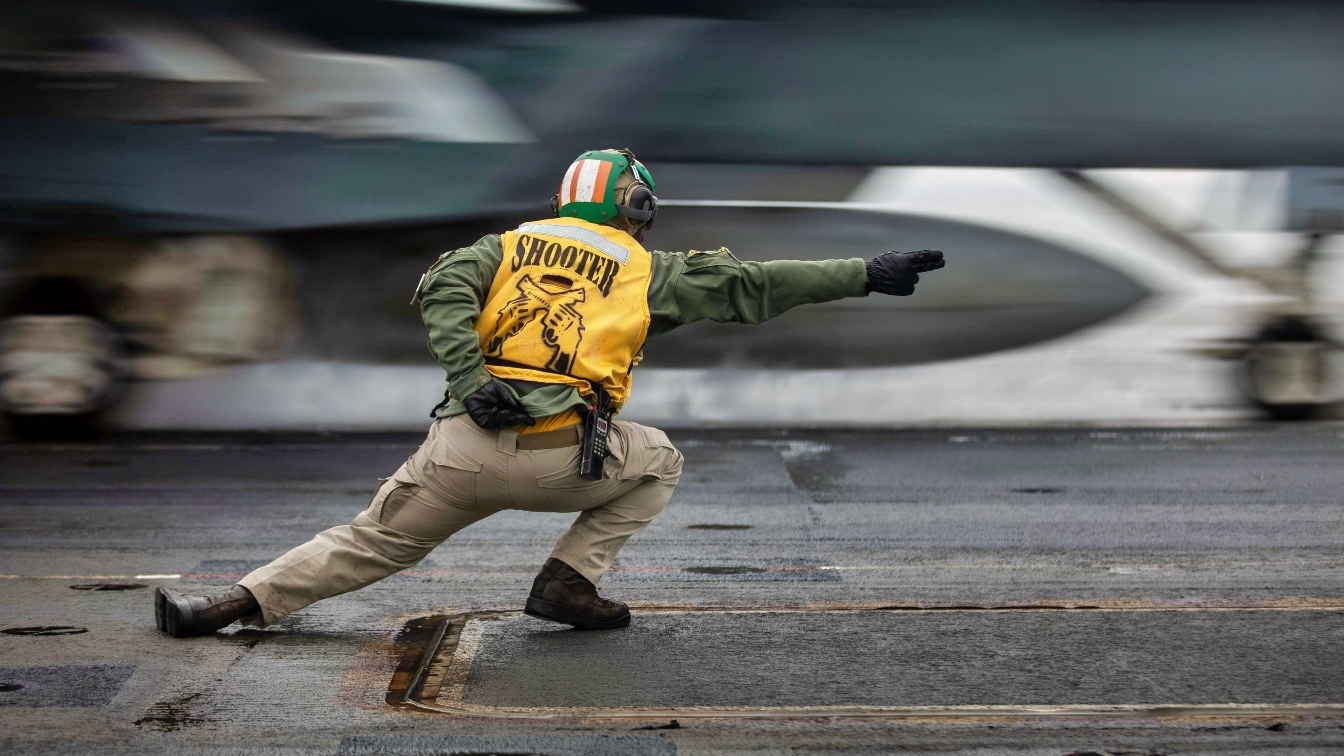
U.S. Navy Lt. Miguel Smith launches an F/A-18E Super Hornet, attached to the “Pukin Dogs” of Strike Fighter Squadron (VFA) 143, from the flight deck of Nimitz-class aircraft carrier USS Dwight D. Eisenhower (CVN 69) May 7, 2026. Eisenhower is underway conducting flight deck certification in the Atlantic Ocean in preparation for future operations. (U.S. Navy photo by Mass Communication Specialist 3rd Class Jamison Sutton)
“The subsequent blasts resulted in a fire in the engine room which temporarily disabled the vessel,” UKMTO continued. “The fire is now reported as extinguished, and the vessel is continuing to its next port of call. Vessels are advised to transit with caution and report any suspicious activity.”
No deaths or injuries were reported in the incident.
Despite U.S. President Donald Trump’s repeated assurances that the Strait of Hormuz is open for business, transiting the strait continues to pose a risk for ships amid Trump’s ongoing war against Iran.
Iran Proposes Plan to Reopen Strait of Hormuz Within Two Days
Iran’s Foreign Ministry announced on Monday that it could reopen the Strait of Hormuz within two days if the U.S. agrees to its demands.
“The possibility of implementing this plan in two days is another indication of Iran’s good-faith approach,” Iranian Foreign Ministry spokesperson Esmaeil Baqaei said. “We have stated that, if Iran’s demands are met, it would be possible to restore security to the Strait of Hormuz and resume the negotiating process within a short period.”
Iran had previously proposed a plan which would reopen the Strait of Hormuz within a week.
The White House has so far rejected Iran’s demands, which include lifting its naval blockade of Iranian ports and unfreezing Iranian assets.
400 Vessels Still Stuck in the Strait of Hormuz
Around 400 vessels carrying roughly 5,000 seafarers remain stuck in the Strait of Hormuz, according to the International Maritime Organization (IMO), as Trump’s war against Iran continues into its eighth month.
More than 120 attacks on vessels have been recorded in the Strait of Hormuz since the beginning of the war, with 30 of those attacks taking place in October alone. At least 24 seamen have been killed.
It’s Not Safe to Go Through, Warns International Maritime Organization
“It’s not safe to go through,” IMO Secretary-General Arsenio Dominguez warned in an interview with Bloomberg on Sunday. “Before the conflict, we had an average of 135 vessels sailing through the Strait of Hormuz every single day. From the 22nd to the 28th of October, the most recent information that we have is an average of around 12 vessels per day. On the 29th of October, we only registered two vessels going through.”
Acknowledging that two vessels had recently sunk in the Strait of Hormuz, Dominguez continued, “There is no confirmation that the strait has been cleared of mines, so it is very difficult for me to come here and say it is clear of any hazards on top of the attacks from drones and missiles that we are experiencing on merchant ships.”
Dominguez also acknowledged that “before the conflict,” which Trump started, “there were no issues in the Strait of Hormuz.”
Fuel prices have skyrocketed globally due to the closure of the Strait of Hormuz, which was frequently transited by oil tankers before Trump’s war against Iran.
Trump’s Approval Rating Tanks as Hormuz Crisis Causes Fuel Prices to Skyrocket
President Trump’s approval ratings have tanked as a result of fuel prices and the cost of living skyrocketing since the beginning of his conflict with Iran.
Former President Barack Obama criticized Trump’s war last month, protesting that the conflict had merely given Iran “veto power” in the strait, which had previously not been the case.
“If you thought everything was too expensive before ‘you know who,’ everything is more expensive now,” said Obama, who tore into the Trump administration’s “chaos and cruelty and corruption and incompetence.”
According to the Pew Research Center, two-thirds of Americans disapprove of Trump’s handling of the Iran war, with just 14% expressing strong approval of how he has handled the conflict.
About the Author: Charlie Nash
Charlie Nash is a journalist and author whose work has appeared in The Spectator, Mediaite, New Statesman, and the American Conservative, among other major publications. The Washington Post, Fox News, the Daily Beast, MS NOW, NewsNation, Hannity, and more have featured his reporting. You can follow Charlie on X at @CharlieNash and on LinkedIn.


