
President Donald Trump is making another push to bring the war in Ukraine to an end, with American, Russian, and Ukrainian representatives meeting in Abu Dhabi on Tuesday, November 10.
They are the first trilateral peace negotiations to take place since February, and the talks follow months of stalled diplomatic efforts amid Russia’s ongoing attacks on Ukraine and Kyiv’s long-range strike campaign against Russian energy infrastructure.

Russian T-90 Tank. Image Credit: Creative Commons.
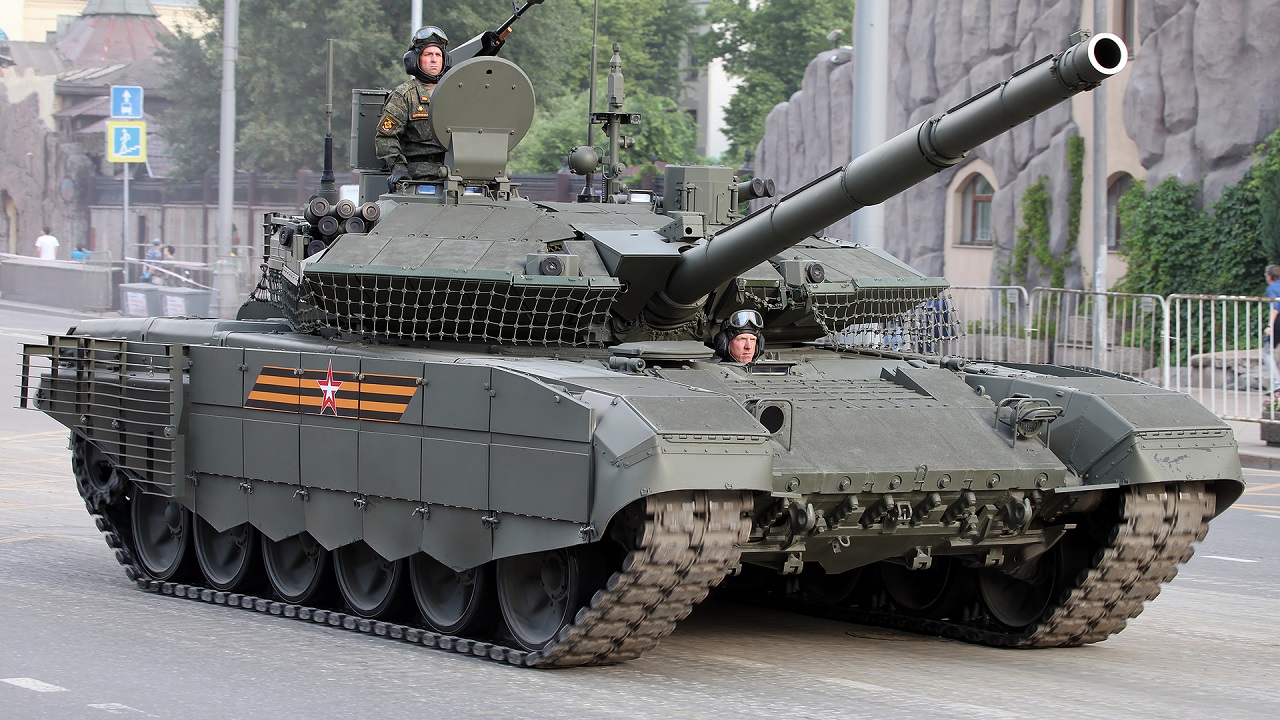
T-90M. Image Credit: Creative Commons.
The Trump administration is expressing optimism about the possibility of the three parties reaching an agreement.
Still, the negotiations are taking place while Russia continues to push to capture the remaining Ukrainian-controlled territory in Donbas aggressively.
Putin has repeatedly demanded that Ukraine surrender the entire region and has reportedly set a deadline of December 31 for his forces to capture the rest of the Donbas.
Continuing strikes against Ukraine while engaging in talks appears to be the strategy, with Moscow looking to secure as much leverage as possible.
Trump appears to be determined to secure an agreement and end the war before he leaves the White House, but it is looking increasingly likely that there won’t be peace until Putin gets the Donbas.
The Latest Round Of Peace Talks
Trilateral peace talks began in Abu Dhabi on Tuesday, with two days of meetings scheduled between representatives of Washington, Moscow, and Kyiv. President Trump sent special envoy Steve Witkoff and his son-in-law Jared Kushner to lead the American delegations.
Kyiv is represented by Rustem Umerov, head of its Foreign Intelligence Service, and Moscow by a team led by Kremlin aide Vladimir Medinsky.
The talks come after months of stalled diplomatic efforts and escalating long-range strike campaigns from both sides of the conflict.
On Monday, Reuters reported that an unnamed U.S. official believed both sides—Kyiv and Moscow—had privately shown some willingness to be flexible on the matter of territory.
However, neither government has publicly abandoned its existing demands.
Based on the last several months of reporting, and comments by the Ukrainian president himself, the report could indicate that Ukraine is willing to follow through on his suggestion of freezing the front lines.
Putin, however, has resisted the call and continues to push to take control of as much of eastern Ukraine as possible.
Putin Wants All of Donbas
Despite the new round of talks, President Putin has shown little public interest in abandoning his territorial demands.
If anything, his resolve appears to be as strong as ever.
Russia currently occupies approximately one-fifth of Ukraine’s territory and continues to insist that Kyiv surrender the entirety of Donbas, which includes the Donetsk and Luhansk regions.
Moscow also wants Ukraine to withdraw from territory that Russia claims in the Kherson and Zaporizhzhia regions, and to abandon its ambitions to join NATO.
Ukraine has also been told that Russia expects restrictions on its long-term military capabilities. But Kyiv has rejected those demands, particularly the prospect of losing any territory it still controls today.
It’s a disagreement Trump’s negotiators will now attempt to navigate.
Still, given the U.S. president’s repeated insistence that Ukraine doesn’t “have the cards,” it’s increasingly likely that Ukraine may find itself with no choice but to accept Moscow’s territorial demands.
That is, unless the war rages on for another two years, a Democrat returns to power, and the United States recommits to providing Ukraine with military and financial support to keep fighting.
If the negotiating process continues for an extended period, it will benefit Moscow by allowing Russian forces to continue without requiring Putin to make immediate concessions—and by the time Putin takes control of Donbas, if that does occur, the negotiations may finally end.
That, it seems, is what Moscow is hoping will occur.
Ukraine Wants Guarantees
Territory is not the only obstacle to an agreement between Kyiv and Moscow, with Zelenskyy also demanding security guarantees that would prevent Moscow from launching another invasion after the fighting ends.
U.S. negotiators are reportedly considering arrangements resembling NATO’s Article 5 collective defense commitment, effectively protecting Ukraine without granting it formal membership of the alliance.
The negotiations now also reportedly include Russian demands for a new European security framework, with The Washington Post reporting on November 10 that Kushner proposed a multilateral security arrangement that involves Russia and European countries, modeled on the former NATO-Russia Council.
But European leaders and governments worry that Moscow could secure concessions that affect NATO’s future role in Eastern Europe as part of a negotiated settlement.
Even if Putin eventually secures the Donbas, it might still not end the war. Russia is making demands that extend well beyond Ukrainian territory, and President Trump appears to be willing to do virtually anything to bring the war to an end before January 2029.
About the Author: Jack Buckby
Jack Buckby is a British researcher and analyst specializing in defense and national security, based in New York. His work focuses on military capability, procurement, and strategic competition, and he produces and edits analysis for policy and defense audiences. He brings extensive editorial experience, with a career output spanning over 1,000 articles at National Security Journal, and has previously authored books and papers on extremism and deradicalization.


