

Whenever the current conflict between the United States and Iran ends, will the Strait of Hormuz return to its status quo?
Not if one political figure in Iran has anything to say about it.

241204-N-VW723-2064 PACIFIC OCEAN (Dec. 4, 2024) The Los Angeles-class fast-attack submarine USS Greeneville (SSN 772) transits the Pacific Ocean while supporting a distinguished visitor embark, Dec. 4, 2024. Greeneville is one of four Los Angeles-class fast-attack submarines assigned to Commander, Submarine Squadron 11. These submarines are capable of supporting various missions, including: anti-submarine warfare; anti-ship warfare; strike warfare; and intelligence, surveillance, and reconnaissance. (U.S. Navy photo by Mass Communication Specialist 1st Class Keenan Daniels)
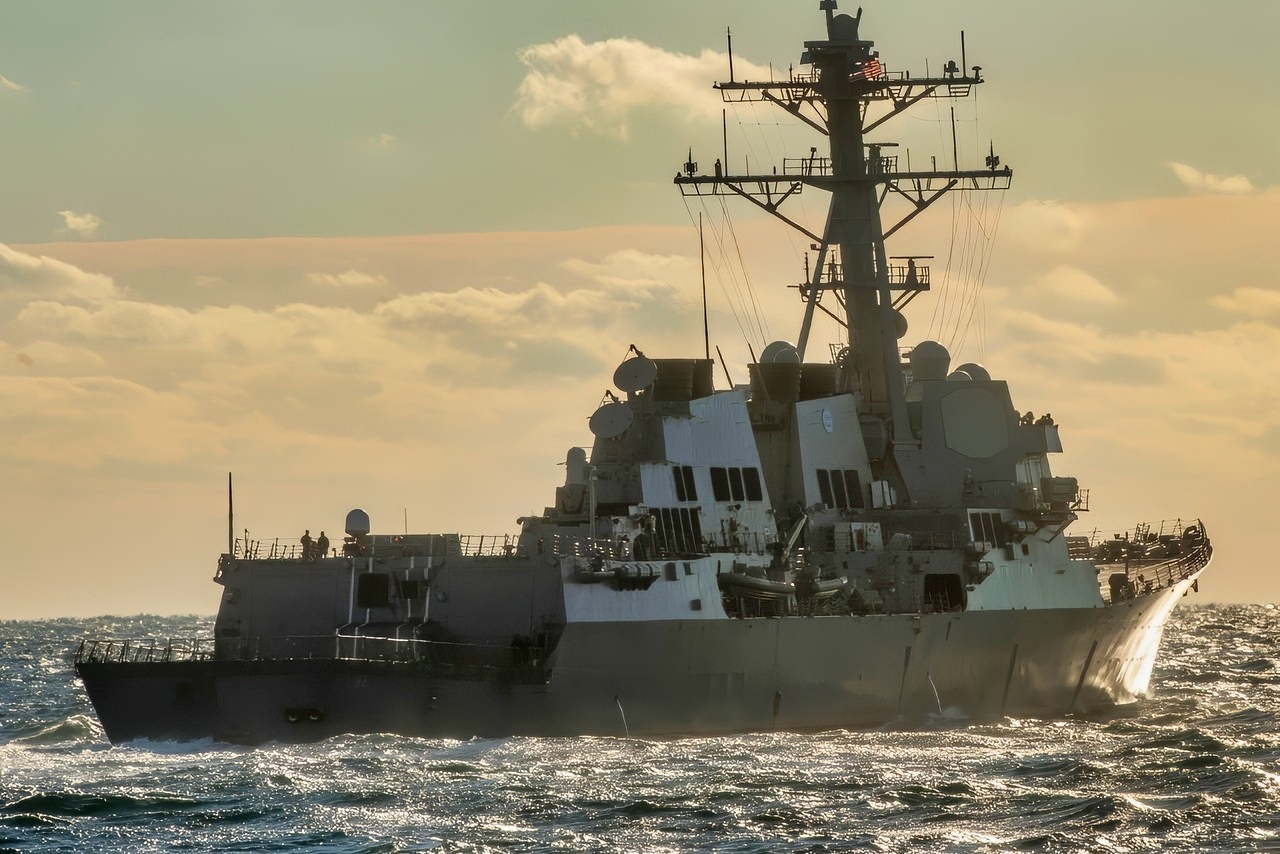
The Arleigh Burke-class guided-missile destroyer USS Lassen (DDG 82) moves into position for an underway exercise with the British Royal Navy aircraft carrier HMS Queen Elizabeth (R08) and Pre-Commissioning Unit (PCU) Michael Monsoor (DDG 1001). The future USS Michael Monsoor is the second ship in the Zumwalt-class of guided-missile destroyers. (Photo by Mass Communication Specialist 1st Class John Philip Wagner, Jr./Released)
Iran’s deputy speaker of parliament, Ali Nikzad, told the Iranian Students News Agency that control of the Strait belongs to Iran and will remain so.
The Strait of Hormuz, Nikzad said, is an achievement of the recently imposed war and a divine gift to the great Iranian nation,” as cited by the Times of Israel.
Nikzad is considered a conservative politician in Iran and served in the government of former President Mahmoud Ahmadinejad, later serving as chief of staff to Ebrahim Raisi.
Nikzad is a politician who often talks tough, stating in Parliament last week that Iran would retaliate against future attacks after a Ukrainian drone struck an Iranian commercial vessel in the Caspian Sea, killing one soldier.
Ukraine’s actions, he said in Parliament, would “not go unanswered.” He also vowed to confront any “adventurism” by the United States and attacked Britain, Bulgaria, and Ukraine for siding with the U.S., Tehran Times reported.
And he threatened accountability for those responsible for the assassination of Supreme Leader Ali Khamenei earlier this year.
The comments come as signs that the last few days of quiet in the conflict had ended.
End of the “Pause”
Starting last weekend, the U.S. had announced a “pause” on air strikes on Iran, after carrying them out nightly for more than a week.
President Donald Trump had been speaking of a major attack on Iran, including openly discussing a move to strike the facility known as Pickaxe Mountain, which reportedly is holding some of Iran’s nuclear materials.
But the U.S. had instead paused the attacks for several days.
And while there had not been an official ceasefire agreement, Reuters reported that Iran had said it would halt bombings as long as the U.S. kept up its pause in strikes.
However, after Iran launched a “surprise attack” on U.S. allies using ballistic missiles, that pause appears to have ended.
U.S. Central Command said in a social media post that Islamic Revolutionary Guard Corps forces launched “multiple ballistic missiles,” which they described as an “attempted surprise attack” on U.S. forces in the Middle East. All of the missiles, CENTCOM added, were intercepted. Axios reported that the target was a U.S. base in Jordan.
CENTCOM said later that the United States had joined with Saudi Arabia to conduct “precision strikes” on IRGC forces in Iraq. Those forces, CENTCOM added, had been planning to “attack U.S. forces and Saudi energy infrastructure.”
Those attacks, the first joint operation between the U.S. and Saudis of the war, were in retaliation for more than 30 aerial drone attacks by the IRGC in the previous 72 hours.
The Saudi defense ministry, in its own social media announcement about the strikes, stated that it had intercepted several drones aimed at energy facilities in Saudi Arabia.
“The Kingdom emphasizes that it does not seek escalation but will respond to any aggression it faces,” the ministry added.
Tough Talk From Trump
As reported by the New York Times, the president called into Fox News’ Fox and Friends morning show on Wednesday and discussed recent developments, including a threat that “We’ll be hitting them hard,” and the president shared that U.S. forces had very little notice before shooting down Iran’s ballistic missiles. “We’re going to beat the f***ing sh** out of them,” was a more profane extension of the threat from Trump.
The president added that the strikes in Iraq had the approval of Iraq’s government.
The Times also reported an increase in oil prices, with Brent Crude rising above $90 a barrel on Wednesday. That price had gone over $100 during the previous week, but had pulled back after the pause in strikes.
This once again puts the president in a tough position, especially with Iran continuing to claim control over the Strait of Hormuz. Trump is stuck in an unpopular war with few options, but needs to retaliate for strikes on U.S. interests and allies.
About the Author: Stephen Silver
Stephen Silver is an award-winning journalist, essayist, and film critic, and contributor to the Philadelphia Inquirer, the Jewish Telegraphic Agency, Broad Street Review, and Splice Today. The co-founder of the Philadelphia Film Critics Circle, Stephen lives in suburban Philadelphia with his wife and two sons. For over a decade, Stephen has authored thousands of articles that focus on politics, national security, technology, and the economy. Follow him on X (formerly Twitter) at @StephenSilver, and subscribe to his Substack newsletter.


